THE ADVENTURE COLLECTIVE® · Independent discovery and booking for outdoor travel

Step into Vatnshellir and walk a 45‑minute guided route through an 8,000‑year‑old lava tube on Snæfellsnes. Learn the geology behind lava stalactites and explore the subterranean side of Icelandic volcanism.
Step into Vatnshellir and walk a 45‑minute guided route through an 8,000‑year‑old lava tube on Snæfellsnes. Learn the geology behind lava stalactites and explore the subterranean side of Icelandic volcanism.
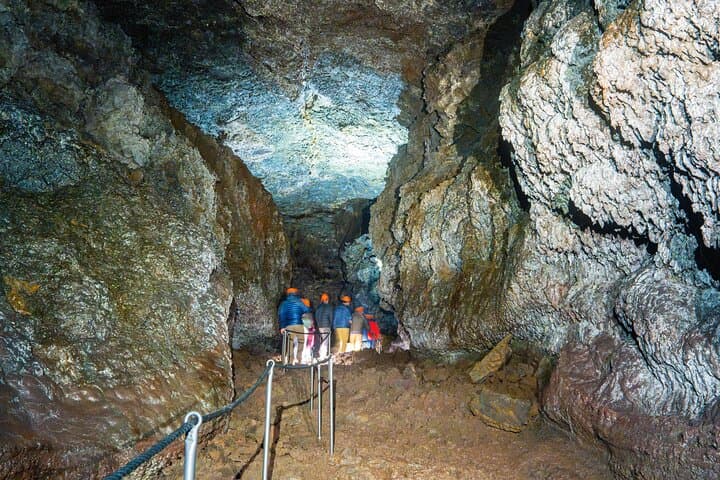
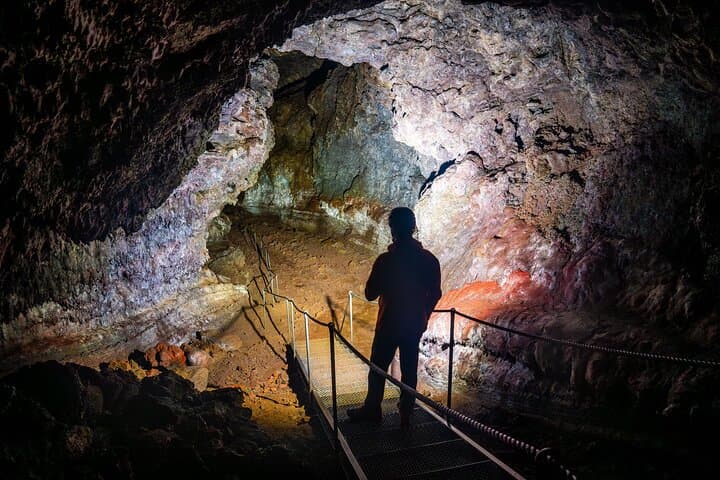
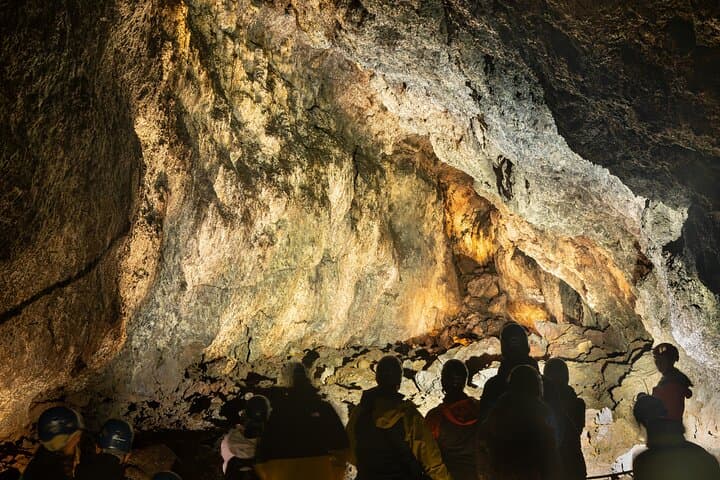
A low, cool breath of earth meets you at the cave entrance—salted wind from the coast, then the enclosed hush of basalt. On the slopes of Snæfellsjökull a dark mouth opens into Vatnshellir, a lava tube formed during an eruption roughly 8,000 years ago. In the glow of a guide’s lamp the tunnel narrows and then unfurls: ropey pahoehoe folds, blistered pockets, lava stalactites and peculiar bulbous formations that look fossilized from fire.
Verified experiences and guided adventures in the surrounding area.
Operated by Summit Adventure Guides · Hellnar, Snæfellsbær
A low, cool breath of earth meets you at the cave entrance—salted wind from the coast, then the enclosed hush of basalt. On the slopes of Snæfellsjökull a dark mouth opens into Vatnshellir, a lava tube formed during an eruption roughly 8,000 years ago. In the glow of a guide’s lamp the tunnel narrows and then unfurls: ropey pahoehoe folds, blistered pockets, lava stalactites and peculiar bulbous formations that look fossilized from fire.
The cave sits beneath the volcano that inspired Jules Verne’s Journey to the Center of the Earth; the geology here is an honest lesson in volcanic plumbing. Lava once flowed fast and hot, hollowing out channels where the exterior cooled as molten interior drained away. Local culture treats the Snæfellsnes coast with quiet reverence—fisheries, small farms and poets have long regarded the mountain and its caves as powerful landscape markers.
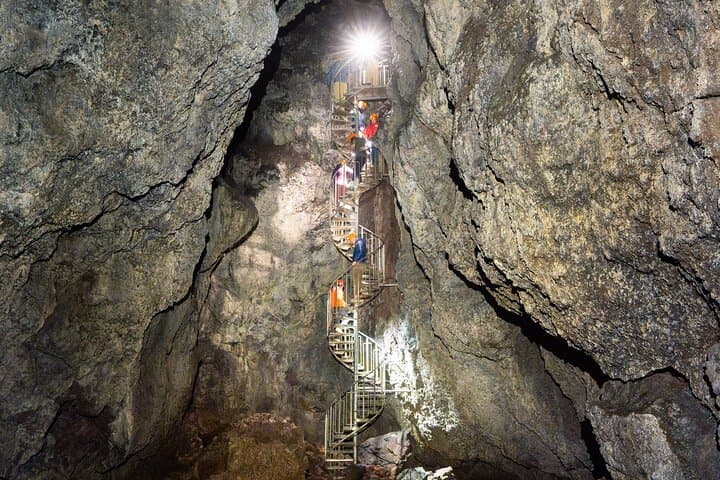
Practical guidance: the guided program runs about 45 minutes, includes helmet and flashlight, and follows carved steps and narrow passages. Expect uneven footing and two spiral staircases; rubber-soled hiking shoes and warm layers are essential. Cameras are welcome but keep hands off fragile formations. Tours operate year-round, though daylight and road conditions vary seasonally—winter access can be icy. Small-group sizes keep the experience intimate; guides explain formation processes and safety rules. Vatnshellir is a short, visceral way to read Iceland’s volcanic history beneath your feet—bring steady shoes, a light jacket, and curiosity.
moderate.
45 minutes.
Suitable for most people who can climb and descend stairs and walk on uneven ground; some mobility limitations may make the visit challenging.
The guided Vatnshellir tour lasts about 45 minutes including entry and exit stairs.
Children and older adults can usually join if they can manage two spiral staircases and uneven footing; check with the operator for specific concerns.
Yes—helmets and flashlights are provided by the tour operator; bringing a personal headlamp is optional.
Photography is allowed but avoid using flash near delicate formations and follow the guide’s instructions to preserve the cave environment.
Vatnshellir formed when an 8,000‑year‑old volcanic eruption created lava tubes on the slopes of Snæfellsjökull; the mountain became famous through Jules Verne’s novel and local lore.
The tube’s formations are fragile—visitors must stay with the guide and avoid touching surfaces; follow leave-no-trace practices on the surrounding lava fields.
Summit Adventure Guides operates guided outdoor trips and adventures with an emphasis on safety, stewardship, and memorable experiences.
A low, cool breath of earth meets you at the cave entrance—salted wind from the coast, then the enclosed hush of basalt. On the slopes of Snæfellsjökull a dark mouth opens into Vatnshellir, a lava tube formed during an eruption roughly 8,000 years ago. In the glow of a guide’s lamp the tunnel narrows and then unfurls: ropey pahoehoe folds, blistered pockets, lava stalactites and peculiar bulbous formations that look fossilized from fire.
A low, cool breath of earth meets you at the cave entrance—salted wind from the coast, then the enclosed hush of basalt. On the slopes of Snæfellsjökull a dark mouth opens into Vatnshellir, a lava tube formed during an eruption roughly 8,000 years ago. In the glow of a guide’s lamp the tunnel narrows and then unfurls: ropey pahoehoe folds, blistered pockets, lava stalactites and peculiar bulbous formations that look fossilized from fire.
The cave sits beneath the volcano that inspired Jules Verne’s Journey to the Center of the Earth; the geology here is an honest lesson in volcanic plumbing. Lava once flowed fast and hot, hollowing out channels where the exterior cooled as molten interior drained away. Local culture treats the Snæfellsnes coast with quiet reverence—fisheries, small farms and poets have long regarded the mountain and its caves as powerful landscape markers.
Practical guidance: the guided program runs about 45 minutes, includes helmet and flashlight, and follows carved steps and narrow passages. Expect uneven footing and two spiral staircases; rubber-soled hiking shoes and warm layers are essential. Cameras are welcome but keep hands off fragile formations. Tours operate year-round, though daylight and road conditions vary seasonally—winter access can be icy. Small-group sizes keep the experience intimate; guides explain formation processes and safety rules. Vatnshellir is a short, visceral way to read Iceland’s volcanic history beneath your feet—bring steady shoes, a light jacket, and curiosity.