THE ADVENTURE COLLECTIVE® · Independent discovery and booking for outdoor travel

Enter a cathedral of blue: this small-group Vatnajökull ice cave tour from Jökulsárlón takes you into naturally formed glacier chambers with expert guides and all technical gear supplied. Expect a 2.5–3 hour adventure marked by dramatic light, icy textures, and essential safety briefings.
Enter a cathedral of blue: this small-group Vatnajökull ice cave tour from Jökulsárlón takes you into naturally formed glacier chambers with expert guides and all technical gear supplied. Expect a 2.5–3 hour adventure marked by dramatic light, icy textures, and essential safety briefings.
You step off the minivan onto wind-brushed gravel and the land feels unusually alive—cold air bites, small stones sing under boots, and a hulking mass of ancient ice crouches ahead. Guides move with practiced calm, clipping helmets and showing crampons like pieces of theater. The glacier does the rest: deep-blue walls curve away, light filters through ice like a rare film, and the cave breathes a draft that seems to push you deeper.
Verified experiences and guided adventures in the surrounding area.
Operated by Glacier Trips · Höfn, South Iceland
You step off the minivan onto wind-brushed gravel and the land feels unusually alive—cold air bites, small stones sing under boots, and a hulking mass of ancient ice crouches ahead. Guides move with practiced calm, clipping helmets and showing crampons like pieces of theater. The glacier does the rest: deep-blue walls curve away, light filters through ice like a rare film, and the cave breathes a draft that seems to push you deeper.
Vatnajökull is not a photogenic backdrop; it is a living archive. Millennia of snowfall compacted into ice layers, volcanic ash trapped between strata, and seasonal melt have sculpted chambers that pulse with color. The cave you visit on this 2.5–3 hour small-group tour is chosen daily for safety and spectacle—no two visits are identical. Guides explain how Katla and other southern volcanoes have tossed ash onto the glacier, how ice flow carves crevasses, and why the blue comes from light pushed through dense ice.
Culturally, this coast has been shaped by a long relationship with extremes—fishermen in nearby hamlets read weather like a map, and sagas speak of routes marked by glacial tongues. Jökulsárlón, the lagoon you'll pass on the drive, is a display of that relationship: icebergs calved from the glacier float like pale sculptures, and seals occasionally pop up to inspect human visitors.
Practically, the tour meets at Hólmur near Jökulsárlón; expect a short drive then a guided walk out onto glacier forefields before the cave entrance. Equipment—helmets, crampons, headlights—is provided, and guides brief the group on safe movement across ice and in low light. The terrain can be slippery and uneven; steady footwear and layered clothing are non-negotiable. Photography inside rewards a low ISO and steady hands—tripods are awkward in tight spaces, but a compact travel tripod or monopod helps.
Timing matters. Weather governs access: storms and melt can close caves or change routes. The operator offers alternative dates or refunds when conditions force cancellation. Small-group sizes (around 12) keep the experience intimate but expect other companies to be in the same general area during peak season.
For anyone who wants a definitive taste of Iceland’s raw processes, this is it: a stretch of glacier carved into a cathedral of cold, where light and time are the architects. Arrive with patience, respect for the landscape, and the preparedness to move deliberately—then let the cave do what it does best: rearrange how you think about ice.
moderate.
2.5–3 hours.
Suitable for most fitness levels; must be able to walk on uneven icy terrain for up to 1–2 km with short climbs.
The walk from the vehicle to the cave entrance varies daily but is typically short—about 10–30 minutes across uneven, rocky or icy ground.
Policies vary by operator, but groups are generally suitable for older children who can follow safety briefings; check age restrictions at booking.
No prior experience is required; guides provide crampon instruction and lead the group for safety.
If cancelled for safety, the operator offers an alternative date or a full refund per their cancellation policy.
Yes—photography is encouraged, but avoid touching ice with hands or equipment and be mindful of other guests when using a tripod.
Not necessarily; caves are dynamic and change with seasons and weather, so each visit is unique and the guide selects the safest accessible cave that day.
Vatnajökull has expanded and contracted over centuries; volcanic eruptions and ice flow have repeatedly reshaped the glacier, influencing local settlements and travel routes.
The glacier is sensitive to climate change and visitor impact—stay on designated paths, avoid moving ice, and follow guide instructions to minimize erosion and disturbance.
Glacier Trips operates guided outdoor trips and adventures with an emphasis on safety, stewardship, and memorable experiences.
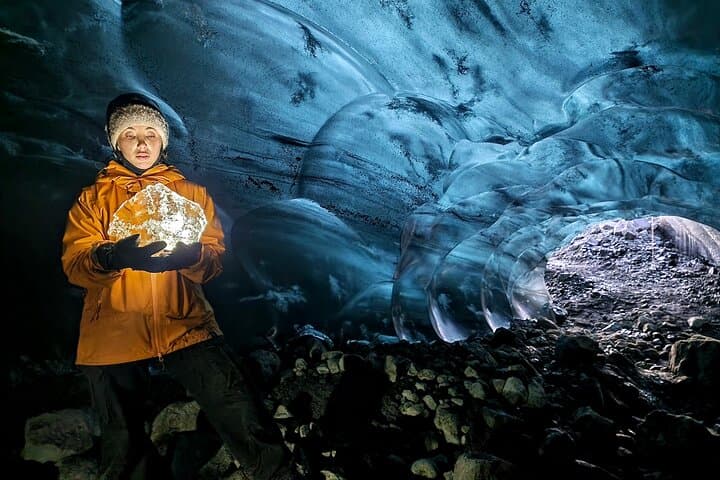
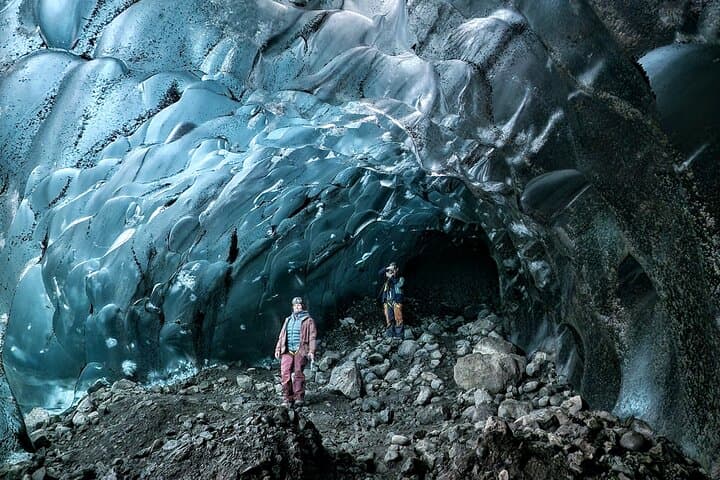
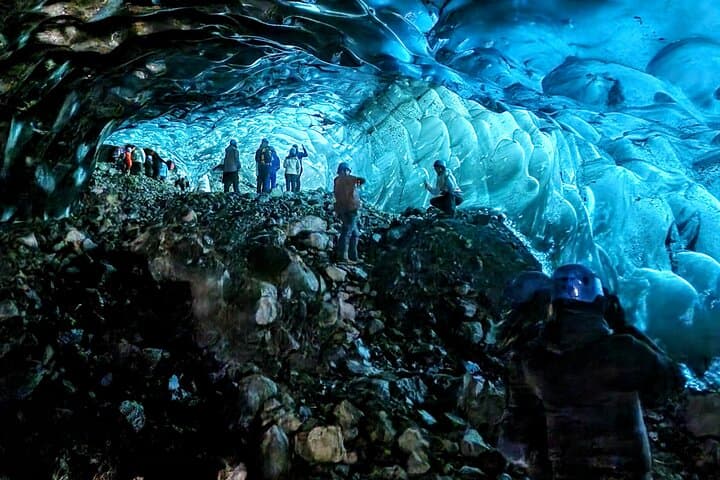
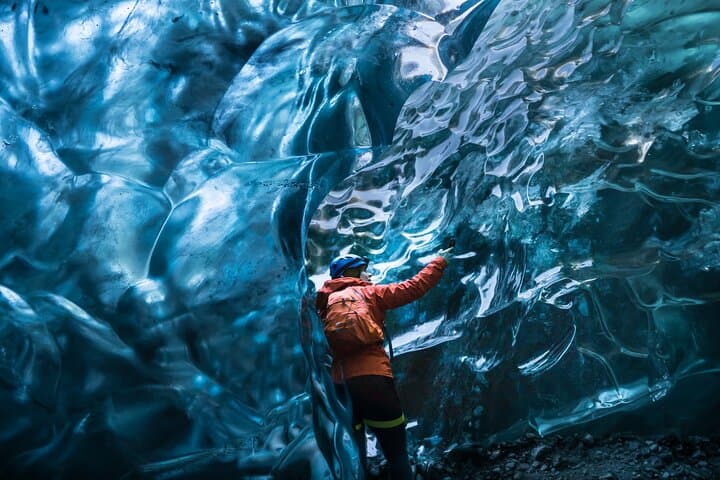
You step off the minivan onto wind-brushed gravel and the land feels unusually alive—cold air bites, small stones sing under boots, and a hulking mass of ancient ice crouches ahead. Guides move with practiced calm, clipping helmets and showing crampons like pieces of theater. The glacier does the rest: deep-blue walls curve away, light filters through ice like a rare film, and the cave breathes a draft that seems to push you deeper.
You step off the minivan onto wind-brushed gravel and the land feels unusually alive—cold air bites, small stones sing under boots, and a hulking mass of ancient ice crouches ahead. Guides move with practiced calm, clipping helmets and showing crampons like pieces of theater. The glacier does the rest: deep-blue walls curve away, light filters through ice like a rare film, and the cave breathes a draft that seems to push you deeper.
Vatnajökull is not a photogenic backdrop; it is a living archive. Millennia of snowfall compacted into ice layers, volcanic ash trapped between strata, and seasonal melt have sculpted chambers that pulse with color. The cave you visit on this 2.5–3 hour small-group tour is chosen daily for safety and spectacle—no two visits are identical. Guides explain how Katla and other southern volcanoes have tossed ash onto the glacier, how ice flow carves crevasses, and why the blue comes from light pushed through dense ice.
Culturally, this coast has been shaped by a long relationship with extremes—fishermen in nearby hamlets read weather like a map, and sagas speak of routes marked by glacial tongues. Jökulsárlón, the lagoon you'll pass on the drive, is a display of that relationship: icebergs calved from the glacier float like pale sculptures, and seals occasionally pop up to inspect human visitors.
Practically, the tour meets at Hólmur near Jökulsárlón; expect a short drive then a guided walk out onto glacier forefields before the cave entrance. Equipment—helmets, crampons, headlights—is provided, and guides brief the group on safe movement across ice and in low light. The terrain can be slippery and uneven; steady footwear and layered clothing are non-negotiable. Photography inside rewards a low ISO and steady hands—tripods are awkward in tight spaces, but a compact travel tripod or monopod helps.
Timing matters. Weather governs access: storms and melt can close caves or change routes. The operator offers alternative dates or refunds when conditions force cancellation. Small-group sizes (around 12) keep the experience intimate but expect other companies to be in the same general area during peak season.
For anyone who wants a definitive taste of Iceland’s raw processes, this is it: a stretch of glacier carved into a cathedral of cold, where light and time are the architects. Arrive with patience, respect for the landscape, and the preparedness to move deliberately—then let the cave do what it does best: rearrange how you think about ice.