THE ADVENTURE COLLECTIVE® · Independent discovery and booking for outdoor travel

Walk the preserved lines of the 1916 Somme offensive with a licensed guide from Amiens. This full-day circuit visits mine craters, intact trenches and major memorials, tailored to family history and nationality.
Walk the preserved lines of the 1916 Somme offensive with a licensed guide from Amiens. This full-day circuit visits mine craters, intact trenches and major memorials, tailored to family history and nationality.
Dawn on the Somme feels like history breathing — low fog lifts off the fields and the contour of craters and hedgerows reads like a map of 1916. On Michael Smith’s guided circuit from Amiens, you move through preserved trenches, cross churned earth where tanks first appeared, and stand beneath the angular silhouette of the Thiepval Memorial.
Verified experiences and guided adventures in the surrounding area.
Operated by Michael Smith · Amiens, Hauts-de-France
Dawn on the Somme feels like history breathing — low fog lifts off the fields and the contour of craters and hedgerows reads like a map of 1916. On Michael Smith’s guided circuit from Amiens, you move through preserved trenches, cross churned earth where tanks first appeared, and stand beneath the angular silhouette of the Thiepval Memorial.
The Somme is as much geology as history: chalk ridges, compacted clay and shell-torn topsoil that still holds fragments of the past. Villages like Pozières and Beaumont-Hamel keep memory in stone and lane; cemeteries are tended with exacting care by the Commonwealth War Graves Commission, while local cafés offer quiet spaces to absorb the landscape and stories.
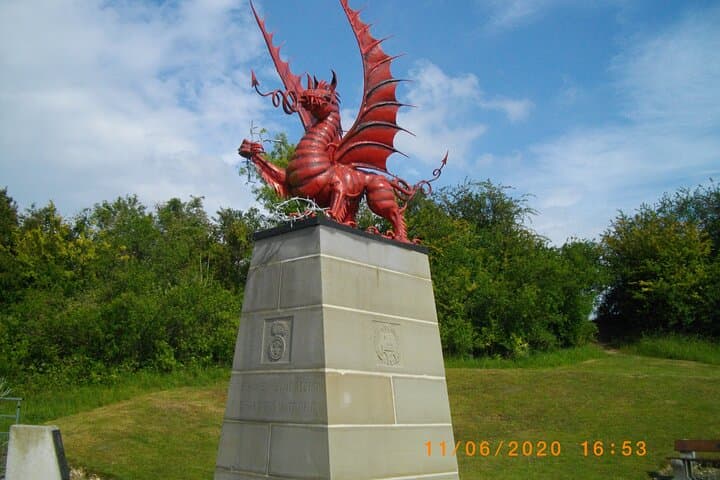
Culturally, the route ties British, Irish, Australian and French threads — Villers-Bretonneux’s Australian memorial and the replica of Helen’s Tower mark training grounds and sacrifice. Guides often tailor stops by nationality and family history, locating graves and monuments where possible.
Practical guidance: the full circuit runs 4–10 hours depending on stops; expect several miles of walking over uneven ground, short trench descents and exposed fields. Wear sturdy footwear, layers for wind and rain, and carry water and basic first aid. Be prepared for emotional moments, maintain respectful behavior in cemeteries, and allow time for photography and reflection. Public transport connects Amiens to the Somme, but private transfer simplifies accessing dispersed sites. This is a field trip in memory as much as a walk — a clear-eyed, physical encounter with landscape and history.
moderate.
4–10 hours.
Moderate fitness: able to walk several miles over uneven terrain and climb short trench steps.
The circuit ranges from about 4 to 10 hours depending on stops; the guide can tailor the itinerary and shorten routes to focus on specific sites.
Expect several miles over uneven ground with short trench descents—moderate fitness is recommended and seating breaks are included.
Yes; with names, service numbers or unit details the guide will include cemetery visits where relevant and practical.
Most sites are open landscape or memorials; smaller museum or café entries may be included depending on the chosen itinerary—verify at booking.
The Somme offensive of 1916 was one of WWI’s largest battles; many front-line features were later preserved and thousands of graves were established in tidy Commonwealth cemeteries.
Sites are maintained by local authorities and the Commonwealth War Graves Commission; visitors are asked to stay on paths and respect graves to limit erosion and disturbance.
Michael Smith operates guided outdoor trips and adventures with an emphasis on safety, stewardship, and memorable experiences.
Dawn on the Somme feels like history breathing — low fog lifts off the fields and the contour of craters and hedgerows reads like a map of 1916. On Michael Smith’s guided circuit from Amiens, you move through preserved trenches, cross churned earth where tanks first appeared, and stand beneath the angular silhouette of the Thiepval Memorial.
Dawn on the Somme feels like history breathing — low fog lifts off the fields and the contour of craters and hedgerows reads like a map of 1916. On Michael Smith’s guided circuit from Amiens, you move through preserved trenches, cross churned earth where tanks first appeared, and stand beneath the angular silhouette of the Thiepval Memorial.
The Somme is as much geology as history: chalk ridges, compacted clay and shell-torn topsoil that still holds fragments of the past. Villages like Pozières and Beaumont-Hamel keep memory in stone and lane; cemeteries are tended with exacting care by the Commonwealth War Graves Commission, while local cafés offer quiet spaces to absorb the landscape and stories.
Culturally, the route ties British, Irish, Australian and French threads — Villers-Bretonneux’s Australian memorial and the replica of Helen’s Tower mark training grounds and sacrifice. Guides often tailor stops by nationality and family history, locating graves and monuments where possible.
Practical guidance: the full circuit runs 4–10 hours depending on stops; expect several miles of walking over uneven ground, short trench descents and exposed fields. Wear sturdy footwear, layers for wind and rain, and carry water and basic first aid. Be prepared for emotional moments, maintain respectful behavior in cemeteries, and allow time for photography and reflection. Public transport connects Amiens to the Somme, but private transfer simplifies accessing dispersed sites. This is a field trip in memory as much as a walk — a clear-eyed, physical encounter with landscape and history.