THE ADVENTURE COLLECTIVE® · Independent discovery and booking for outdoor travel

Walk between six mysterious stone pyramids, cultivated ravines and curated gardens at the Ethnographic Park Pirámides de Güímar. This concise guide orients you to the site’s history, geology and practical planning tips for a thoughtful half-day visit.
Walk between six mysterious stone pyramids, cultivated ravines and curated gardens at the Ethnographic Park Pirámides de Güímar. This concise guide orients you to the site’s history, geology and practical planning tips for a thoughtful half-day visit.
You step from the sun-warmed parking lot onto paths that move between six step-like stone structures, scrubby volcanic outcrops and irrigated ravine gardens. The air here tastes of salt and basalt; the water in the Sustainable Garden gurgles and seems to dare you to follow it upstream. Visitors drift from pyramid to greenhouse to viewpoint at a relaxed, curious pace — this is a place built for slow noticing.
Verified experiences and guided adventures in the surrounding area.
Operated by " The Pyramids of Güímar Admission Ticket" · Güímar, Santa Cruz de Tenerife
You step from the sun-warmed parking lot onto paths that move between six step-like stone structures, scrubby volcanic outcrops and irrigated ravine gardens. The air here tastes of salt and basalt; the water in the Sustainable Garden gurgles and seems to dare you to follow it upstream. Visitors drift from pyramid to greenhouse to viewpoint at a relaxed, curious pace — this is a place built for slow noticing.
The Park combines botanical collections, ethnography and contested archaeology. The six pyramids, aligned to solar events, were popularized in the 20th century by expeditions and debate over their builders; the site today frames those conversations alongside Canary Island culture. Geologically, you’re standing on recent volcanic flows that shaped Tenerife’s eastern flank, and the Botanical Route highlights plants adapted to fire, salt spray and fractured lava. Culturally, the Casa Chacona museum and the Exportations Route trace local agricultural history and migration patterns tied to the sea.
For a practical visit, allow 2–4 hours to wander the four outdoor routes, the Poison and Sustainable Gardens, the museum and a café stop. Comfortable shoes and sun protection make the difference on exposed paths; the park is largely wheelchair accessible but some uneven volcanic surfaces remain. Spring and autumn offer mild temperatures; summer brings stronger sun; occasional winter rains deepen colors in the ravine. Take binoculars for birds around the watercourse, carry refillable water, and respect signage — trails are designed to protect fragile plantings. The park rewards deliberate exploration: quiet corners, a small freshwater run with European eel, and viewpoints that put Tenerife’s volcanic story in plain sight.
easy.
2–4 hours.
Suitable for light to moderate mobility; mostly easy walking with short uneven sections.
Plan for 2–4 hours to see the pyramids, the four outdoor routes, the Casa Chacona museum and the specialized gardens at a relaxed pace.
Yes — most paths and facilities are wheelchair accessible, though some volcanic surfaces and short slopes may be uneven; assistance can be useful for full access.
Service animals are allowed; general pets are restricted to protect plant collections and wildlife — check local rules before visiting.
Tickets may be purchased in advance; premium admission options exist and mobile tickets are accepted, which helps during busy periods.
The pyramids have been the subject of study and debate; the park presents local ethnography alongside research popularized by 20th-century visitors who drew attention to the alignments and island history.
The Park emphasizes sustainable planting and water-wise design in the Sustainable Garden and limits off-route access to protect endemic flora; visitors are asked to follow signage and carry out litter.
" The Pyramids of Güímar Admission Ticket" operates guided outdoor trips and adventures with an emphasis on safety, stewardship, and memorable experiences.

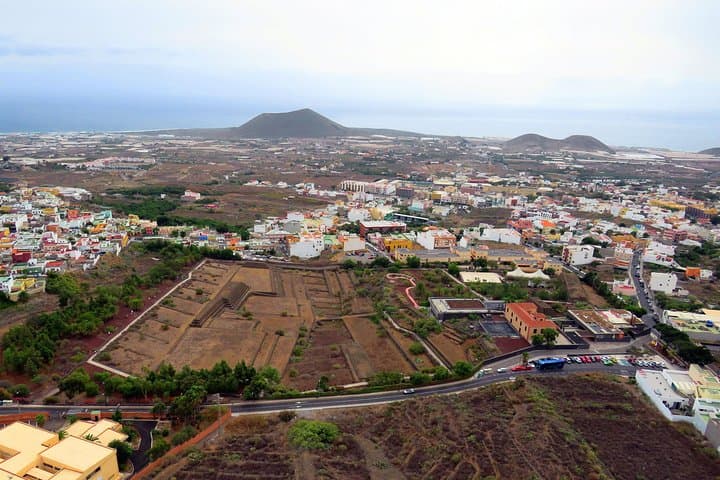
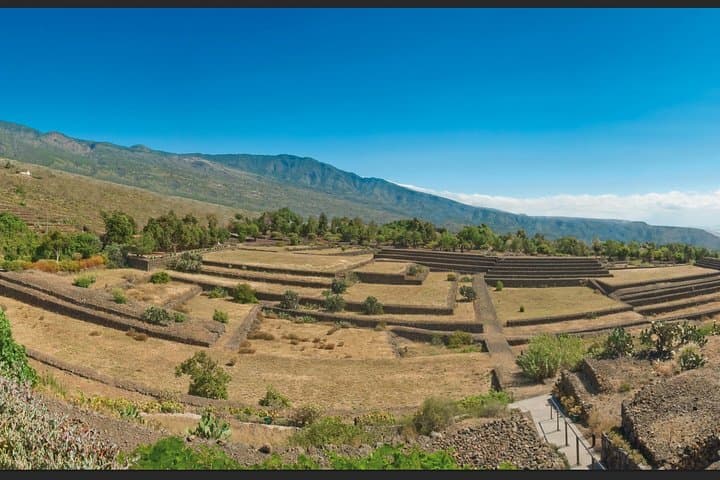
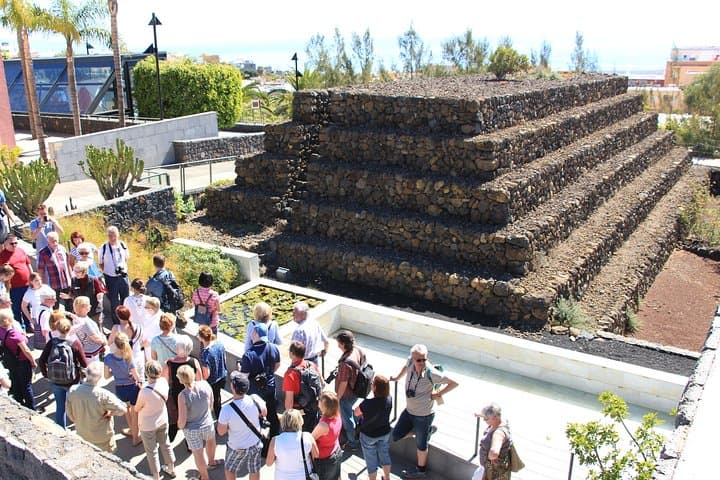
You step from the sun-warmed parking lot onto paths that move between six step-like stone structures, scrubby volcanic outcrops and irrigated ravine gardens. The air here tastes of salt and basalt; the water in the Sustainable Garden gurgles and seems to dare you to follow it upstream. Visitors drift from pyramid to greenhouse to viewpoint at a relaxed, curious pace — this is a place built for slow noticing.
You step from the sun-warmed parking lot onto paths that move between six step-like stone structures, scrubby volcanic outcrops and irrigated ravine gardens. The air here tastes of salt and basalt; the water in the Sustainable Garden gurgles and seems to dare you to follow it upstream. Visitors drift from pyramid to greenhouse to viewpoint at a relaxed, curious pace — this is a place built for slow noticing.
The Park combines botanical collections, ethnography and contested archaeology. The six pyramids, aligned to solar events, were popularized in the 20th century by expeditions and debate over their builders; the site today frames those conversations alongside Canary Island culture. Geologically, you’re standing on recent volcanic flows that shaped Tenerife’s eastern flank, and the Botanical Route highlights plants adapted to fire, salt spray and fractured lava. Culturally, the Casa Chacona museum and the Exportations Route trace local agricultural history and migration patterns tied to the sea.
For a practical visit, allow 2–4 hours to wander the four outdoor routes, the Poison and Sustainable Gardens, the museum and a café stop. Comfortable shoes and sun protection make the difference on exposed paths; the park is largely wheelchair accessible but some uneven volcanic surfaces remain. Spring and autumn offer mild temperatures; summer brings stronger sun; occasional winter rains deepen colors in the ravine. Take binoculars for birds around the watercourse, carry refillable water, and respect signage — trails are designed to protect fragile plantings. The park rewards deliberate exploration: quiet corners, a small freshwater run with European eel, and viewpoints that put Tenerife’s volcanic story in plain sight.