THE ADVENTURE COLLECTIVE® · Independent discovery and booking for outdoor travel

A full-day drive from Marrakech through the Atlas foothills, this route threads rivers, waterfalls and argan cooperatives across four distinct valleys. Expect short village walks, local food, and a high terrace lunch with sweeping mountain views.
A full-day drive from Marrakech through the Atlas foothills, this route threads rivers, waterfalls and argan cooperatives across four distinct valleys. Expect short village walks, local food, and a high terrace lunch with sweeping mountain views.
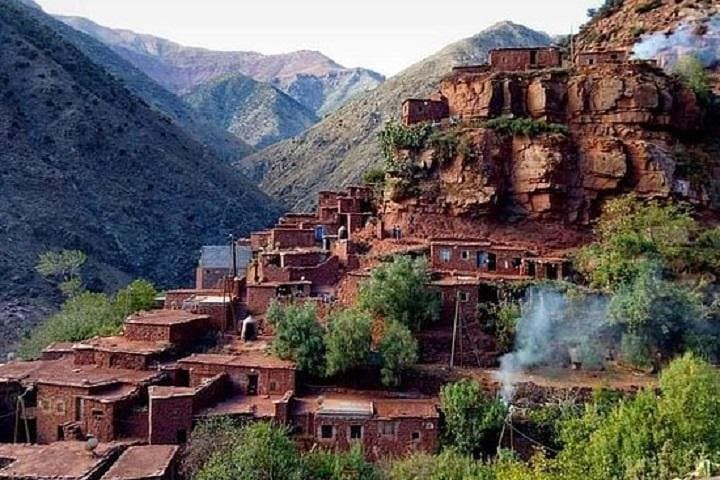
The van peels away from Marrakech and the city heat gives up to a ribbon of road that climbs into the Atlas foothills. Rivers flash like living seams—Sitti-Fatma daring you toward cool spray—while red-streaked hills roll past the window. Small stone homes and argan trees dot terraces; women at cooperatives lift jars of oil and offer tea and honey.
Verified experiences and guided adventures in the surrounding area.
Operated by Marrakesh Indeed · Ourika, Marrakesh-Safi
The van peels away from Marrakech and the city heat gives up to a ribbon of road that climbs into the Atlas foothills. Rivers flash like living seams—Sitti-Fatma daring you toward cool spray—while red-streaked hills roll past the window. Small stone homes and argan trees dot terraces; women at cooperatives lift jars of oil and offer tea and honey.
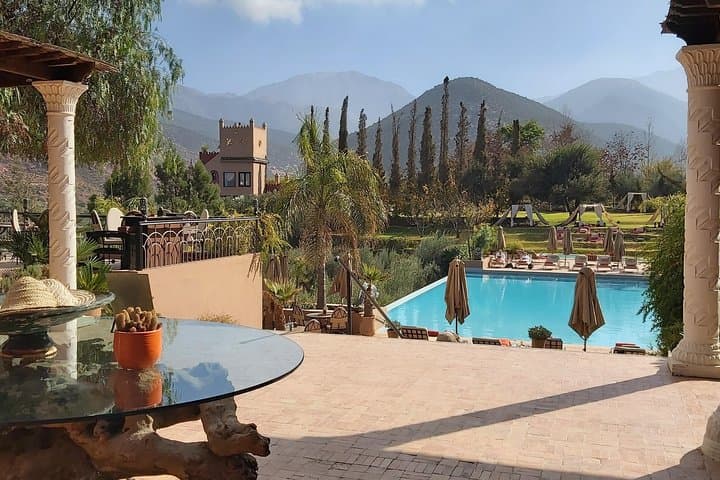
The route visits four distinct valleys: the first, the Ourika corridor with its river and cascades; the second, the Oukaimeden-facing valley with old stone enclosures and fresher air; then a sweep of pastoral valleys with grazing sheep, argan and fruit trees; finally a high terrace at about 1,780 m for lunch and a 360° sweep of villages and ridgelines. Geologically the area sits on Atlas foothills where folded rock and alluvial soils create steep drains and colourful slopes. Culturally this is Berber country—cooperatives for argan oil, simple breads, and mint tea anchor the visit.
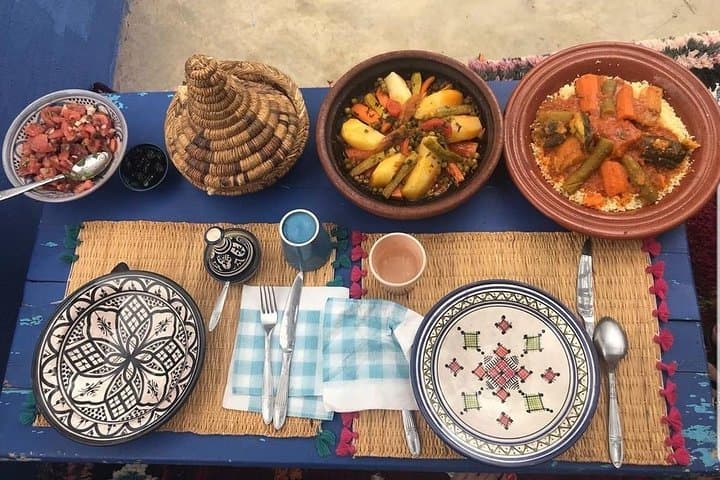
Practical notes: expect 6–9 hours total, roughly 1 hour drive to the first valley and another ~45 minutes to the second; most of the day is sightseeing with short, uneven village walks and a brief waterfall approach on dirt paths. Bring sturdy walking shoes, sun protection and a light jacket for higher, wind-exposed terraces. Water is provided, and meals typically include local breads, tajine and fruit. The tour is suitable for most fitness levels but includes some unpaved surfaces and occasional short climbs—move at your own pace and respect local property and eco-rules to keep the valleys healthy for the communities that rely on them.
easy.
6–9 hours.
Suitable for travelers in light to moderate physical condition; involves short, uneven village walks and brief climbs.
Mostly short, optional village walks and a brief, uneven path to the waterfall; you won’t be hiking all day—it's primarily a driving-and-sightseeing tour.
Yes—breakfast, bottled water, tea and a traditional lunch (including tajine and fruit) are included; vegetarian options are available if requested.
Approximately a 45–75 minute drive depending on traffic and pickup location; the tour usually reaches the first valley within about one hour.
The tour is family-friendly, but waterfall approaches and village strolls include uneven terrain—children should be supervised and travelers with limited mobility may find some sections challenging.
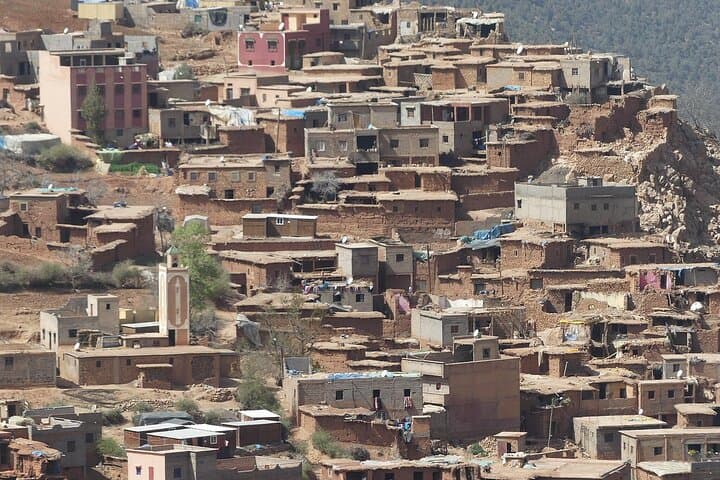
This corridor has long been inhabited by Berber communities who maintain terraced agriculture and traditional stone buildings; argan cooperatives are a modern extension of local craft economies.
Argan woodlands and water resources are fragile—stay on paths, avoid single-use plastic, and buy from local cooperatives to support sustainable livelihoods.
Marrakesh Indeed operates guided outdoor trips and adventures with an emphasis on safety, stewardship, and memorable experiences.
The van peels away from Marrakech and the city heat gives up to a ribbon of road that climbs into the Atlas foothills. Rivers flash like living seams—Sitti-Fatma daring you toward cool spray—while red-streaked hills roll past the window. Small stone homes and argan trees dot terraces; women at cooperatives lift jars of oil and offer tea and honey.
The van peels away from Marrakech and the city heat gives up to a ribbon of road that climbs into the Atlas foothills. Rivers flash like living seams—Sitti-Fatma daring you toward cool spray—while red-streaked hills roll past the window. Small stone homes and argan trees dot terraces; women at cooperatives lift jars of oil and offer tea and honey.
The route visits four distinct valleys: the first, the Ourika corridor with its river and cascades; the second, the Oukaimeden-facing valley with old stone enclosures and fresher air; then a sweep of pastoral valleys with grazing sheep, argan and fruit trees; finally a high terrace at about 1,780 m for lunch and a 360° sweep of villages and ridgelines. Geologically the area sits on Atlas foothills where folded rock and alluvial soils create steep drains and colourful slopes. Culturally this is Berber country—cooperatives for argan oil, simple breads, and mint tea anchor the visit.
Practical notes: expect 6–9 hours total, roughly 1 hour drive to the first valley and another ~45 minutes to the second; most of the day is sightseeing with short, uneven village walks and a brief waterfall approach on dirt paths. Bring sturdy walking shoes, sun protection and a light jacket for higher, wind-exposed terraces. Water is provided, and meals typically include local breads, tajine and fruit. The tour is suitable for most fitness levels but includes some unpaved surfaces and occasional short climbs—move at your own pace and respect local property and eco-rules to keep the valleys healthy for the communities that rely on them.