THE ADVENTURE COLLECTIVE® · Independent discovery and booking for outdoor travel

Wander among retired icons of the Strip at The Neon Museum’s outdoor Boneyard. This timed, mobile-ticket experience packs decades of Las Vegas design, history and restoration into a 45–60 minute walk.
Wander among retired icons of the Strip at The Neon Museum’s outdoor Boneyard. This timed, mobile-ticket experience packs decades of Las Vegas design, history and restoration into a 45–60 minute walk.
You step through a low gate and the city’s bright persona changes tone: here, retired giants of light recline on desert gravel, their tubes dark but their shapes still bold against the blue Nevada sky.
Verified experiences and guided adventures in the surrounding area.
Operated by The Neon Museum · Las Vegas, Nevada
You step through a low gate and the city’s bright persona changes tone: here, retired giants of light recline on desert gravel, their tubes dark but their shapes still bold against the blue Nevada sky.
The Neon Museum’s Boneyard is an outdoor archive of Las Vegas signage from the 1930s to today—27 restored signs that illuminate program nights and more than 200 unrestored pieces that show paint, wiring and time. The collection maps the city’s commercial boom, changes in typography and the mid‑century optimism that shaped the Strip and downtown.
Geology is subtle but present: compacted desert soil and summer heat put restoration work on a deadline, and wind-blown grit is part of each sign’s aging. Culturally, the Neon Museum documents an industry of spectacle—hotels, casinos and showrooms—that defined local identity and drew millions.
Practical guidance: admission is timed (45–60 minutes suggested), mobile tickets accepted; bring sun protection and water—much of the route is exposed. The site is largely wheelchair accessible but uneven surfaces and sign internals can require care. Download the free museum app for supplemental audio and sign histories, and plan an early‑evening visit if you want photos of illuminated restorations during scheduled lighting events.
Staffed museum experts are on hand to answer questions; note the museum operates outdoors and may close in severe weather. For visitors interested in design, restoration techniques, or Las Vegas history, the Neon Museum offers a compact, walkable lesson in how electric signs shaped a city’s story.
easy.
45–60 minutes.
Suitable for all fitness levels; expect standing and short walks on compacted or gravel surfaces
Most visitors spend 45–60 minutes wandering the Boneyard; longer if you use the app or join a scheduled illuminated-sign program.
Yes—admission is for a timed entry and tickets are mobile; note the operator’s policy is all sales final, so check the time before purchase.
The site is wheelchair- and stroller-accessible, but some paths are gravel and certain sign areas may be uneven—staff can advise on the easiest routes.
Photography is allowed; tripods may be restricted during busy hours or special events—check with staff on arrival for rules about lighting programs.
Founded to preserve Las Vegas’ commercial-sign heritage, the museum collects signage spanning the 1930s through modern neon restorations that chart the city’s development.
Restoration teams balance historical integrity with modern materials, and the site manages foot traffic and lighting events to reduce wear and minimize impact on nearby residential areas.
The Neon Museum operates guided outdoor trips and adventures with an emphasis on safety, stewardship, and memorable experiences.
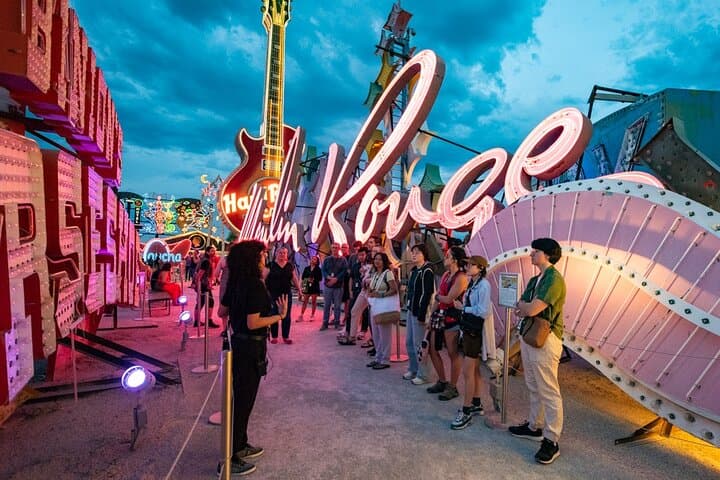
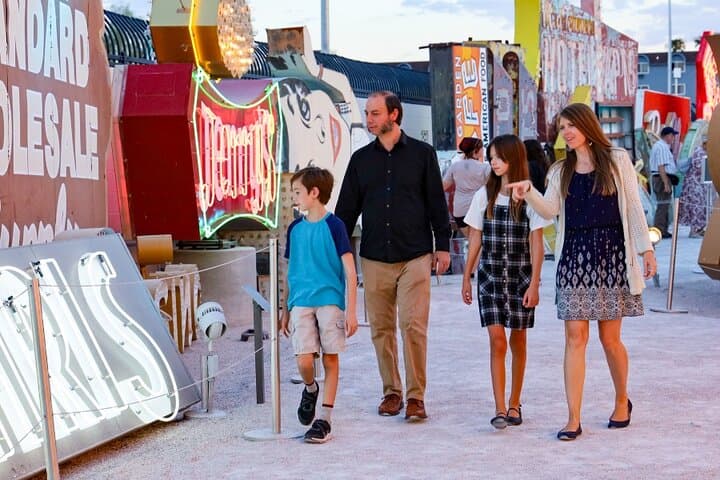

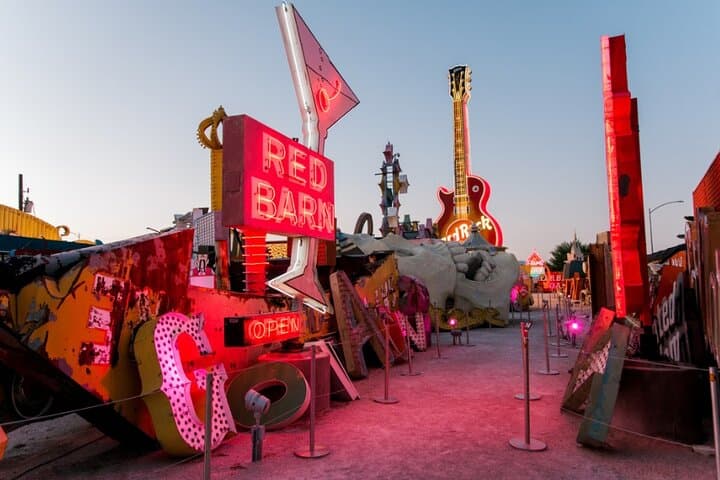
You step through a low gate and the city’s bright persona changes tone: here, retired giants of light recline on desert gravel, their tubes dark but their shapes still bold against the blue Nevada sky.
You step through a low gate and the city’s bright persona changes tone: here, retired giants of light recline on desert gravel, their tubes dark but their shapes still bold against the blue Nevada sky.
The Neon Museum’s Boneyard is an outdoor archive of Las Vegas signage from the 1930s to today—27 restored signs that illuminate program nights and more than 200 unrestored pieces that show paint, wiring and time. The collection maps the city’s commercial boom, changes in typography and the mid‑century optimism that shaped the Strip and downtown.
Geology is subtle but present: compacted desert soil and summer heat put restoration work on a deadline, and wind-blown grit is part of each sign’s aging. Culturally, the Neon Museum documents an industry of spectacle—hotels, casinos and showrooms—that defined local identity and drew millions.
Practical guidance: admission is timed (45–60 minutes suggested), mobile tickets accepted; bring sun protection and water—much of the route is exposed. The site is largely wheelchair accessible but uneven surfaces and sign internals can require care. Download the free museum app for supplemental audio and sign histories, and plan an early‑evening visit if you want photos of illuminated restorations during scheduled lighting events.
Staffed museum experts are on hand to answer questions; note the museum operates outdoors and may close in severe weather. For visitors interested in design, restoration techniques, or Las Vegas history, the Neon Museum offers a compact, walkable lesson in how electric signs shaped a city’s story.