THE ADVENTURE COLLECTIVE® · Independent discovery and booking for outdoor travel

Walk through immersive galleries that tell the American story of World War II on a compact downtown campus. This guide covers what to expect, timing, accessibility and practical tips for visiting The National WWII Museum in New Orleans.
Walk through immersive galleries that tell the American story of World War II on a compact downtown campus. This guide covers what to expect, timing, accessibility and practical tips for visiting The National WWII Museum in New Orleans.
You step off Magazine Street into a block of vaulted glass and concrete where the past reaches out in letters, uniforms and engines. Light from the Mississippi slants through high windows and the roar of the river seems to press the story forward—this is a place built to make history feel immediate.
Verified experiences and guided adventures in the surrounding area.
Operated by National WWII Museum · New Orleans, Louisiana
You step off Magazine Street into a block of vaulted glass and concrete where the past reaches out in letters, uniforms and engines. Light from the Mississippi slants through high windows and the roar of the river seems to press the story forward—this is a place built to make history feel immediate.
The museum began as the National D-Day Museum and expanded into a five-pavilion campus that Congress designated the official WWII museum of the United States. Galleries chronicle the European and Pacific theaters with oral histories, restored artifacts and full-scale vehicles; behind the displays, conservators work to preserve fragile uniforms, documents and craft. The site sits on the edge of downtown New Orleans, where the city’s low delta plain and the nearby river shaped logistics and industry long before the war.
Culturally the museum links national memory to local identity: New Orleans’ port and shipbuilding legacy—most notably Higgins boats—are woven through the exhibits and live in the restoration bays.
Plan to spend 2–3 hours; popular galleries and the Road to Berlin / Road to Tokyo exhibits demand time. Purchase a timed, mobile ticket in advance to avoid lines, arrive early to avoid crowds, and reserve any special programs such as the 4D cinema or guided tours.
Practical tips: wear comfortable shoes for standing and walking, carry a refillable water bottle (no food in galleries), and leave large backpacks at the entry if possible. The museum is wheelchair accessible and offers climate-controlled galleries—summer humidity is kept outside, but cooler rooms reward a light layer.
easy.
2–3 hours.
Light to moderate—requires standing and walking on indoor, flat surfaces; museum notes a moderate fitness level is recommended
Plan 2–3 hours for the main exhibits; allow extra time if you want to see special galleries, the 4D film or dine at the on-site restaurant.
Yes—general admission tickets are date- and time-specific; book a mobile ticket in advance to secure your entry slot.
Yes—the museum is wheelchair accessible and provides elevators and accessible restrooms; contact the museum for additional accommodations.
Photography is permitted in many galleries, but flash and tripods are typically restricted to protect artifacts—follow posted rules.
The museum grew from the National D-Day Museum and has expanded into a multi-pavilion campus that emphasizes the American experience in WWII, including local shipbuilding contributions like Higgins boats.
The museum follows artifact preservation best practices—respect exhibit rules (no flash, no touching) and use recycling and waste stations on campus to reduce visitor impact.
National WWII Museum operates guided outdoor trips and adventures with an emphasis on safety, stewardship, and memorable experiences.
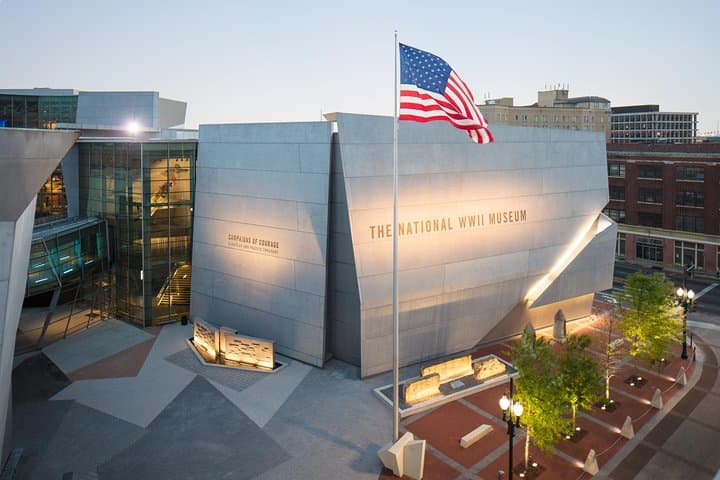
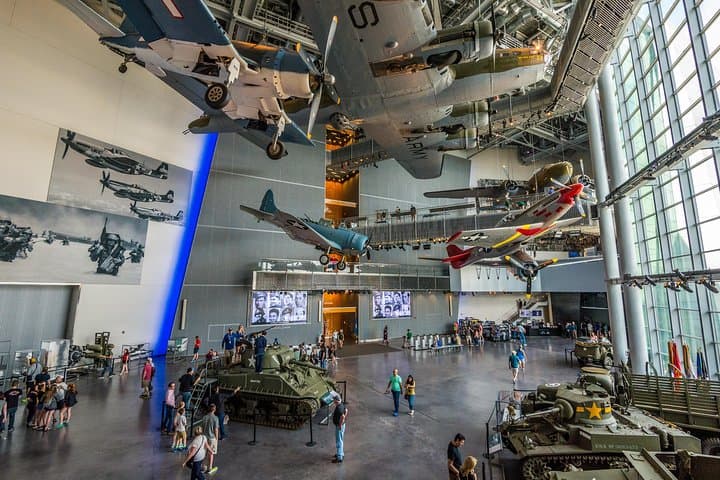
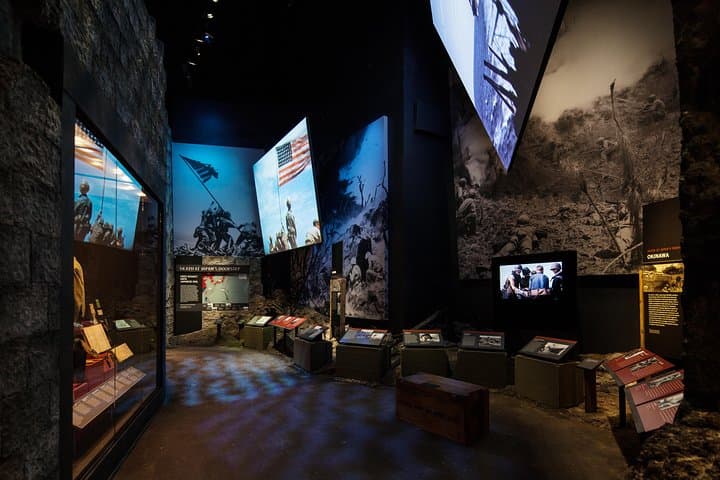
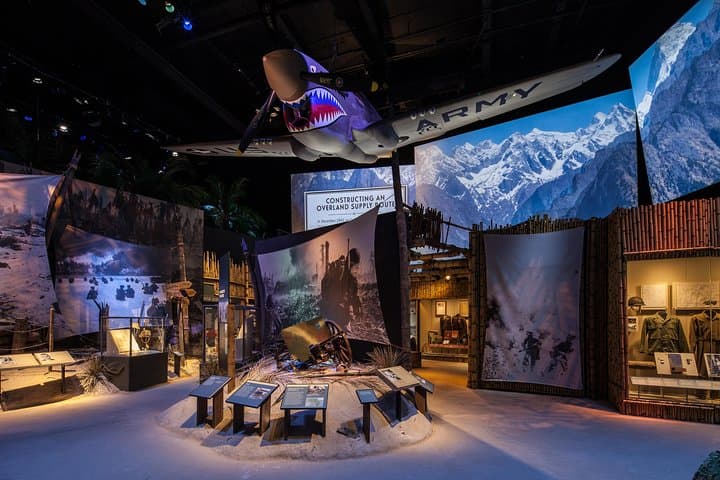
You step off Magazine Street into a block of vaulted glass and concrete where the past reaches out in letters, uniforms and engines. Light from the Mississippi slants through high windows and the roar of the river seems to press the story forward—this is a place built to make history feel immediate.
You step off Magazine Street into a block of vaulted glass and concrete where the past reaches out in letters, uniforms and engines. Light from the Mississippi slants through high windows and the roar of the river seems to press the story forward—this is a place built to make history feel immediate.
The museum began as the National D-Day Museum and expanded into a five-pavilion campus that Congress designated the official WWII museum of the United States. Galleries chronicle the European and Pacific theaters with oral histories, restored artifacts and full-scale vehicles; behind the displays, conservators work to preserve fragile uniforms, documents and craft. The site sits on the edge of downtown New Orleans, where the city’s low delta plain and the nearby river shaped logistics and industry long before the war.
Culturally the museum links national memory to local identity: New Orleans’ port and shipbuilding legacy—most notably Higgins boats—are woven through the exhibits and live in the restoration bays.
Plan to spend 2–3 hours; popular galleries and the Road to Berlin / Road to Tokyo exhibits demand time. Purchase a timed, mobile ticket in advance to avoid lines, arrive early to avoid crowds, and reserve any special programs such as the 4D cinema or guided tours.
Practical tips: wear comfortable shoes for standing and walking, carry a refillable water bottle (no food in galleries), and leave large backpacks at the entry if possible. The museum is wheelchair accessible and offers climate-controlled galleries—summer humidity is kept outside, but cooler rooms reward a light layer.