THE ADVENTURE COLLECTIVE® · Independent discovery and booking for outdoor travel

A compact, 7–8 hour day tour from Seoul that brings you to the Third Tunnel, Dora Observatory and Imjingak—sites that stage the history, geology and ongoing realities of Korea’s division. Learn what to expect, practical logistics, and how to prepare for shifting security and weather conditions.
A compact, 7–8 hour day tour from Seoul that brings you to the Third Tunnel, Dora Observatory and Imjingak—sites that stage the history, geology and ongoing realities of Korea’s division. Learn what to expect, practical logistics, and how to prepare for shifting security and weather conditions.
You step off the bus into Imjingak’s wide concrete plaza and the air feels charged—the distant river and barbed wire seem to watch you back. The route pushes northward through low hills that once bore the weight of armies; now they hold observation posts and museum cases. This full-day tour concentrates the politics, geology, and living history of the Demilitarized Zone into a single, disciplined loop.
Verified experiences and guided adventures in the surrounding area.
Operated by Seoul N Tour · Paju, Gyeonggi-do
You step off the bus into Imjingak’s wide concrete plaza and the air feels charged—the distant river and barbed wire seem to watch you back. The route pushes northward through low hills that once bore the weight of armies; now they hold observation posts and museum cases. This full-day tour concentrates the politics, geology, and living history of the Demilitarized Zone into a single, disciplined loop.
The DMZ was created after the 1953 armistice; sites like the Third Tunnel and Dora Observatory reveal both wartime strategy and Cold War aftershocks. Geologically the area is a low-lying peninsula carved by the Imjin River, with alluvial flats that contrast the rocky ridgelines where observation posts perch. Culturally, Paju’s border towns mix memorials—Freedom Bridge, Mangbaedan—and local markets selling goods from the fertile border soils, like Jangdan soybeans.
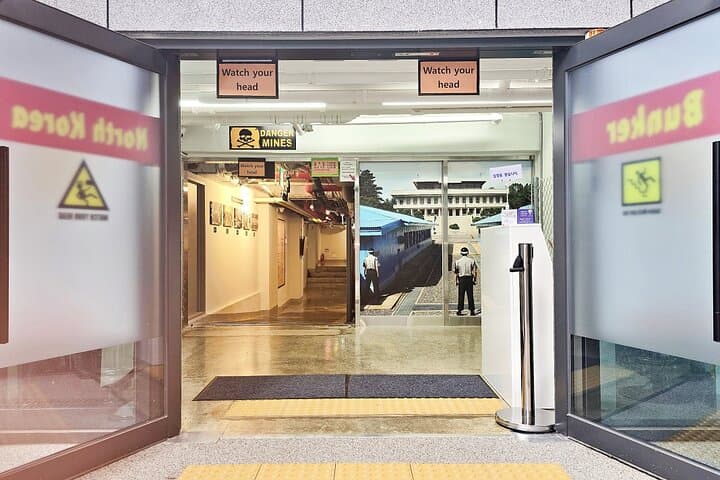
Expect museums and short films that contextualize artifacts, plus the visceral experience of descending into the Third Tunnel (narrow, low ceiling) or peering through Dora’s telescopes at Kijŏng-dong. On Mondays and some national holidays the tunnel and certain sites close; alternative stops include the DMZ Peace Gondola or Gloster Hill Memorial.
Practical guidance: bring your original passport, wear closed-toe shoes and layered outerwear, and plan for a 7–8 hour day with multiple short walks and stairs. Hydrate; carry snacks if you have dietary needs. Security rules and weather can alter the route without notice, so keep flexible plans in Seoul for the evening.
moderate.
7–8 hours.
Moderate fitness: able to stand, walk short distances, and climb stairs repeatedly.
Yes. An original passport is required for checkpoint processing—photocopies are not accepted and you will be denied entry without the original.
No. The Third Tunnel and other sites close on specific Mondays, national holidays, and during military inspections; the operator will substitute alternate sites when closures occur.
Photography rules vary: telescopes and outdoor observatories generally allow photos, but military areas and some indoor exhibits may restrict photography—follow your guide’s instructions.
Tours are conducted with official permissions and English-speaking guides; however, the DMZ is an active military area subject to sudden closures and strict rules—follow briefings and the guide’s directions at all times.
The DMZ formed after the 1953 armistice; many sites—Freedom Bridge, the Third Tunnel—directly reflect wartime movements and the long-standing division between North and South Korea.
Restricted human access has unintentionally created one of the peninsula’s most important refuges for wildlife; visitors are asked to minimize disturbance and follow low-impact guidelines.
Seoul N Tour operates guided outdoor trips and adventures with an emphasis on safety, stewardship, and memorable experiences.
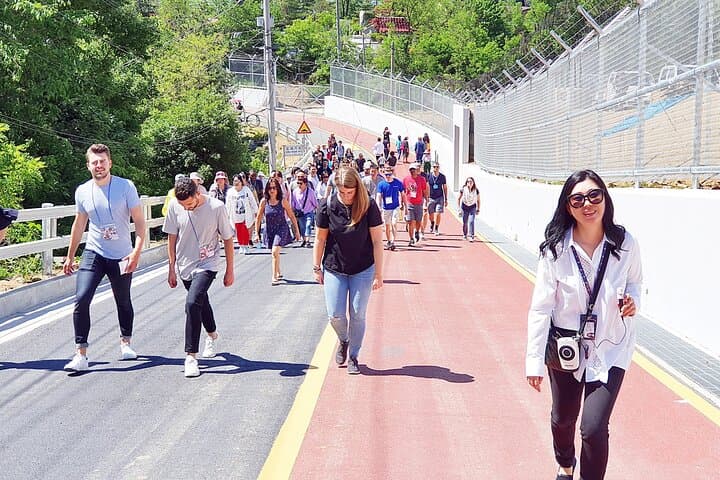
You step off the bus into Imjingak’s wide concrete plaza and the air feels charged—the distant river and barbed wire seem to watch you back. The route pushes northward through low hills that once bore the weight of armies; now they hold observation posts and museum cases. This full-day tour concentrates the politics, geology, and living history of the Demilitarized Zone into a single, disciplined loop.
You step off the bus into Imjingak’s wide concrete plaza and the air feels charged—the distant river and barbed wire seem to watch you back. The route pushes northward through low hills that once bore the weight of armies; now they hold observation posts and museum cases. This full-day tour concentrates the politics, geology, and living history of the Demilitarized Zone into a single, disciplined loop.
The DMZ was created after the 1953 armistice; sites like the Third Tunnel and Dora Observatory reveal both wartime strategy and Cold War aftershocks. Geologically the area is a low-lying peninsula carved by the Imjin River, with alluvial flats that contrast the rocky ridgelines where observation posts perch. Culturally, Paju’s border towns mix memorials—Freedom Bridge, Mangbaedan—and local markets selling goods from the fertile border soils, like Jangdan soybeans.
Expect museums and short films that contextualize artifacts, plus the visceral experience of descending into the Third Tunnel (narrow, low ceiling) or peering through Dora’s telescopes at Kijŏng-dong. On Mondays and some national holidays the tunnel and certain sites close; alternative stops include the DMZ Peace Gondola or Gloster Hill Memorial.
Practical guidance: bring your original passport, wear closed-toe shoes and layered outerwear, and plan for a 7–8 hour day with multiple short walks and stairs. Hydrate; carry snacks if you have dietary needs. Security rules and weather can alter the route without notice, so keep flexible plans in Seoul for the evening.