THE ADVENTURE COLLECTIVE® · Independent discovery and booking for outdoor travel

Step from the limousine into a landscape where the ground keeps secrets. The Cu Chi Tunnels VIP tour pairs air-conditioned transfer with on-site interpretation of the vast underground network used during the Vietnam War—an accessible half-day experience emphasizing history, engineering, and practical visitor guidance.
Step from the limousine into a landscape where the ground keeps secrets. The Cu Chi Tunnels VIP tour pairs air-conditioned transfer with on-site interpretation of the vast underground network used during the Vietnam War—an accessible half-day experience emphasizing history, engineering, and practical visitor guidance.
The road out of Ho Chi Minh hums with city heat; palms and scrub slide past the limousine window until the landscape tightens and the soil seems to press inward. At the Cu Chi site, the earth does more than sit: it shelters stories. Visitors step from air-conditioned comfort into a compact, scrubby plain where narrow bunkers and camouflaged trapdoors still pepper the ground, and the air holds the faint, metallic memory of conflict.
Verified experiences and guided adventures in the surrounding area.
Operated by Authentic Hanoi Homestay & Travel · Ho Chi Minh City, Ho Chi Minh
The road out of Ho Chi Minh hums with city heat; palms and scrub slide past the limousine window until the landscape tightens and the soil seems to press inward. At the Cu Chi site, the earth does more than sit: it shelters stories. Visitors step from air-conditioned comfort into a compact, scrubby plain where narrow bunkers and camouflaged trapdoors still pepper the ground, and the air holds the faint, metallic memory of conflict.
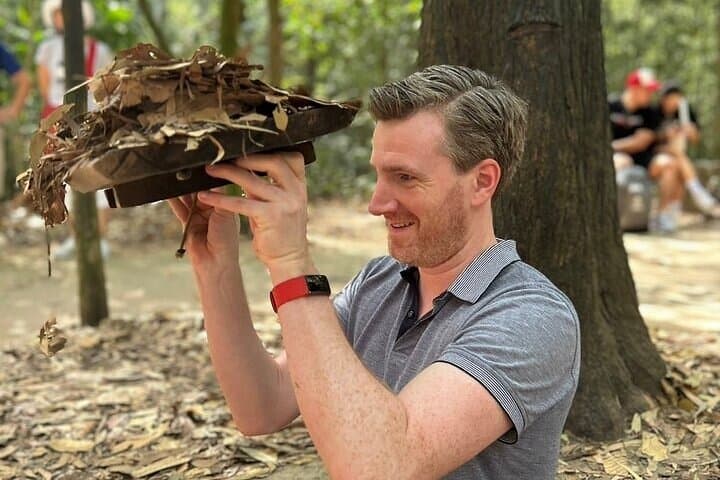
Carved from alluvial clay and laterite, the tunnel network—expanded over decades—became an underground village and fighting system during the Vietnam War. Guides explain how supply shafts, kitchens, field hospitals and hidden chambers were stacked like a vertical village; guerrilla ingenuity is on display in booby-trap remnants and replica rooms. The area’s flat geology made concealment effective, while nearby rubber plantations and scrub provided cover for movement above ground.
Culturally, Cu Chi is a place of contested memory: a point of national resilience for Vietnamese visitors and a sober lesson for international travelers. Interpretive sites balance artifacts, preserved tunnel sections, and demonstrations that aim to show everyday wartime mechanics rather than glorify combat.
Practical guidance: arrive early to avoid midday heat, wear closed shoes for uneven paths, and bring a light jacket if you plan to enter preserved tunnel sections—temps drop underground. Respect signage: many original chambers are fragile and closed to protect them. The tour suits a broad range of travelers but those with claustrophobia or mobility issues should avoid crawling sections. Hydrate, budget a half-day for travel time from District 1, and expect a mix of outdoor walking and museum-style interpretation.
easy.
6 hours.
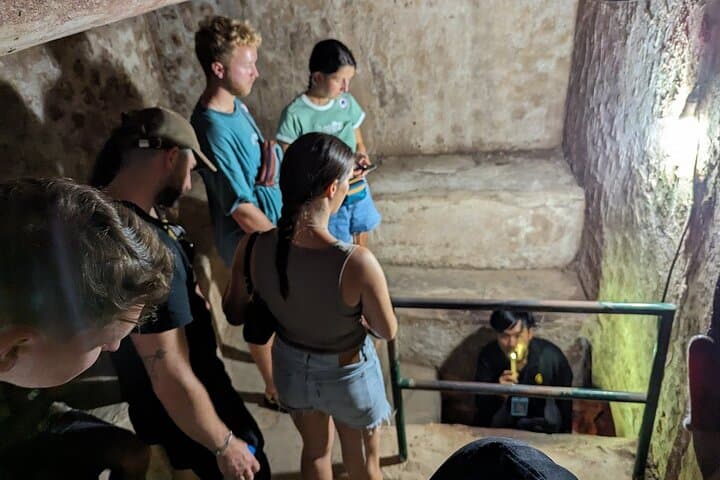
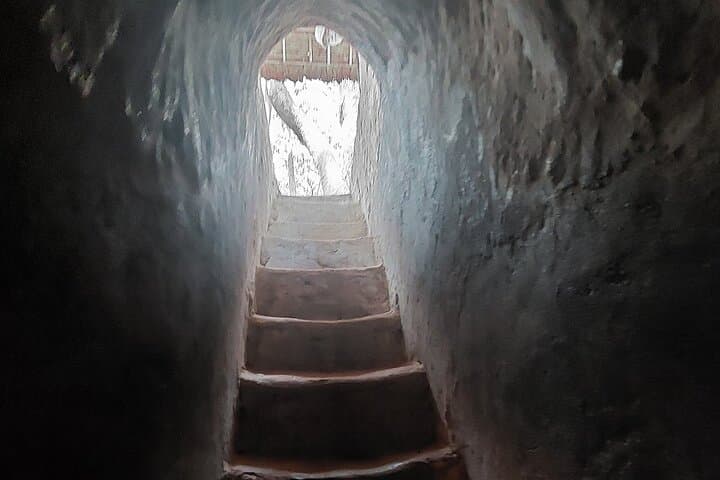
Suitable for travelers in average physical condition; involves short walks and some stairs.
The Cu Chi complex is about 60–70 km northwest of District 1; expect roughly 1.5–2 hours each way depending on traffic.
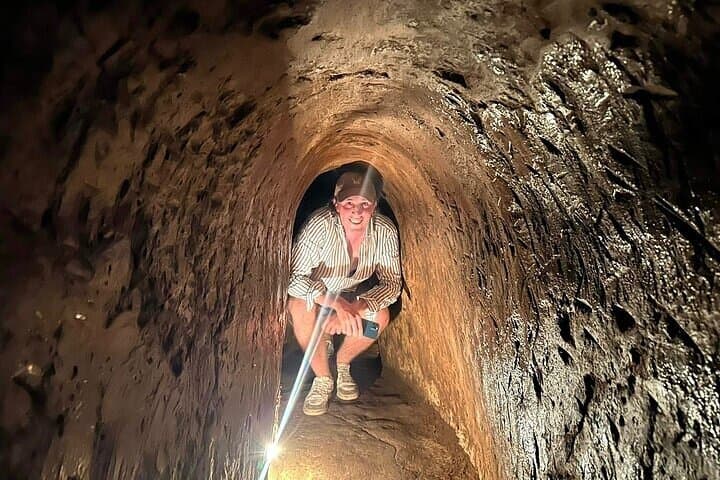
Some sections are preserved and widened for visitor access, but original narrow passages are often closed; crawling demonstrations use reconstructed tunnels.
Yes. Tours commonly include English-speaking guides who explain history, tunnels, and local context.
Yes, but supervise children around exhibits and avoid tunnel crawls for young or anxious kids; some demonstrations include mock explosions or weapon displays that may be unsettling.
The Cu Chi tunnels were expanded by Viet Cong forces into more than 200 km of underground passages used for living, command, and supply during the Vietnam War era.
Conservation focuses on stabilizing original tunnel sections and managing visitor access; stick to designated paths, avoid touching artifacts, and follow guide instructions to limit wear.
Authentic Hanoi Homestay & Travel operates guided outdoor trips and adventures with an emphasis on safety, stewardship, and memorable experiences.
The road out of Ho Chi Minh hums with city heat; palms and scrub slide past the limousine window until the landscape tightens and the soil seems to press inward. At the Cu Chi site, the earth does more than sit: it shelters stories. Visitors step from air-conditioned comfort into a compact, scrubby plain where narrow bunkers and camouflaged trapdoors still pepper the ground, and the air holds the faint, metallic memory of conflict.
The road out of Ho Chi Minh hums with city heat; palms and scrub slide past the limousine window until the landscape tightens and the soil seems to press inward. At the Cu Chi site, the earth does more than sit: it shelters stories. Visitors step from air-conditioned comfort into a compact, scrubby plain where narrow bunkers and camouflaged trapdoors still pepper the ground, and the air holds the faint, metallic memory of conflict.
Carved from alluvial clay and laterite, the tunnel network—expanded over decades—became an underground village and fighting system during the Vietnam War. Guides explain how supply shafts, kitchens, field hospitals and hidden chambers were stacked like a vertical village; guerrilla ingenuity is on display in booby-trap remnants and replica rooms. The area’s flat geology made concealment effective, while nearby rubber plantations and scrub provided cover for movement above ground.
Culturally, Cu Chi is a place of contested memory: a point of national resilience for Vietnamese visitors and a sober lesson for international travelers. Interpretive sites balance artifacts, preserved tunnel sections, and demonstrations that aim to show everyday wartime mechanics rather than glorify combat.
Practical guidance: arrive early to avoid midday heat, wear closed shoes for uneven paths, and bring a light jacket if you plan to enter preserved tunnel sections—temps drop underground. Respect signage: many original chambers are fragile and closed to protect them. The tour suits a broad range of travelers but those with claustrophobia or mobility issues should avoid crawling sections. Hydrate, budget a half-day for travel time from District 1, and expect a mix of outdoor walking and museum-style interpretation.