THE ADVENTURE COLLECTIVE® · Independent discovery and booking for outdoor travel

Take a half-day journey from Ho Chi Minh City into the Cu Chi Tunnels — an underground network of living quarters, hospitals and traps used during the Vietnam War. This accessible tour combines transport, guided interpretation and a look at both below-ground passages and above-ground artillery displays.
Take a half-day journey from Ho Chi Minh City into the Cu Chi Tunnels — an underground network of living quarters, hospitals and traps used during the Vietnam War. This accessible tour combines transport, guided interpretation and a look at both below-ground passages and above-ground artillery displays.
You step out of the minivan into humid air thick with leaves and the smell of earth — the jungle seems to press close, as if the land itself is holding its breath. A narrow path leads to low, unassuming entrances where the ground is folded and patched by decades of history. Inside, the passageways feel purposeful: dark, cool, and designed to conceal every movement.
Verified experiences and guided adventures in the surrounding area.
Operated by TREVOPEDIA · Cu Chi, Ho Chi Minh
You step out of the minivan into humid air thick with leaves and the smell of earth — the jungle seems to press close, as if the land itself is holding its breath. A narrow path leads to low, unassuming entrances where the ground is folded and patched by decades of history. Inside, the passageways feel purposeful: dark, cool, and designed to conceal every movement.
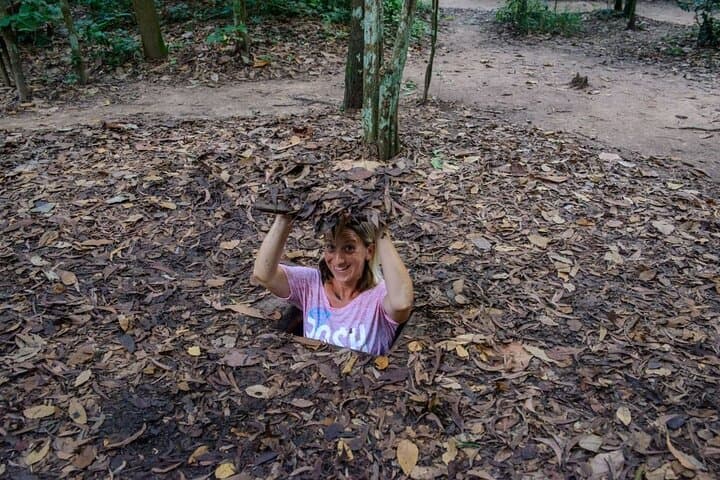
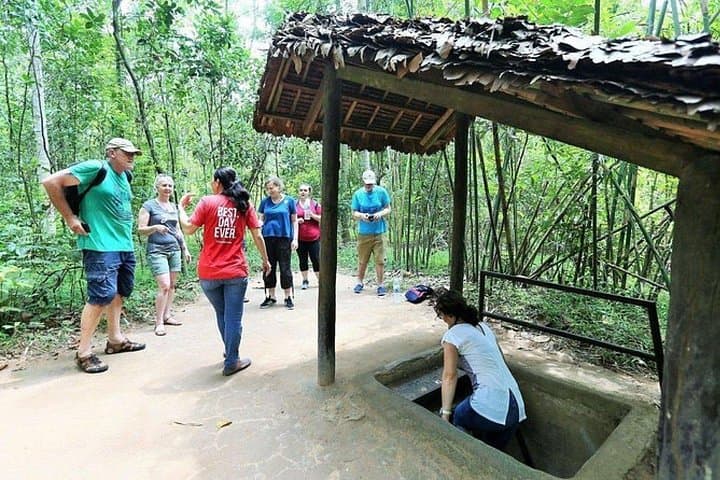
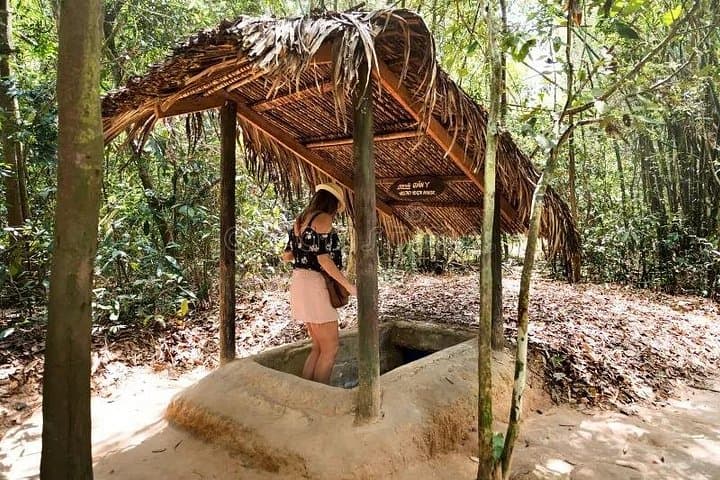
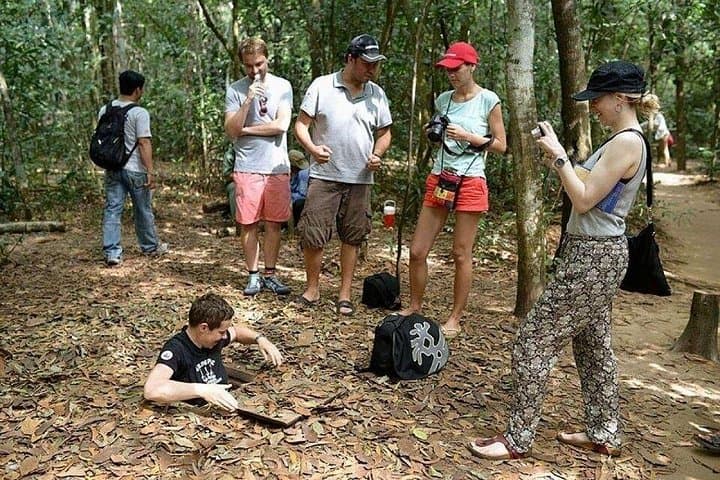
The Cu Chi Tunnels were an improvised underground world used by Viet Cong fighters during the conflict of the mid-20th century. Sections open to visitors reveal living quarters, kitchens, armories and field hospitals carved into laterite soil that drains quickly in the wet season. Above ground, you’ll find remnants of artillery and displays showing how local ingenuity—hidden doors, collapsed trap pits, and camouflaged openings—turned ordinary farm fields into defensive landscapes.
Culturally the site captures both hardship and resourcefulness: local guides often point out everyday items repurposed for survival, and nearby hamlets still serve cassava tea and local snacks used historically as rations.
Practical guidance: this tour runs about 5–6 hours including transport from Ho Chi Minh City; expect uneven paths and some short, low-ceiling tunnel sections (optional to enter). Wear closed-toe shoes, a light long-sleeve shirt for insects, and bring a refillable water bottle. Mornings are cooler and less crowded; afternoons can be hot and busy. Visitors with mobility concerns can see many exhibits above ground, but crawling sections are narrow. Respect the site’s history — follow guides, avoid touching fragile artifacts, and pack out trash to help preserve the area.
easy.
5–6 hours.
Suitable for most fitness levels; walking on uneven ground required and optional low-crawl sections may be uncomfortable for those with limited mobility.
The full experience including transport from Ho Chi Minh City is about 5–6 hours (300–360 minutes), with roughly 2–3 hours on-site depending on schedule.
Designated sections open to visitors are maintained for safety; narrow crawls are optional and supervised—follow guide instructions and avoid confined sections if you have claustrophobia or mobility limits.
Many above-ground exhibits and displays are accessible, but the underground tunnel sections are not suitable for wheelchairs; confirm pickup and drop-off accessibility with the operator.
Bring water, insect repellent, sturdy shoes, and your passport if required for booking; avoid large bags that are awkward on narrow paths and do not remove artifacts or disturb exhibits.
The Cu Chi network stretched for more than 250 kilometers and was expanded over decades to include living quarters, storage, medical bays and command tunnels used by Viet Cong units.
Visitor traffic is managed to protect fragile earthen walls and exhibits; stick to marked paths, avoid touching tunnel structures, and support local conservation efforts by disposing of waste properly.
TREVOPEDIA operates guided outdoor trips and adventures with an emphasis on safety, stewardship, and memorable experiences.
You step out of the minivan into humid air thick with leaves and the smell of earth — the jungle seems to press close, as if the land itself is holding its breath. A narrow path leads to low, unassuming entrances where the ground is folded and patched by decades of history. Inside, the passageways feel purposeful: dark, cool, and designed to conceal every movement.
You step out of the minivan into humid air thick with leaves and the smell of earth — the jungle seems to press close, as if the land itself is holding its breath. A narrow path leads to low, unassuming entrances where the ground is folded and patched by decades of history. Inside, the passageways feel purposeful: dark, cool, and designed to conceal every movement.
The Cu Chi Tunnels were an improvised underground world used by Viet Cong fighters during the conflict of the mid-20th century. Sections open to visitors reveal living quarters, kitchens, armories and field hospitals carved into laterite soil that drains quickly in the wet season. Above ground, you’ll find remnants of artillery and displays showing how local ingenuity—hidden doors, collapsed trap pits, and camouflaged openings—turned ordinary farm fields into defensive landscapes.
Culturally the site captures both hardship and resourcefulness: local guides often point out everyday items repurposed for survival, and nearby hamlets still serve cassava tea and local snacks used historically as rations.
Practical guidance: this tour runs about 5–6 hours including transport from Ho Chi Minh City; expect uneven paths and some short, low-ceiling tunnel sections (optional to enter). Wear closed-toe shoes, a light long-sleeve shirt for insects, and bring a refillable water bottle. Mornings are cooler and less crowded; afternoons can be hot and busy. Visitors with mobility concerns can see many exhibits above ground, but crawling sections are narrow. Respect the site’s history — follow guides, avoid touching fragile artifacts, and pack out trash to help preserve the area.