THE ADVENTURE COLLECTIVE® · Independent discovery and booking for outdoor travel

A compact, five‑hour excursion from Ho Chi Minh City that takes you into preserved sections of the Cu Chi tunnel network. Expect short walks, optional narrow tunnel crawls, and direct historical context from local guides.
A compact, five‑hour excursion from Ho Chi Minh City that takes you into preserved sections of the Cu Chi tunnel network. Expect short walks, optional narrow tunnel crawls, and direct historical context from local guides.
You step into an air‑conditioned van in central District 1 and the city’s heat thins behind you as the road unfolds toward low, scrubby woods. Arriving at the Cu Chi complex, the forest seems to press close, leaves brushing the tops of rusted relics while wooden trapdoor covers sit flush with the ground, waiting like a secret. The guide points to a low aperture and, for a moment, you sense the architecture of concealment around you—tight, dark, designed to hide and move.
Verified experiences and guided adventures in the surrounding area.
Operated by Nha Trang Local Tours · Ho Chi Minh City, Ho Chi Minh
You step into an air‑conditioned van in central District 1 and the city’s heat thins behind you as the road unfolds toward low, scrubby woods. Arriving at the Cu Chi complex, the forest seems to press close, leaves brushing the tops of rusted relics while wooden trapdoor covers sit flush with the ground, waiting like a secret. The guide points to a low aperture and, for a moment, you sense the architecture of concealment around you—tight, dark, designed to hide and move.
The tunnels themselves run through laterite and clay soils that lend unusual structural stability; engineers turned local materials into a subterranean network used by Viet Cong fighters for command, medical care, supplies and surprise attacks. Today roughly 120 kilometers of the original system are preserved at different sites, with reconstructed booby traps and firing ranges that explain tactics rather than glorify conflict.
Culturally the site is a living classroom: local guides translate wartime ingenuity in measured terms, and roadside vendors offer simple snacks and tea in the informal compound. Geologically you’ll notice the red-brown soil and shallow karst-like features that made digging practical.
Practical notes: the tour is about five hours including roundtrip transport and short walks; much of the visit is at ground level but there are optional narrow tunnel sections that require crouching or crawling. Wear closed-toe shoes, bring water and insect repellent, and plan your visit in the cooler morning hours to beat crowds and midday humidity. Respect signage, avoid touching fragile reconstructions, and be prepared for steep, low openings if you choose the crawl option.
easy.
5 hours.
Light fitness required—short walks and occasional crouching; not strenuous but requires mobility for low tunnel openings.
The total duration is approximately five hours and the tour includes hotel pickup and drop-off from central District 1 in Ho Chi Minh City.
No—there are demonstration tunnel sections; visitors can opt out of crawling and tour the above-ground exhibits instead.
The site is generally accessible for most ages, but tight tunnel sections and uneven ground make it unsuitable for those with severe mobility issues or certain medical conditions; check restrictions before booking.
Light snacks and an English-speaking guide are typically included in the tour package; confirm dietary needs when booking.
The Cu Chi tunnels were an extensive subterranean network used by Viet Cong fighters for shelter, logistics and operations during the Vietnam War; preserved sections now illustrate wartime living conditions and tactics.
Preservation balances access and protection: visitors should avoid touching reconstructions and stay on marked paths to limit erosion and damage to original tunnel structures.
Nha Trang Local Tours operates guided outdoor trips and adventures with an emphasis on safety, stewardship, and memorable experiences.
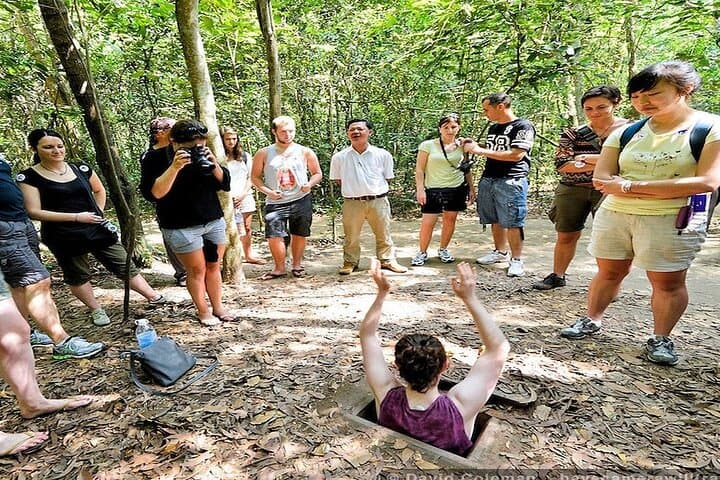


You step into an air‑conditioned van in central District 1 and the city’s heat thins behind you as the road unfolds toward low, scrubby woods. Arriving at the Cu Chi complex, the forest seems to press close, leaves brushing the tops of rusted relics while wooden trapdoor covers sit flush with the ground, waiting like a secret. The guide points to a low aperture and, for a moment, you sense the architecture of concealment around you—tight, dark, designed to hide and move.
You step into an air‑conditioned van in central District 1 and the city’s heat thins behind you as the road unfolds toward low, scrubby woods. Arriving at the Cu Chi complex, the forest seems to press close, leaves brushing the tops of rusted relics while wooden trapdoor covers sit flush with the ground, waiting like a secret. The guide points to a low aperture and, for a moment, you sense the architecture of concealment around you—tight, dark, designed to hide and move.
The tunnels themselves run through laterite and clay soils that lend unusual structural stability; engineers turned local materials into a subterranean network used by Viet Cong fighters for command, medical care, supplies and surprise attacks. Today roughly 120 kilometers of the original system are preserved at different sites, with reconstructed booby traps and firing ranges that explain tactics rather than glorify conflict.
Culturally the site is a living classroom: local guides translate wartime ingenuity in measured terms, and roadside vendors offer simple snacks and tea in the informal compound. Geologically you’ll notice the red-brown soil and shallow karst-like features that made digging practical.
Practical notes: the tour is about five hours including roundtrip transport and short walks; much of the visit is at ground level but there are optional narrow tunnel sections that require crouching or crawling. Wear closed-toe shoes, bring water and insect repellent, and plan your visit in the cooler morning hours to beat crowds and midday humidity. Respect signage, avoid touching fragile reconstructions, and be prepared for steep, low openings if you choose the crawl option.