THE ADVENTURE COLLECTIVE® · Independent discovery and booking for outdoor travel

Visit the Copalita pyramids outside Huatulco for a compact, guided look at more than 2,000 years of coastal Oaxacan history. Expect uneven stone paths, estuary views, a small museum and a short downtown stop.
Visit the Copalita pyramids outside Huatulco for a compact, guided look at more than 2,000 years of coastal Oaxacan history. Expect uneven stone paths, estuary views, a small museum and a short downtown stop.
You step off the air-conditioned van and the Pacific breeze meets the low stone platforms—salt and scrub lending a sharp edge to the warm air. The Copalita pyramids sit on a coastal plain where river and sea push the same story forward: people chose this shore for trade, food and ceremony more than two millennia ago.
Verified experiences and guided adventures in the surrounding area.
Operated by Homietours · Huatulco, Oaxaca
You step off the air-conditioned van and the Pacific breeze meets the low stone platforms—salt and scrub lending a sharp edge to the warm air. The Copalita pyramids sit on a coastal plain where river and sea push the same story forward: people chose this shore for trade, food and ceremony more than two millennia ago.
Opened to the public in October 2010 as an eco‑archaeological site, Copalita blends exposed masonry platforms, ruinous stairways and broad viewpoints that look toward the bay. The site sits beside the Copalita River estuary and a small on‑site museum, offering context on the regional Oaxacan coastal cultures who built ceremonial centers, plazas and terraces here. Geology is visible underfoot—sandstone outcrops, alluvial deposits and mangrove sediments where the land meets the sea.
Expect a guided walk across compacted earth trails and uneven stone with stops at reconstructed structures and lookout points. Local guides interpret pottery styles, funerary evidence and coastal trade links rather than delivering grand myths: this is practical archaeology for a public audience. A short visit to Huatulco’s downtown (La Crucecita) usually follows, where local markets and seafood stands reflect the living culture.
Practical notes: allow about 2–3 hours, bring sun protection and water, and wear closed shoes for uneven surfaces. Photographers will find simple compositions—ruin geometry against sky and shoreline—while birders can scan the estuary for shorebirds. The experience balances cultural history with the tactile reality of coastal Oaxaca—quiet stones, impatient surf, and the plain business of stewardship and visitation.
easy.
2–3 hours.
Suitable for most fitness levels; requires short walks on uneven ground and occasional low steps.
Yes—this tour includes entrance fees and a wristband per the operator’s inclusions.
Children can enjoy the site but there are uneven surfaces and steps; it’s not fully wheelchair accessible and not recommended for serious back or spinal issues.
The guided portion is approximately 2–3 hours, often including a short downtown stop afterward.
Photography is allowed for personal use; tripods may be restricted in delicate areas—follow guide instructions on equipment use.
Copalita preserves ceremonial and residential structures from coastal Oaxacan cultures more than 2,000 years old and interprets their ties to maritime trade routes and riverine resources.
The site operates as an eco‑archaeological center emphasizing controlled visitor routes and interpretation to limit impact; stick to marked paths and avoid touching exposed masonry.
Homietours operates guided outdoor trips and adventures with an emphasis on safety, stewardship, and memorable experiences.
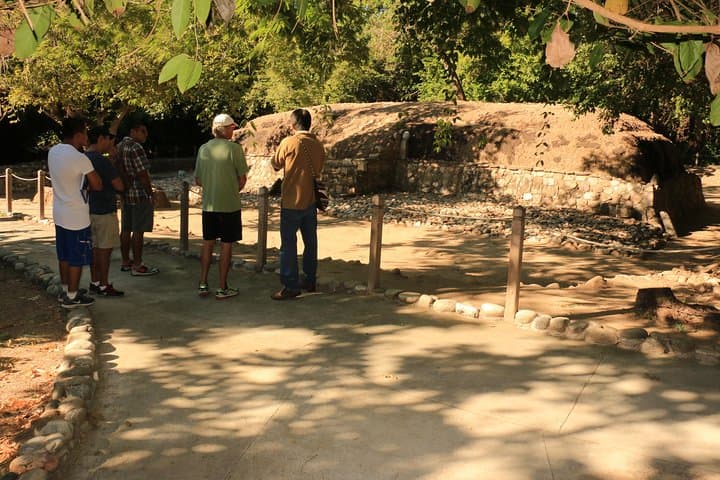


You step off the air-conditioned van and the Pacific breeze meets the low stone platforms—salt and scrub lending a sharp edge to the warm air. The Copalita pyramids sit on a coastal plain where river and sea push the same story forward: people chose this shore for trade, food and ceremony more than two millennia ago.
You step off the air-conditioned van and the Pacific breeze meets the low stone platforms—salt and scrub lending a sharp edge to the warm air. The Copalita pyramids sit on a coastal plain where river and sea push the same story forward: people chose this shore for trade, food and ceremony more than two millennia ago.
Opened to the public in October 2010 as an eco‑archaeological site, Copalita blends exposed masonry platforms, ruinous stairways and broad viewpoints that look toward the bay. The site sits beside the Copalita River estuary and a small on‑site museum, offering context on the regional Oaxacan coastal cultures who built ceremonial centers, plazas and terraces here. Geology is visible underfoot—sandstone outcrops, alluvial deposits and mangrove sediments where the land meets the sea.
Expect a guided walk across compacted earth trails and uneven stone with stops at reconstructed structures and lookout points. Local guides interpret pottery styles, funerary evidence and coastal trade links rather than delivering grand myths: this is practical archaeology for a public audience. A short visit to Huatulco’s downtown (La Crucecita) usually follows, where local markets and seafood stands reflect the living culture.
Practical notes: allow about 2–3 hours, bring sun protection and water, and wear closed shoes for uneven surfaces. Photographers will find simple compositions—ruin geometry against sky and shoreline—while birders can scan the estuary for shorebirds. The experience balances cultural history with the tactile reality of coastal Oaxaca—quiet stones, impatient surf, and the plain business of stewardship and visitation.