THE ADVENTURE COLLECTIVE® · Independent discovery and booking for outdoor travel

A five‑day circuit through northern Peru’s cloud forest that pairs cliffside sarcophagi and stone fortresses with the thunder of Gocta Falls. Expect moderate hikes, cable‑car access to Kuelap, and immersive local culture.
A five‑day circuit through northern Peru’s cloud forest that pairs cliffside sarcophagi and stone fortresses with the thunder of Gocta Falls. Expect moderate hikes, cable‑car access to Kuelap, and immersive local culture.
Morning mist lifts off the Andean ridges as a cable car hums toward Kuelap, stone walls rising like an ancient city reclaiming the sky. Walkways narrow, circular house foundations press close, and the wind seems to push visitors through apertures once used for ceremony and defense.
Verified experiences and guided adventures in the surrounding area.
Operated by Kuelap Adventure · Chachapoyas, Amazonas
Morning mist lifts off the Andean ridges as a cable car hums toward Kuelap, stone walls rising like an ancient city reclaiming the sky. Walkways narrow, circular house foundations press close, and the wind seems to push visitors through apertures once used for ceremony and defense.
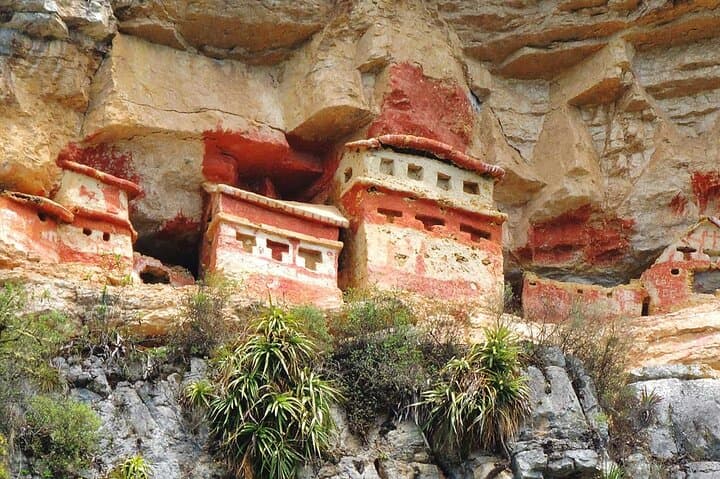
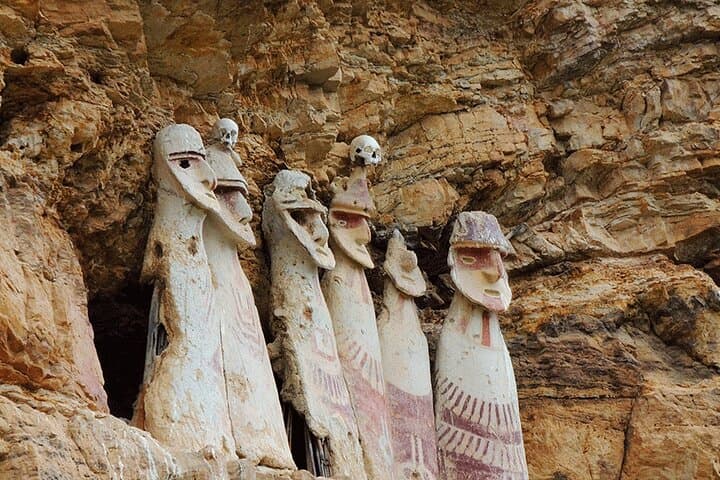
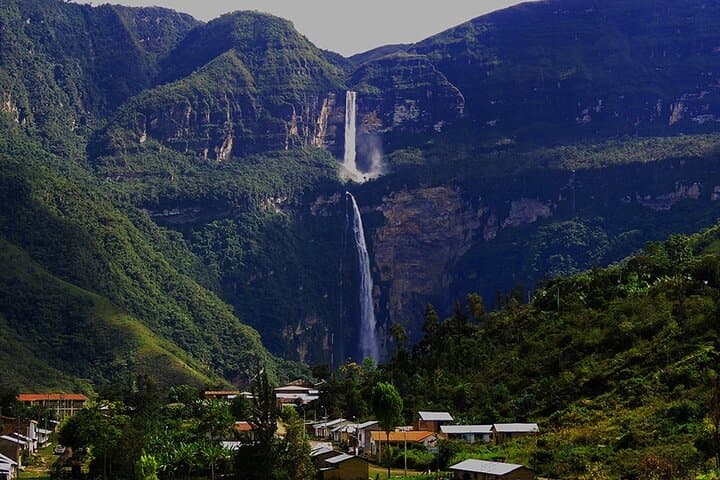
This five‑day circuit threads Chachapoyas’ highlights: the 20‑meter high walls of Kuelap; cliff‑perched sarcophagi at Karajía; the painted funeral towers of Revash; the Leymebamba Museum’s collection of 219 mummies; and the two‑step plunge of Gocta Falls (about 771 m). Geology here is dramatic—deep canyons cut by the Sonche and Utcubamba rivers, limestone caverns like Quiocta with illuminated stalactites, and terraced pre‑Hispanic roads that connect hilltop settlements.
Local culture remains tactile: Huancas potters still shape clay by hand and mountain villages maintain pastoral rhythms. Guides translate symbols carved into friezes and explain how the Chachapoya negotiated height, climate and isolation to build monumental sites.
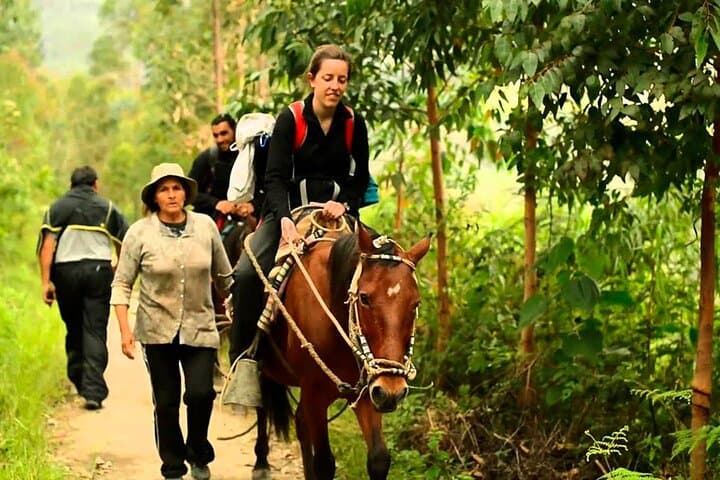
Practical guidance: expect moderate fitness demands—short steep walks (Kuelap involves a 30‑minute uphill approach from the cable car stop; Gocta is a 5 km round‑trip roughly 2 hours each way), uneven stone paths, and exposed viewpoints where vertigo is common. Bring layered clothing for temperatures that shift quickly with elevation (Chachapoyas sits around 2,300 m), sturdy hiking shoes, sun and rain protection, and cash for small purchases in villages. Caves are lit and have platforms, but the tour provides protective gear; still, a compact headlamp and good grip shoes improve comfort.
The route rewards curiosity: archaeology, cloud‑forest birds, and waterfalls that insist you pause and look up.
moderate.
5–6 days.
Suitable for travelers with regular aerobic fitness used to several hours of walking and short steep sections; comfortable with uneven ground and some elevation.
The trail from Cocachimba is about 5 km each way; allow roughly 2 hours one way depending on pace and stops.
Cable car tickets are listed as included in the tour package; confirm at booking and bring any ID required for boarding.
Reaching Karajía requires a downhill walk of about 30 minutes from the drop‑off and some scrambling near viewpoints; visitors should be steady on feet and avoid edges if uncomfortable with heights.
Yes—the Leymebamba Museum displays about 219 mummies and associated artifacts; photography rules vary, so follow museum guidance.
The Chachapoya culture built fortified citadels, funerary towers and cliff sarcophagi centuries before Inca incorporation; many sites show continued local stewardship.
Many sites are fragile—stay on marked paths, avoid touching painted surfaces, and support local guides and community‑run museums to encourage sustainable tourism.
Kuelap Adventure operates guided outdoor trips and adventures with an emphasis on safety, stewardship, and memorable experiences.
Morning mist lifts off the Andean ridges as a cable car hums toward Kuelap, stone walls rising like an ancient city reclaiming the sky. Walkways narrow, circular house foundations press close, and the wind seems to push visitors through apertures once used for ceremony and defense.
Morning mist lifts off the Andean ridges as a cable car hums toward Kuelap, stone walls rising like an ancient city reclaiming the sky. Walkways narrow, circular house foundations press close, and the wind seems to push visitors through apertures once used for ceremony and defense.
This five‑day circuit threads Chachapoyas’ highlights: the 20‑meter high walls of Kuelap; cliff‑perched sarcophagi at Karajía; the painted funeral towers of Revash; the Leymebamba Museum’s collection of 219 mummies; and the two‑step plunge of Gocta Falls (about 771 m). Geology here is dramatic—deep canyons cut by the Sonche and Utcubamba rivers, limestone caverns like Quiocta with illuminated stalactites, and terraced pre‑Hispanic roads that connect hilltop settlements.
Local culture remains tactile: Huancas potters still shape clay by hand and mountain villages maintain pastoral rhythms. Guides translate symbols carved into friezes and explain how the Chachapoya negotiated height, climate and isolation to build monumental sites.
Practical guidance: expect moderate fitness demands—short steep walks (Kuelap involves a 30‑minute uphill approach from the cable car stop; Gocta is a 5 km round‑trip roughly 2 hours each way), uneven stone paths, and exposed viewpoints where vertigo is common. Bring layered clothing for temperatures that shift quickly with elevation (Chachapoyas sits around 2,300 m), sturdy hiking shoes, sun and rain protection, and cash for small purchases in villages. Caves are lit and have platforms, but the tour provides protective gear; still, a compact headlamp and good grip shoes improve comfort.
The route rewards curiosity: archaeology, cloud‑forest birds, and waterfalls that insist you pause and look up.