THE ADVENTURE COLLECTIVE® · Independent discovery and booking for outdoor travel

A day tour from Huacachina that takes you into a 3-kilometer, 150-meter-deep canyon carved from ancient seabed deposits. Expect sandy approaches, short scrambles, desert flora and clear guidance from local guides.
A day tour from Huacachina that takes you into a 3-kilometer, 150-meter-deep canyon carved from ancient seabed deposits. Expect sandy approaches, short scrambles, desert flora and clear guidance from local guides.
You step out of Huacachina’s mirage of palms and sand and into a landscape that reads like an atlas of time. The road narrows, dust rises, and the canyon opens—a 3-kilometer ribbon carved through ochre rock, its 150-meter walls shading pockets of life. Wind and sun have shaped alcoves, ledges and narrow gullies that seem to hold fossils of an ancient seabed.
Verified experiences and guided adventures in the surrounding area.
Operated by Travel Adventures Peru · Huacachina, Ica
You step out of Huacachina’s mirage of palms and sand and into a landscape that reads like an atlas of time. The road narrows, dust rises, and the canyon opens—a 3-kilometer ribbon carved through ochre rock, its 150-meter walls shading pockets of life. Wind and sun have shaped alcoves, ledges and narrow gullies that seem to hold fossils of an ancient seabed.
Discovered locally in the late 20th century, the Canyon of the Lost reveals Ica’s geological history: marine sediments lifted and exposed, cross-bedded sandstones and compacted silt that once lay beneath the Pacific. Cultural notes appear in roadside vineyards and small adobe settlements; local guides often point out how people in the valley have worked with scarce water for generations, harvesting seasonal plants and tending vineyards that thrive on minimal rainfall.
On the trail expect sandy approaches, short rock scrambles and flat stretches that thread through plant communities adapted to desert moisture. Birds and small mammals watch from crevices; the canyon’s narrow sections amplify sound so your footfalls and whispers feel larger than they are.
Practical guidance: this is a full-day outing (5–8 hours) with moderate walking; bring 2+ liters of water, sun protection and sturdy footwear for uneven ground. Morning departures avoid midday heat and give softer light for photography. Listen to your guide about fragile surfaces—erosion is active here—and leave no trace: the canyon’s dramatic shapes took millennia; they can’t be replaced overnight.
easy.
5–8 hours.
Basic walking fitness; able to handle several hours of uneven terrain and short rock scrambles.
The full excursion runs about 5–8 hours with roughly 3 kilometers of canyon exploration and additional time for transport; walking includes sandy approaches and short scrambles.
Yes—operators list the activity as suitable for all fitness levels, but those with mobility or spine issues should avoid it; check with the supplier about specific needs.
Entrance is typically included with guided tours; bring identification and any booking confirmation, and confirm with the operator if local park fees apply.
Yes, but avoid the hottest midday hours in summer and opt for morning departures; operators may cancel for extreme weather.
The canyon exposes marine sediments from when the area was under the sea; local discovery and public interest grew in the late 20th century as tourism from Huacachina increased.
Erosion and foot traffic threaten fragile sandstone features; stick to established paths, avoid climbing soft rock, and pack out all waste to limit impact.
Travel Adventures Peru operates guided outdoor trips and adventures with an emphasis on safety, stewardship, and memorable experiences.
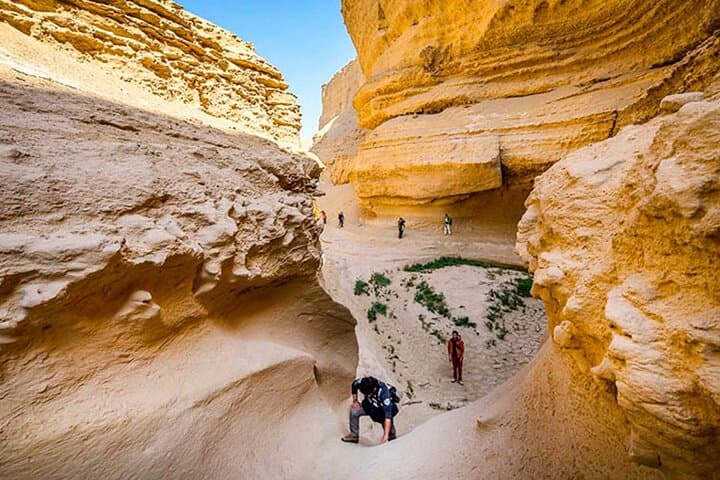
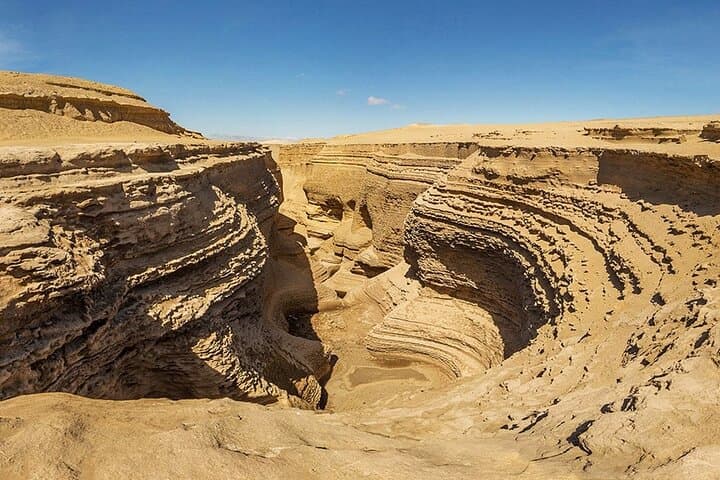
You step out of Huacachina’s mirage of palms and sand and into a landscape that reads like an atlas of time. The road narrows, dust rises, and the canyon opens—a 3-kilometer ribbon carved through ochre rock, its 150-meter walls shading pockets of life. Wind and sun have shaped alcoves, ledges and narrow gullies that seem to hold fossils of an ancient seabed.
You step out of Huacachina’s mirage of palms and sand and into a landscape that reads like an atlas of time. The road narrows, dust rises, and the canyon opens—a 3-kilometer ribbon carved through ochre rock, its 150-meter walls shading pockets of life. Wind and sun have shaped alcoves, ledges and narrow gullies that seem to hold fossils of an ancient seabed.
Discovered locally in the late 20th century, the Canyon of the Lost reveals Ica’s geological history: marine sediments lifted and exposed, cross-bedded sandstones and compacted silt that once lay beneath the Pacific. Cultural notes appear in roadside vineyards and small adobe settlements; local guides often point out how people in the valley have worked with scarce water for generations, harvesting seasonal plants and tending vineyards that thrive on minimal rainfall.
On the trail expect sandy approaches, short rock scrambles and flat stretches that thread through plant communities adapted to desert moisture. Birds and small mammals watch from crevices; the canyon’s narrow sections amplify sound so your footfalls and whispers feel larger than they are.
Practical guidance: this is a full-day outing (5–8 hours) with moderate walking; bring 2+ liters of water, sun protection and sturdy footwear for uneven ground. Morning departures avoid midday heat and give softer light for photography. Listen to your guide about fragile surfaces—erosion is active here—and leave no trace: the canyon’s dramatic shapes took millennia; they can’t be replaced overnight.