THE ADVENTURE COLLECTIVE® · Independent discovery and booking for outdoor travel

Walk among Bronze-Age rock carvings at Tamgaly, a UNESCO-listed petroglyph complex northwest of Almaty. This half-day visit offers concentrated history, striking open-country views, and intact panels that span millennia.
Walk among Bronze-Age rock carvings at Tamgaly, a UNESCO-listed petroglyph complex northwest of Almaty. This half-day visit offers concentrated history, striking open-country views, and intact panels that span millennia.
A dry wind pushes dust along the river terraces as you step onto a sun-baked plateau strewn with weathered boulders. The first carved figures appear like a shallow script across the stone: riders, ibex, solar motifs and ritual scenes that have survived millennia of steppe seasons. The site opens slowly—each panel a page in a long, human story.
Verified experiences and guided adventures in the surrounding area.
Operated by Kazia Tour · Tamgaly, Almaty Region
A dry wind pushes dust along the river terraces as you step onto a sun-baked plateau strewn with weathered boulders. The first carved figures appear like a shallow script across the stone: riders, ibex, solar motifs and ritual scenes that have survived millennia of steppe seasons. The site opens slowly—each panel a page in a long, human story.
The petroglyphs at Tamgaly (sometimes written Tanbaly) span from the Bronze Age through medieval times. Archaeologists date some images to the 2nd millennium BCE; later marks reflect Turkic and Kazakh riders, rites, and astronomical symbols. The geology is coarse sandstone and conglomerate; freeze-thaw cycles and wind have polished many panels, preserving deep incisions while rounding edges.
Locally the petroglyphs have cultural weight—herders and travelers recognized marked rocks as places of memory and ritual. The landscape is steppe broken by ridgelines and river terraces; the sparse vegetation and wide sky make the figures visible from a distance and lend a cinematic scale to the carvings.
Plan on uneven footing and open sun. Bring water, sun protection and a camera with a polarizer to cut glare on rock faces. Respect ropes and signage: many panels are fragile and covered by lichen. Visits are often guided from Almaty and involve a drive; allow half a day for transit and interpretation.
Best visited in steady weather—early morning or late afternoon light brings the carvings into relief and yields cooler temperatures. The site rewards slow inspection and a basic knowledge of steppe prehistory: bring curiosity and leave no trace.
moderate.
2–3 hours.
Moderate fitness—able to walk on uneven, rocky ground and manage short ups and downs for up to a couple of hours.
Most visitors travel by car or organized tour from Almaty; the drive can take 2–4 hours depending on route and traffic—confirm pickup and return times with your operator.
UNESCO sites commonly have managed access; many visits are included with guided tours—check with the operator for current fees and permit rules.
No—touching accelerates wear and many panels are protected by signage and ropes; follow the guide and stay on established paths.
Late spring through early fall offers mild conditions; visit early morning or late afternoon for better light and cooler temperatures.
Panels at Tamgaly record ritual scenes, hunting and celestial symbols from the Bronze Age through later Turkic and Kazakh eras; the site served as a long-term cultural landmark.
The site's UNESCO status protects it, but visitor pressure, graffiti and natural weathering are ongoing concerns—stick to paths, avoid touching rock art, and support local conservation efforts.
Kazia Tour operates guided outdoor trips and adventures with an emphasis on safety, stewardship, and memorable experiences.
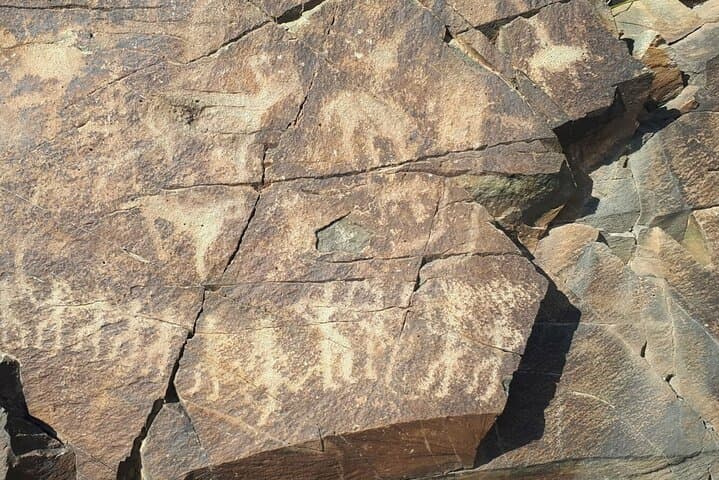
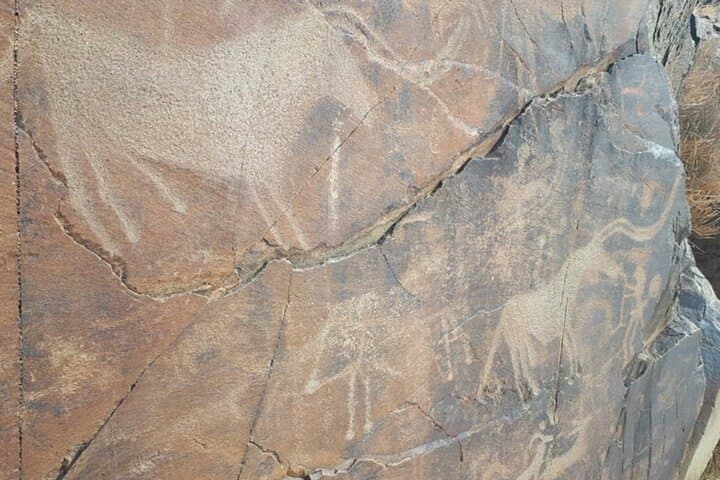
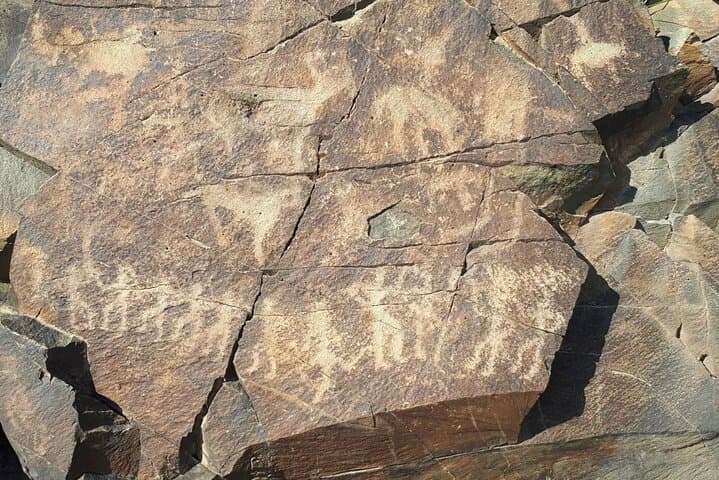
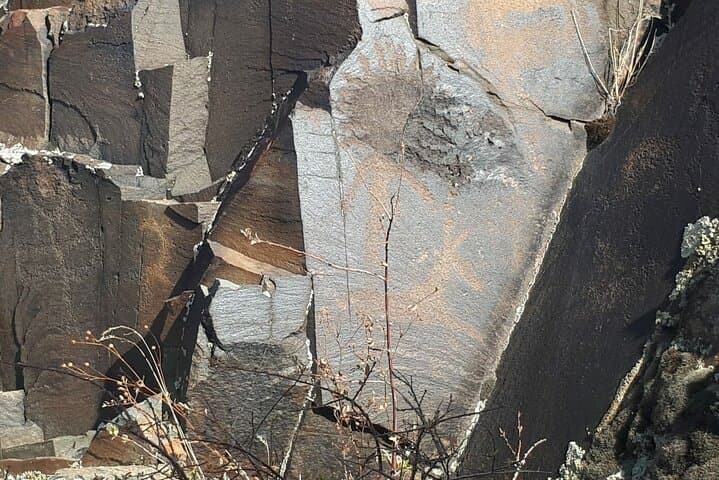
A dry wind pushes dust along the river terraces as you step onto a sun-baked plateau strewn with weathered boulders. The first carved figures appear like a shallow script across the stone: riders, ibex, solar motifs and ritual scenes that have survived millennia of steppe seasons. The site opens slowly—each panel a page in a long, human story.
A dry wind pushes dust along the river terraces as you step onto a sun-baked plateau strewn with weathered boulders. The first carved figures appear like a shallow script across the stone: riders, ibex, solar motifs and ritual scenes that have survived millennia of steppe seasons. The site opens slowly—each panel a page in a long, human story.
The petroglyphs at Tamgaly (sometimes written Tanbaly) span from the Bronze Age through medieval times. Archaeologists date some images to the 2nd millennium BCE; later marks reflect Turkic and Kazakh riders, rites, and astronomical symbols. The geology is coarse sandstone and conglomerate; freeze-thaw cycles and wind have polished many panels, preserving deep incisions while rounding edges.
Locally the petroglyphs have cultural weight—herders and travelers recognized marked rocks as places of memory and ritual. The landscape is steppe broken by ridgelines and river terraces; the sparse vegetation and wide sky make the figures visible from a distance and lend a cinematic scale to the carvings.
Plan on uneven footing and open sun. Bring water, sun protection and a camera with a polarizer to cut glare on rock faces. Respect ropes and signage: many panels are fragile and covered by lichen. Visits are often guided from Almaty and involve a drive; allow half a day for transit and interpretation.
Best visited in steady weather—early morning or late afternoon light brings the carvings into relief and yields cooler temperatures. The site rewards slow inspection and a basic knowledge of steppe prehistory: bring curiosity and leave no trace.