THE ADVENTURE COLLECTIVE® · Independent discovery and booking for outdoor travel

A two-day, guide-led trip through Somoto Canyon takes you along five kilometers of towering basalt walls, calm pools, and narrow squeezes. This feature covers the canyon’s geology, cultural context, and practical planning tips for experiencing one of Nicaragua’s oldest formations.
A two-day, guide-led trip through Somoto Canyon takes you along five kilometers of towering basalt walls, calm pools, and narrow squeezes. This feature covers the canyon’s geology, cultural context, and practical planning tips for experiencing one of Nicaragua’s oldest formations.
The canyon appears before you like a cut in the earth — two vertical stone ribs narrowing to a corridor of water and shadow. You step off the trail and feel the air change: cooler, damp, threaded with mist. For the next two days the landscape sets the pace. The Comalí and Tapacalí rivers gum together into a slow, green current that threads five kilometers of high basalt walls, alternating narrow squeezes with open pools where light drowns in deep blue.
Verified experiences and guided adventures in the surrounding area.
Operated by Darwin Antonio Rivas Arana · Somoto, Madriz
The canyon appears before you like a cut in the earth — two vertical stone ribs narrowing to a corridor of water and shadow. You step off the trail and feel the air change: cooler, damp, threaded with mist. For the next two days the landscape sets the pace. The Comalí and Tapacalí rivers gum together into a slow, green current that threads five kilometers of high basalt walls, alternating narrow squeezes with open pools where light drowns in deep blue.
Somoto Canyon is older than most national narratives in Central America. Its vertical walls carved over millennia offer a visible record of tectonic shifts and riverine patience. Locals call the site La Estrechura or Namancambre — names that point to its narrow throat and the long relationship between the river and the people who live on its rim. Geologically, the canyon is a study in contrasts: hard volcanic rock on the walls and softer alluvial deposits on the bed where the water pools, backs up, and creates calm stretches that feel more like inland lagoons than a canyon stream.
Culturally, the region is rural and resilient. Small coffee and corn farms scatter the slopes above Madriz department; families pass through markets in Somoto town. Guides here are often from nearby communities and bring local knowledge — where a hidden pool holds small freshwater fish, or which ledge provides the best view at sunset. Conservation is a quiet, practical concern: visitors are asked to carry out waste, stick to paths, and follow guide instructions so the fragile riparian plants and endemic species can thrive.
Practically, this is a guide-led multi-day excursion best suited to travelers comfortable with uneven terrain, short swims, and occasional rock scrambling. Expect changing underfoot conditions — wet stone, pebbly shallows, and short climbs — and bring footwear that grips. Two days allows a measured pace: morning canyon walking and pool exploration, midday rest in shaded alcoves, and a second day for deeper pools and viewpoint loops above the gorge.
Timing and logistics: the canyon sits about 15 kilometers west of Somoto town and is reached by a short dirt-road approach; 4x4 access helps but is not mandatory. Guides provide local safety briefings and often include breakfasts; accommodations before and after are typically simple lodges in Somoto or Managua for travelers connecting from the capital. Hydrate in advance, layer for humidity and sun, and charge cameras — the interplay of light and stone makes for some of Nicaragua’s most dramatic landscape photography.
Somoto Canyon rewards patience more than speed. Walk with attention and the place opens up: quiet pools alive with fish, a narrow groove that forces you to squeeze past dripping walls, and a high ledge where the river looks like a green ribbon far below.
moderate.
2 days (approx. 48 hours).
Moderately fit: able to walk uneven terrain, scramble short sections, and swim or wade in calm pools.
The packaged itinerary runs two days (about 48 hours) with guided exploration of the canyon on both days.
You don’t need to be an expert swimmer, but basic swimming ability and comfort in calm, deep pools is recommended.
Many operators consider it suitable for children with supervision, though some narrow or slippery sections may be challenging for very young kids.
Private transfer from Managua is common; the canyon is roughly a 4–5 hour drive depending on traffic and road conditions toward Somoto and a short dirt approach.
Local guides are standard and advisable — they handle route-finding, safety, and interpretive information about the canyon’s geology and ecology.
Bring insect repellent for shaded riverbanks and reef-safe sunscreen for exposed stretches above the canyon.
Somoto Canyon is one of Central America’s oldest rock formations; its walls record long-term river incision and regional tectonic activity.
Visitor impact is concentrated on riverbanks and pools; follow guide rules, avoid soaps in the water, and carry out all trash to protect riparian plants and aquatic life.
Darwin Antonio Rivas Arana operates guided outdoor trips and adventures with an emphasis on safety, stewardship, and memorable experiences.
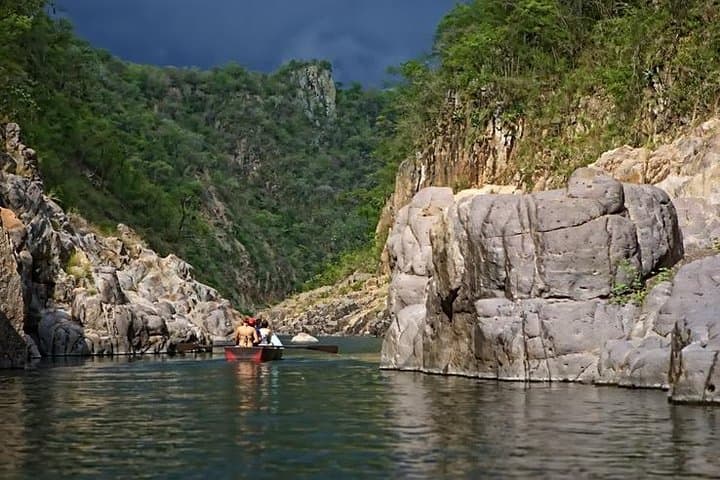
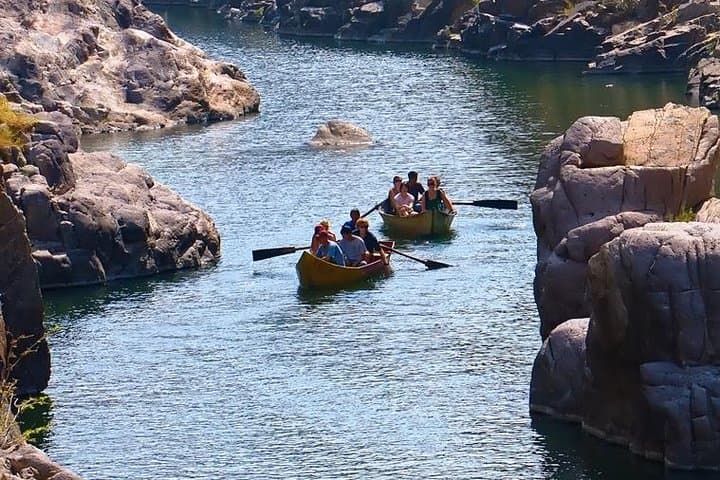
The canyon appears before you like a cut in the earth — two vertical stone ribs narrowing to a corridor of water and shadow. You step off the trail and feel the air change: cooler, damp, threaded with mist. For the next two days the landscape sets the pace. The Comalí and Tapacalí rivers gum together into a slow, green current that threads five kilometers of high basalt walls, alternating narrow squeezes with open pools where light drowns in deep blue.
The canyon appears before you like a cut in the earth — two vertical stone ribs narrowing to a corridor of water and shadow. You step off the trail and feel the air change: cooler, damp, threaded with mist. For the next two days the landscape sets the pace. The Comalí and Tapacalí rivers gum together into a slow, green current that threads five kilometers of high basalt walls, alternating narrow squeezes with open pools where light drowns in deep blue.
Somoto Canyon is older than most national narratives in Central America. Its vertical walls carved over millennia offer a visible record of tectonic shifts and riverine patience. Locals call the site La Estrechura or Namancambre — names that point to its narrow throat and the long relationship between the river and the people who live on its rim. Geologically, the canyon is a study in contrasts: hard volcanic rock on the walls and softer alluvial deposits on the bed where the water pools, backs up, and creates calm stretches that feel more like inland lagoons than a canyon stream.
Culturally, the region is rural and resilient. Small coffee and corn farms scatter the slopes above Madriz department; families pass through markets in Somoto town. Guides here are often from nearby communities and bring local knowledge — where a hidden pool holds small freshwater fish, or which ledge provides the best view at sunset. Conservation is a quiet, practical concern: visitors are asked to carry out waste, stick to paths, and follow guide instructions so the fragile riparian plants and endemic species can thrive.
Practically, this is a guide-led multi-day excursion best suited to travelers comfortable with uneven terrain, short swims, and occasional rock scrambling. Expect changing underfoot conditions — wet stone, pebbly shallows, and short climbs — and bring footwear that grips. Two days allows a measured pace: morning canyon walking and pool exploration, midday rest in shaded alcoves, and a second day for deeper pools and viewpoint loops above the gorge.
Timing and logistics: the canyon sits about 15 kilometers west of Somoto town and is reached by a short dirt-road approach; 4x4 access helps but is not mandatory. Guides provide local safety briefings and often include breakfasts; accommodations before and after are typically simple lodges in Somoto or Managua for travelers connecting from the capital. Hydrate in advance, layer for humidity and sun, and charge cameras — the interplay of light and stone makes for some of Nicaragua’s most dramatic landscape photography.
Somoto Canyon rewards patience more than speed. Walk with attention and the place opens up: quiet pools alive with fish, a narrow groove that forces you to squeeze past dripping walls, and a high ledge where the river looks like a green ribbon far below.