THE ADVENTURE COLLECTIVE® · Independent discovery and booking for outdoor travel

Visit Sambor Prei Kuk to walk among 7th-century brick shrines and octagonal towers that predate Angkor. This day tour from Siem Reap reveals early Khmer architecture, forest-engulfed ruins, and a rural landscape shaped by the Prey Preas River.
Visit Sambor Prei Kuk to walk among 7th-century brick shrines and octagonal towers that predate Angkor. This day tour from Siem Reap reveals early Khmer architecture, forest-engulfed ruins, and a rural landscape shaped by the Prey Preas River.
You arrive before the heat builds, the road from Siem Reap unwinding through low paddy fields and scrub forest until brick walls and squat towers appear through a green haze. Morning light catches the combed edges of laterite blocks and the odd octagonal tower—temples that predate Angkor and still wear the forest like a slow-moving cloak.
Verified experiences and guided adventures in the surrounding area.
Operated by Easy Angkor Trip · Kampong Thom, Kampong Thom Province
You arrive before the heat builds, the road from Siem Reap unwinding through low paddy fields and scrub forest until brick walls and squat towers appear through a green haze. Morning light catches the combed edges of laterite blocks and the odd octagonal tower—temples that predate Angkor and still wear the forest like a slow-moving cloak.
Sambor Prei Kuk was the 7th-century seat of the Chenla kingdom, built under King Ishanavarman I. The site’s octagonal shrines and the so-called “flying palace” carvings show architectural experiments that later shaped Angkorian art. Geologically the area sits on the floodplain of central Cambodia; temple bricks and laterite have weathered differently, leaving some towers sharp and others softened by roots.
Culturally, local villages maintain crafts and foods that reflect a long rural continuity—markets here sell sticky rice, freshwater fish and the occasional insect snack if you’re curious. Nature has personality here: strangler figs pry apart lintels, and the breeze along the Prey Preas River seems to push you from one ruin to the next.
Practical guidance: expect 7–10 hours if traveling from Siem Reap, often on a private, air-conditioned vehicle with guide. Wear closed-toe shoes for uneven bricks, bring sun protection and insect repellent, and carry water—shade can be scarce between temple clusters. Photography rewards patience; step lightly on ancient masonry, follow signage, and plan visits in the cooler morning or late afternoon to avoid midday heat. If you want to linger, consider an overnight in nearby Kampong Thom to split the drive and explore local markets.
easy.
7–10 hours.
Suitable for most fitness levels; expect light walking on uneven ground and short climbs over ruins.
Expect about 3–4 hours one-way by car depending on traffic; many tours depart early and include hotel pickup.
Yes, the archaeological site charges an entrance fee paid at the ticket office; rates change, so confirm current prices before travel.
Most private tours include an English-speaking guide and transport; check the tour details for inclusions and pickup options.
You can visit independently by arranging transport to Kampong Thom, but guided tours streamline logistics and context for the ruins.
Sambor Prei Kuk was the 7th-century capital of the Chenla kingdom under Ishanavarman I; its octagonal shrine style influenced later Khmer temple architecture.
The site is a UNESCO World Heritage property; visitor pressure and invasive vegetation are managed through restricted access to sensitive structures—keep to paths and avoid touching carvings.
Easy Angkor Trip operates guided outdoor trips and adventures with an emphasis on safety, stewardship, and memorable experiences.
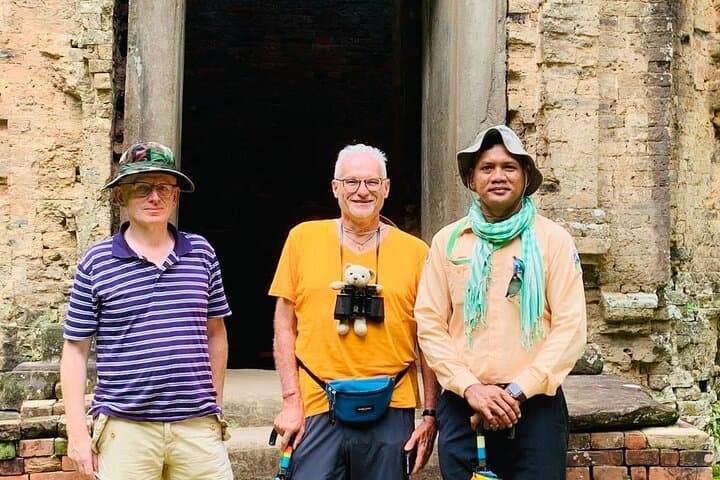
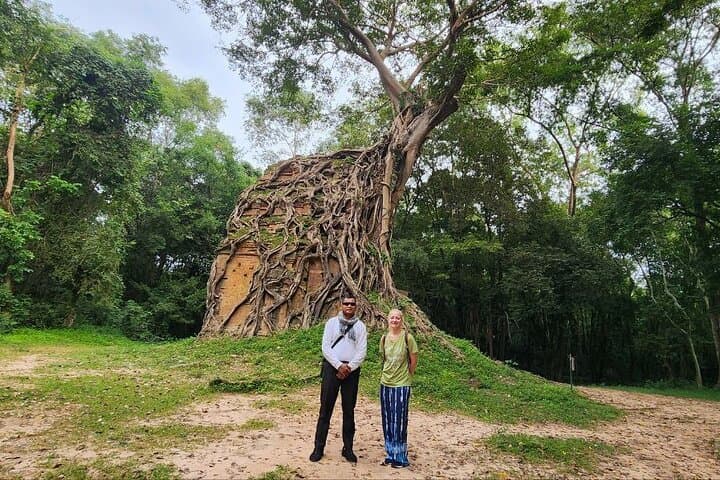
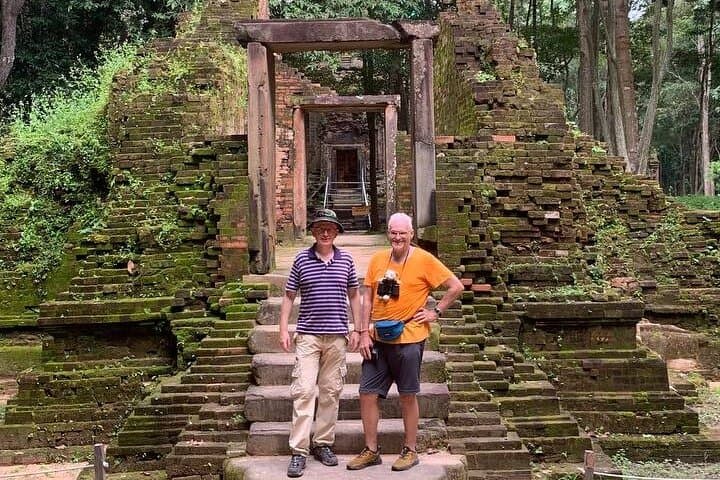
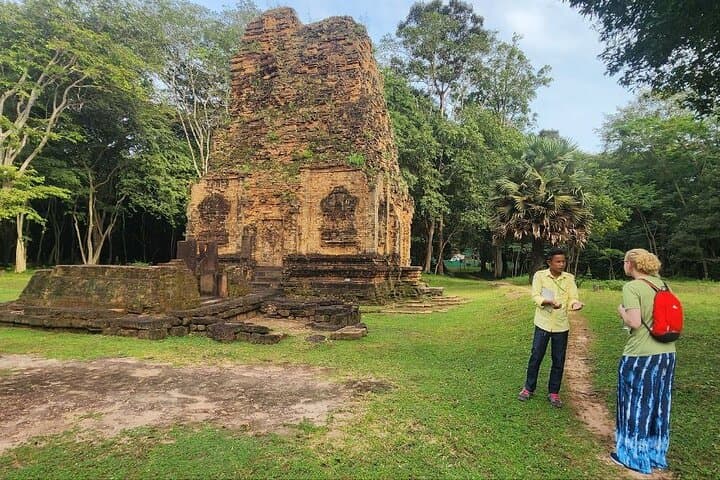
You arrive before the heat builds, the road from Siem Reap unwinding through low paddy fields and scrub forest until brick walls and squat towers appear through a green haze. Morning light catches the combed edges of laterite blocks and the odd octagonal tower—temples that predate Angkor and still wear the forest like a slow-moving cloak.
You arrive before the heat builds, the road from Siem Reap unwinding through low paddy fields and scrub forest until brick walls and squat towers appear through a green haze. Morning light catches the combed edges of laterite blocks and the odd octagonal tower—temples that predate Angkor and still wear the forest like a slow-moving cloak.
Sambor Prei Kuk was the 7th-century seat of the Chenla kingdom, built under King Ishanavarman I. The site’s octagonal shrines and the so-called “flying palace” carvings show architectural experiments that later shaped Angkorian art. Geologically the area sits on the floodplain of central Cambodia; temple bricks and laterite have weathered differently, leaving some towers sharp and others softened by roots.
Culturally, local villages maintain crafts and foods that reflect a long rural continuity—markets here sell sticky rice, freshwater fish and the occasional insect snack if you’re curious. Nature has personality here: strangler figs pry apart lintels, and the breeze along the Prey Preas River seems to push you from one ruin to the next.
Practical guidance: expect 7–10 hours if traveling from Siem Reap, often on a private, air-conditioned vehicle with guide. Wear closed-toe shoes for uneven bricks, bring sun protection and insect repellent, and carry water—shade can be scarce between temple clusters. Photography rewards patience; step lightly on ancient masonry, follow signage, and plan visits in the cooler morning or late afternoon to avoid midday heat. If you want to linger, consider an overnight in nearby Kampong Thom to split the drive and explore local markets.