THE ADVENTURE COLLECTIVE® · Independent discovery and booking for outdoor travel

A short drive from Hurghada, Safaga’s Ghost Village is an abandoned phosphate town frozen between industry and desert. This guided visit walks you through villas, schools and a mosque complex while explaining the mining history that built—and emptied—this place.
A short drive from Hurghada, Safaga’s Ghost Village is an abandoned phosphate town frozen between industry and desert. This guided visit walks you through villas, schools and a mosque complex while explaining the mining history that built—and emptied—this place.
Sand lifts and sifts through broken window frames as sunlight slants across empty classrooms—this is Safaga’s Ghost Village, an arrested town where the industrial pulse of phosphate mining once animated 16,000 lives. Visitors arrive after a coastal drive from Hurghada; the road peels away from the Red Sea and gives space to flat, pale desert that seems to be holding its breath.
Verified experiences and guided adventures in the surrounding area.
Operated by Sjptour.com · Safaga, Red Sea Governorate
Sand lifts and sifts through broken window frames as sunlight slants across empty classrooms—this is Safaga’s Ghost Village, an arrested town where the industrial pulse of phosphate mining once animated 16,000 lives. Visitors arrive after a coastal drive from Hurghada; the road peels away from the Red Sea and gives space to flat, pale desert that seems to be holding its breath.
Founded in 1902 by an English engineer known locally as Mr. Andy, the village grew around the world’s then-largest phosphate operations. By 1988 the mines slowed and homes, schools, markets and mosques were left to the elements. The geology here is straightforward: layered sedimentary deposits and exposed mine tailings that tell the story of extractive industry and remnant infrastructure.
Culturally, the site reads like an industrial archive—peeling paint, rusted railbeds, and a few standing villas where families once gathered. Guides usually point out Mr. Andy’s villa, the old school, and mosque centers while situating the town in Egypt’s early 20th-century mining boom. If time allows, tours often add the nearby El Qusir castle for a contrasting coastal fortification.
Practicalities are simple: expect 3–4 hours total, easy walking over uneven, dusty surfaces; bring sun protection, at least 1.5–2 liters of water, and a camera with shutter priority for high-contrast scenes. Structures are fragile—observe from safe distances and follow your guide’s briefings. The Ghost Village is a concise, evocative stop for travelers based in Hurghada who want a raw, historical slice of Red Sea industrial heritage.
easy.
3–4 hours.
Suitable for travelers in normal physical condition; involves short walks on uneven ground and minimal elevation change.
The tour is typically 3–4 hours including round-trip driving from Hurghada and about 60–90 minutes onsite for guided exploration.
The operator lists the tour as stroller- and wheelchair-accessible, but onsite paths are uneven—check specific access arrangements with your guide before booking.
No separate admission is normally required; the tour price covers fees and taxes. Local restrictions can change, so confirm at booking.
Many structures are fragile and unsafe. Guides will indicate safe viewing areas—avoid entering unstable buildings to reduce risk.
Established in 1902 around phosphate mining by a British engineer called Mr Andy, the town peaked mid-century before being abandoned around 1988 when mining declined.
This site is fragile—avoid graffiti, don’t remove artifacts, and stay on guide-designated routes to protect archaeological and ecological features.
Sjptour.com operates guided outdoor trips and adventures with an emphasis on safety, stewardship, and memorable experiences.

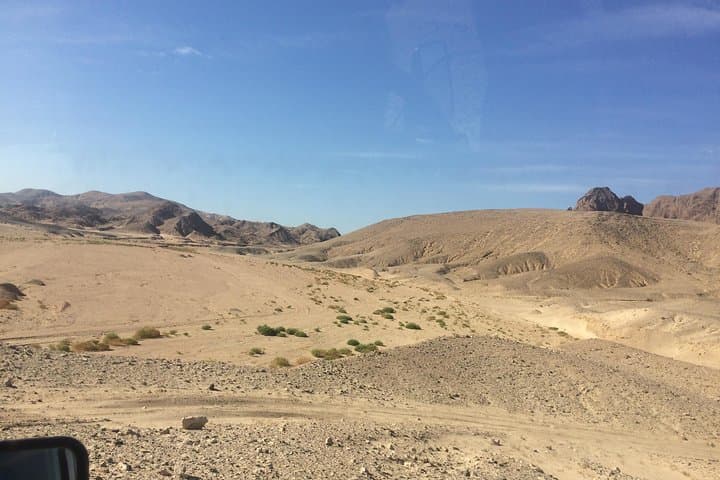


Sand lifts and sifts through broken window frames as sunlight slants across empty classrooms—this is Safaga’s Ghost Village, an arrested town where the industrial pulse of phosphate mining once animated 16,000 lives. Visitors arrive after a coastal drive from Hurghada; the road peels away from the Red Sea and gives space to flat, pale desert that seems to be holding its breath.
Sand lifts and sifts through broken window frames as sunlight slants across empty classrooms—this is Safaga’s Ghost Village, an arrested town where the industrial pulse of phosphate mining once animated 16,000 lives. Visitors arrive after a coastal drive from Hurghada; the road peels away from the Red Sea and gives space to flat, pale desert that seems to be holding its breath.
Founded in 1902 by an English engineer known locally as Mr. Andy, the village grew around the world’s then-largest phosphate operations. By 1988 the mines slowed and homes, schools, markets and mosques were left to the elements. The geology here is straightforward: layered sedimentary deposits and exposed mine tailings that tell the story of extractive industry and remnant infrastructure.
Culturally, the site reads like an industrial archive—peeling paint, rusted railbeds, and a few standing villas where families once gathered. Guides usually point out Mr. Andy’s villa, the old school, and mosque centers while situating the town in Egypt’s early 20th-century mining boom. If time allows, tours often add the nearby El Qusir castle for a contrasting coastal fortification.
Practicalities are simple: expect 3–4 hours total, easy walking over uneven, dusty surfaces; bring sun protection, at least 1.5–2 liters of water, and a camera with shutter priority for high-contrast scenes. Structures are fragile—observe from safe distances and follow your guide’s briefings. The Ghost Village is a concise, evocative stop for travelers based in Hurghada who want a raw, historical slice of Red Sea industrial heritage.