THE ADVENTURE COLLECTIVE® · Independent discovery and booking for outdoor travel

Wander beneath towering Roman arches at Parco degli Acquedotti, where engineering, geology and local life intersect. This two-hour walking experience highlights centuries of reuse — from aqueduct to quarry to catacomb — while offering clear, family-friendly routes through a uniquely quiet corner of Rome.
Wander beneath towering Roman arches at Parco degli Acquedotti, where engineering, geology and local life intersect. This two-hour walking experience highlights centuries of reuse — from aqueduct to quarry to catacomb — while offering clear, family-friendly routes through a uniquely quiet corner of Rome.
You step off the tram and the city exhales — a corridor of stone arches stretches ahead, sunlight slicing through vaults and dust. The Parco degli Acquedotti presents Roman engineering at scale: masonry channels that once delivered fresh water across imperial Rome now frame grassy meadows and slow, local life.
Verified experiences and guided adventures in the surrounding area.
Operated by Underground Rome · Rome, Lazio
You step off the tram and the city exhales — a corridor of stone arches stretches ahead, sunlight slicing through vaults and dust. The Parco degli Acquedotti presents Roman engineering at scale: masonry channels that once delivered fresh water across imperial Rome now frame grassy meadows and slow, local life.
These aqueducts were built, reused and reinvented over two millennia. Some arches date to the Republican era and others to the 16th-century works of Pope Sixtus V; the concrete cores and dressed blocks reveal construction techniques, reuse as quarries and later adaptations — even catacombs and mushroom farms in the more sheltered chambers. Geologically, the structures sit on travertine and tuff outcrops that quarried easily for the city’s growth; you can see the color shifts where builders patched older masonry.
Culturally the park is outside usual tourist routes, a place where runners, families and local shepherds cross the same paths modern Romans do. On a practical level, the tour is a mostly flat 2-hour walk across dirt and packed earth with short sections of uneven flagstone; portions are exposed to sun and wind. Expect minimal elevation gain but watch for loose stones and occasional livestock droppings.
Bring sturdy walking shoes, a filled water bottle, sun protection in summer and a light rain layer in shoulder seasons. Photography is generous but avoid climbing on arches — the stone still carries centuries of weight. Arrive by bus or metro to save time and plan a mid-afternoon slot for softer light and fewer crowds.
easy.
2 hours.
Suitable for most fitness levels; required stamina equals a casual 2-hour walk with short uneven sections.
The park reports wheelchair-accessible surfaces in many areas, but some dirt paths and grass can be uneven; check with the operator for specific accessibility support.
Public restrooms are limited; use facilities in nearby neighborhoods or at your starting point before entering the park.
Photography is allowed for personal use; tripods are usually fine but avoid blocking paths and never climb on monuments for a shot.
Some sections still leak or carry water underground; visible flowing channels are limited but you can observe historic conduits and seepage in certain spots.
The park preserves sections of several Roman aqueducts built between the Republic and Imperial eras and later reused by Renaissance engineers like Sixtus V; over centuries parts were quarried, repurposed and adapted for new infrastructure.
Stay on marked paths and don’t remove material — erosion, climbing and graffiti accelerate decay; local groups manage conservation and occasional archaeological work.
Underground Rome operates guided outdoor trips and adventures with an emphasis on safety, stewardship, and memorable experiences.
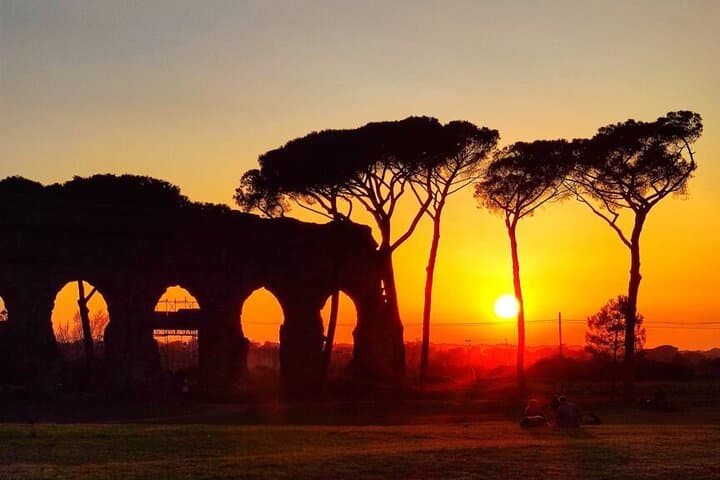
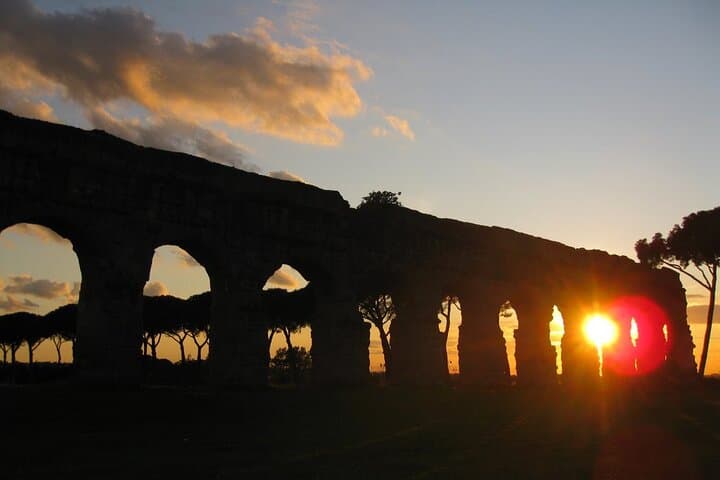
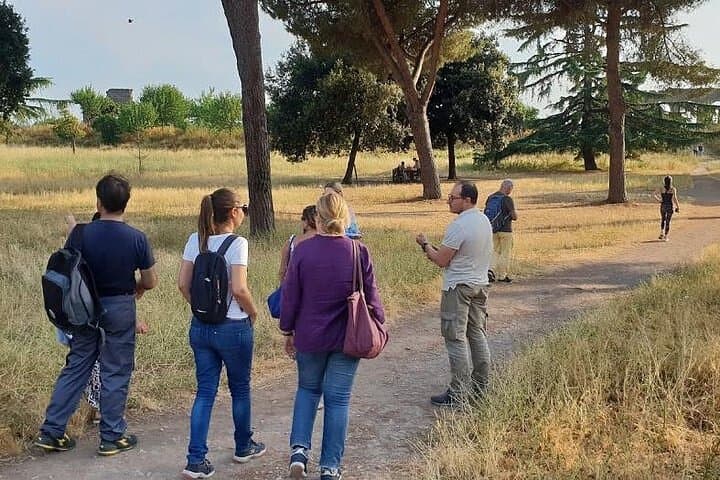
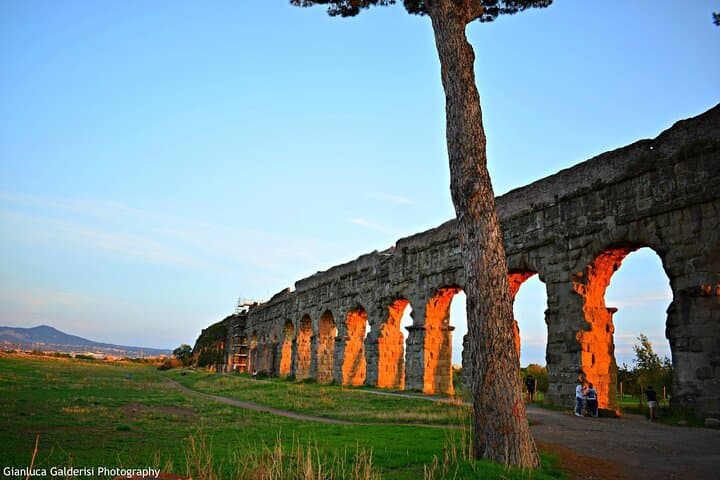
You step off the tram and the city exhales — a corridor of stone arches stretches ahead, sunlight slicing through vaults and dust. The Parco degli Acquedotti presents Roman engineering at scale: masonry channels that once delivered fresh water across imperial Rome now frame grassy meadows and slow, local life.
You step off the tram and the city exhales — a corridor of stone arches stretches ahead, sunlight slicing through vaults and dust. The Parco degli Acquedotti presents Roman engineering at scale: masonry channels that once delivered fresh water across imperial Rome now frame grassy meadows and slow, local life.
These aqueducts were built, reused and reinvented over two millennia. Some arches date to the Republican era and others to the 16th-century works of Pope Sixtus V; the concrete cores and dressed blocks reveal construction techniques, reuse as quarries and later adaptations — even catacombs and mushroom farms in the more sheltered chambers. Geologically, the structures sit on travertine and tuff outcrops that quarried easily for the city’s growth; you can see the color shifts where builders patched older masonry.
Culturally the park is outside usual tourist routes, a place where runners, families and local shepherds cross the same paths modern Romans do. On a practical level, the tour is a mostly flat 2-hour walk across dirt and packed earth with short sections of uneven flagstone; portions are exposed to sun and wind. Expect minimal elevation gain but watch for loose stones and occasional livestock droppings.
Bring sturdy walking shoes, a filled water bottle, sun protection in summer and a light rain layer in shoulder seasons. Photography is generous but avoid climbing on arches — the stone still carries centuries of weight. Arrive by bus or metro to save time and plan a mid-afternoon slot for softer light and fewer crowds.