THE ADVENTURE COLLECTIVE® · Independent discovery and booking for outdoor travel

See Puna Pau, Ahu Akivi and Tahai on a guided half-day loop around Rapa Nui’s best-preserved moai sites. Quick, accessible and rich in geology and oral history, this tour is ideal for travelers who want a focused introduction to Easter Island.
See Puna Pau, Ahu Akivi and Tahai on a guided half-day loop around Rapa Nui’s best-preserved moai sites. Quick, accessible and rich in geology and oral history, this tour is ideal for travelers who want a focused introduction to Easter Island.
A low, wind-scoured shore slides into view as the van turns toward Tahai. Salt and volcanic dust ride the breeze; flat-topped moai sit in silhouette against the Pacific, their carved eyes keeping a slow, indifferent vigil. On this half-day loop, visitors move through open coast, tuff quarries and a rare inland ahu where seven statues face the sea.
Verified experiences and guided adventures in the surrounding area.
Operated by Maururu Travel · Hanga Roa, Valparaíso Region
A low, wind-scoured shore slides into view as the van turns toward Tahai. Salt and volcanic dust ride the breeze; flat-topped moai sit in silhouette against the Pacific, their carved eyes keeping a slow, indifferent vigil. On this half-day loop, visitors move through open coast, tuff quarries and a rare inland ahu where seven statues face the sea.
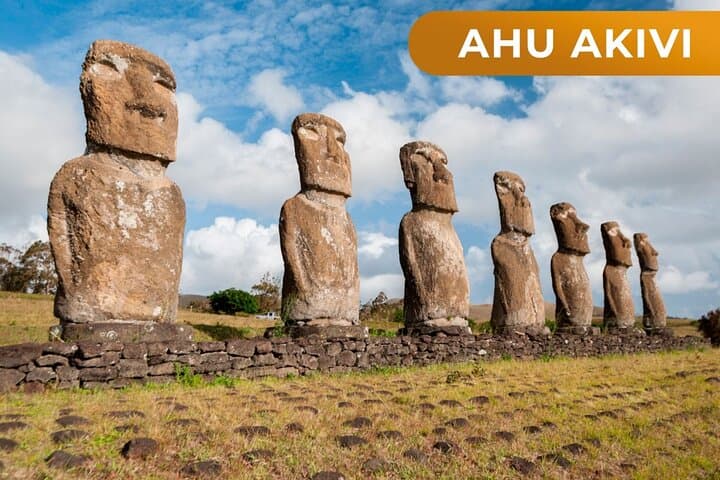
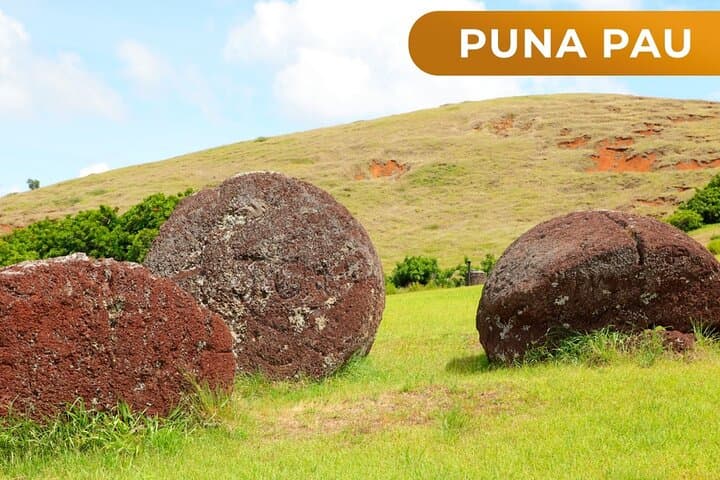
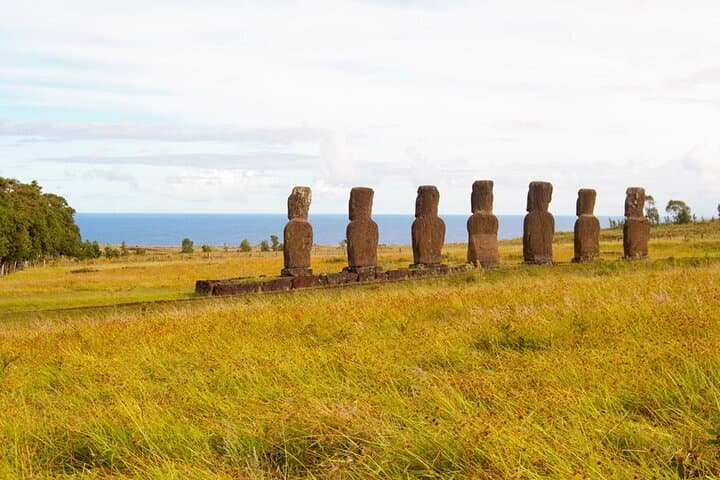
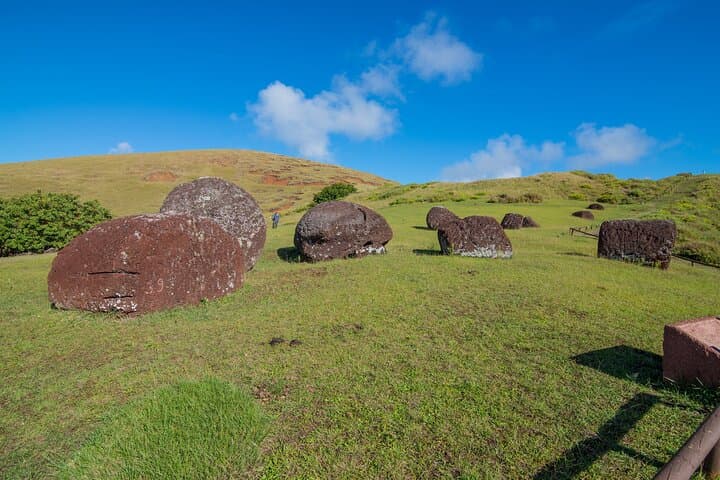
The route touches Puna Pau, the small red scoria quarry where the pukaos — the moai “hats” — were shaped, then stops at Ahu Akivi, the only inland group of seven moai oriented to the ocean. These figures are linked to oral histories of King Hotu Matu'a and the island’s first explorers; the volcanic tuff and scoria tell a story of eruptions that supplied both raw stone and the island’s stark topography.
Guides frame cultural context: statue transport methods, ceremonial ahu design, and the 20th-century restorations at Tahai that reintroduced standing moai to the coastline. The landscape pushes against you here — wind that erodes and polishes, cliffs that demand respect.
Practical guidance: plan for sun and wind, carry water and a light wind shell, and allow time for slow photography at each stop. The tour is short and accessible — little elevation, mostly short walks from the vehicle — but surfaces are uneven and exposed. Morning departures favor softer light at Tahai; afternoons can be windier.
For travelers who want concentrated history, geology and striking coastal views in under an hour, this half-day circuit delivers a compact, well-guided introduction to Rapa Nui’s most iconic places.
easy.
45–60 minutes.
Suitable for most fitness levels; involves short, flat walks from vehicle to viewpoints
The tour lasts about 45–60 minutes with scheduled stops at Puna Pau, Ahu Akivi and Tahai.
Yes — the operator lists it as suitable for all fitness levels; however, surfaces at sites are uneven and may be challenging for some mobility devices.
Yes — the itinerary includes short stops at each site for photos, but time is brief so plan priority shots and ask the guide about best angles.
The tour can be canceled for bad weather; full refunds are typically available if canceled at least 24 hours before departure — check the booking terms for specifics.
The island’s moai were carved between the 10th and 16th centuries using local volcanic tuff and scoria; Ahu Akivi is unique for its inland placement and astronomical alignments.
Easter Island’s fragile archaeology and limited fresh water mean visitors should follow leave-no-trace principles and stick to marked paths to reduce erosion and damage.
Maururu Travel operates guided outdoor trips and adventures with an emphasis on safety, stewardship, and memorable experiences.
A low, wind-scoured shore slides into view as the van turns toward Tahai. Salt and volcanic dust ride the breeze; flat-topped moai sit in silhouette against the Pacific, their carved eyes keeping a slow, indifferent vigil. On this half-day loop, visitors move through open coast, tuff quarries and a rare inland ahu where seven statues face the sea.
A low, wind-scoured shore slides into view as the van turns toward Tahai. Salt and volcanic dust ride the breeze; flat-topped moai sit in silhouette against the Pacific, their carved eyes keeping a slow, indifferent vigil. On this half-day loop, visitors move through open coast, tuff quarries and a rare inland ahu where seven statues face the sea.
The route touches Puna Pau, the small red scoria quarry where the pukaos — the moai “hats” — were shaped, then stops at Ahu Akivi, the only inland group of seven moai oriented to the ocean. These figures are linked to oral histories of King Hotu Matu'a and the island’s first explorers; the volcanic tuff and scoria tell a story of eruptions that supplied both raw stone and the island’s stark topography.
Guides frame cultural context: statue transport methods, ceremonial ahu design, and the 20th-century restorations at Tahai that reintroduced standing moai to the coastline. The landscape pushes against you here — wind that erodes and polishes, cliffs that demand respect.
Practical guidance: plan for sun and wind, carry water and a light wind shell, and allow time for slow photography at each stop. The tour is short and accessible — little elevation, mostly short walks from the vehicle — but surfaces are uneven and exposed. Morning departures favor softer light at Tahai; afternoons can be windier.
For travelers who want concentrated history, geology and striking coastal views in under an hour, this half-day circuit delivers a compact, well-guided introduction to Rapa Nui’s most iconic places.