THE ADVENTURE COLLECTIVE® · Independent discovery and booking for outdoor travel

Step off a vintage van and trace streets fossilized by the eruption of AD 79. This four-hour guided tour brings Pompeii’s forums, baths and frescoed homes to life—plan for uneven cobbles, buy entry in advance and bring water and sun protection.
Step off a vintage van and trace streets fossilized by the eruption of AD 79. This four-hour guided tour brings Pompeii’s forums, baths and frescoed homes to life—plan for uneven cobbles, buy entry in advance and bring water and sun protection.
Morning light slants across the Forum as a vintage van rattles up—your guide steps down with a map and a voice that cuts through the faint hum of the modern town. Walkways of compacted pumice and ancient basalt lead between houses whose frescoes survived the heat that froze a day in 79 AD. The air carries citrus and sea; Vesuvius looms, a dark shoulder on the horizon.
Verified experiences and guided adventures in the surrounding area.
Operated by Sesto Continente Tours · Pompeii, Campania
Morning light slants across the Forum as a vintage van rattles up—your guide steps down with a map and a voice that cuts through the faint hum of the modern town. Walkways of compacted pumice and ancient basalt lead between houses whose frescoes survived the heat that froze a day in 79 AD. The air carries citrus and sea; Vesuvius looms, a dark shoulder on the horizon.
Pompeii’s streets reveal layered history: pre-Roman settlement, Roman urban planning and the catastrophic eruption of AD 79 that buried the city in ash and lapilli. Systematic excavations since the 18th century have exposed markets, baths, theaters and private homes preserved by rapid burial and later scientific techniques. Geology is part of the exhibit—pyroclastic deposits and volcanic tuff explain both preservation and the hazards that shaped the landscape.
Locally, Pompeii is a living classroom: graffiti that reads like gossip, commercial counters set into shopfronts, and domestic altars where household cults once burned offerings. Licensed guides point out plumbing, mosaics and social clues that ordinary walls provide about ancient daily life.
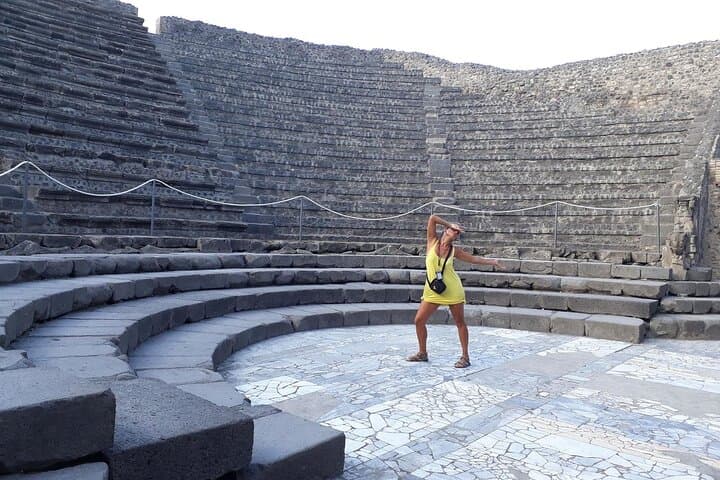
Practical guidance: this experience includes private transportation in a vintage van and a licensed multilingual guide; admission is not included, so arrange tickets ahead. Expect uneven cobbles, short staircases and dusty paths—comfortable walking shoes, sun protection and water are essential. The four-hour schedule typically covers the Forum, House of the Faun, Teatro Grande and Via dell’Abbondanza. Restrooms and small cafes cluster near the entrance; arrive early to avoid crowds and the heat, and always stay on designated routes to protect fragile frescoes and mosaics.
easy.
4 hours.
Suitable for most fitness levels; involves several hours of standing and walking on uneven ground
No—admission is not included with the tour; purchase tickets in advance or ask your operator to advise on entry options.
Pickup points include towns along the Bay of Naples such as Castellammare di Stabia, Pompei, Vico Equense and select hotels; confirm your pickup when booking.
Parts of the site and the meeting/entrance area are stroller-accessible, but many streets are uneven and some sites have steps—access can be limited for wheelchairs.
Restrooms and small cafes are located near the main entrance; bring snacks if you need more options during the tour.
Pompeii was buried in the eruption of Vesuvius in AD 79 and has been excavated since the 18th century, offering an unusually detailed picture of Roman urban life.
The site faces erosion, weathering and visitor impact; staying on marked paths and avoiding contact with frescoes helps protect fragile surfaces.
Sesto Continente Tours operates guided outdoor trips and adventures with an emphasis on safety, stewardship, and memorable experiences.
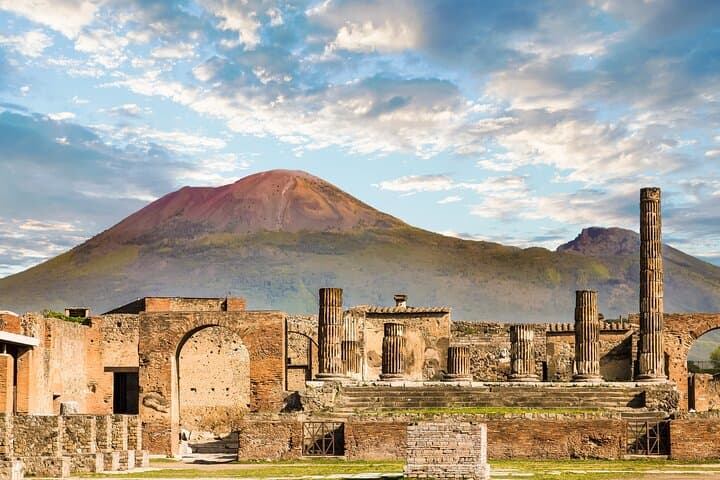
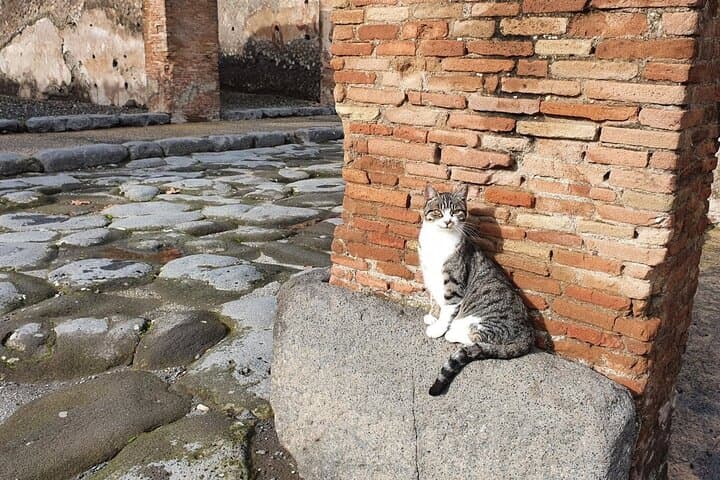
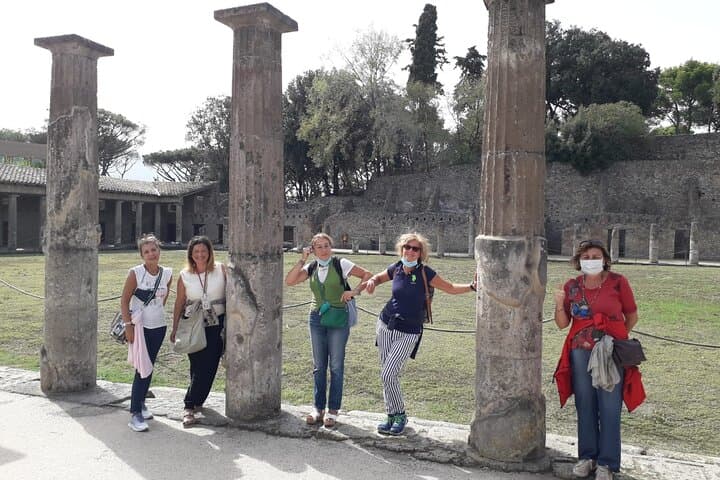
Morning light slants across the Forum as a vintage van rattles up—your guide steps down with a map and a voice that cuts through the faint hum of the modern town. Walkways of compacted pumice and ancient basalt lead between houses whose frescoes survived the heat that froze a day in 79 AD. The air carries citrus and sea; Vesuvius looms, a dark shoulder on the horizon.
Morning light slants across the Forum as a vintage van rattles up—your guide steps down with a map and a voice that cuts through the faint hum of the modern town. Walkways of compacted pumice and ancient basalt lead between houses whose frescoes survived the heat that froze a day in 79 AD. The air carries citrus and sea; Vesuvius looms, a dark shoulder on the horizon.
Pompeii’s streets reveal layered history: pre-Roman settlement, Roman urban planning and the catastrophic eruption of AD 79 that buried the city in ash and lapilli. Systematic excavations since the 18th century have exposed markets, baths, theaters and private homes preserved by rapid burial and later scientific techniques. Geology is part of the exhibit—pyroclastic deposits and volcanic tuff explain both preservation and the hazards that shaped the landscape.
Locally, Pompeii is a living classroom: graffiti that reads like gossip, commercial counters set into shopfronts, and domestic altars where household cults once burned offerings. Licensed guides point out plumbing, mosaics and social clues that ordinary walls provide about ancient daily life.
Practical guidance: this experience includes private transportation in a vintage van and a licensed multilingual guide; admission is not included, so arrange tickets ahead. Expect uneven cobbles, short staircases and dusty paths—comfortable walking shoes, sun protection and water are essential. The four-hour schedule typically covers the Forum, House of the Faun, Teatro Grande and Via dell’Abbondanza. Restrooms and small cafes cluster near the entrance; arrive early to avoid crowds and the heat, and always stay on designated routes to protect fragile frescoes and mosaics.