THE ADVENTURE COLLECTIVE® · Independent discovery and booking for outdoor travel

Navigate Chandni Chowk’s crowded bazaars and centuries of history on a three‑hour private walk that starts and ends at Jama Masjid. Learn where to go, what to expect, and how to prepare for this sensory, fast‑moving slice of Old Delhi.
Navigate Chandni Chowk’s crowded bazaars and centuries of history on a three‑hour private walk that starts and ends at Jama Masjid. Learn where to go, what to expect, and how to prepare for this sensory, fast‑moving slice of Old Delhi.
The air tastes of spice and dust as you step from an air‑conditioned vehicle into the narrow arteries of Chandni Chowk. Rickshaw bells, hawkers’ calls and the beat of foot traffic push you forward; above, the red sandstone domes of Jama Masjid frame the sky.
Verified experiences and guided adventures in the surrounding area.
Operated by SITA World Tours · New Delhi, Delhi
The air tastes of spice and dust as you step from an air‑conditioned vehicle into the narrow arteries of Chandni Chowk. Rickshaw bells, hawkers’ calls and the beat of foot traffic push you forward; above, the red sandstone domes of Jama Masjid frame the sky.
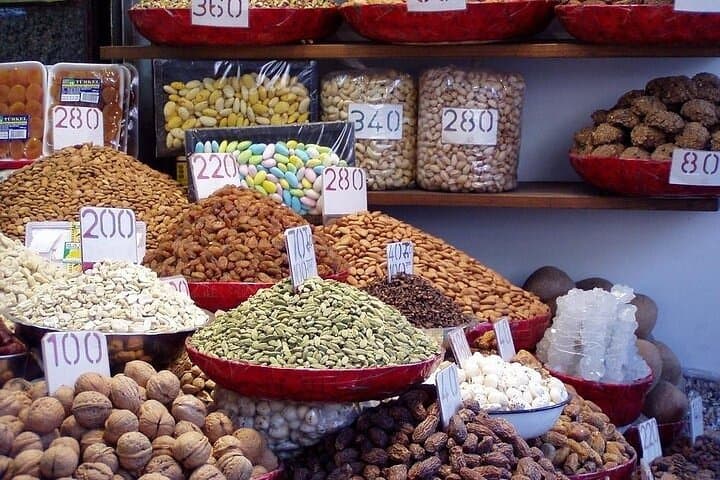
This three‑hour private walk begins and ends at Jama Masjid, taking you along streets historically dedicated to single trades — silks, books, jewelry and utensils — a pattern set during the Mughal era when Shah Jahan laid out Old Delhi in the 17th century. You’ll pass the Digambar Jain Temple and the 18th‑century Gauri Shankar Temple, glimpse the Sisganj Gurdwara and edge toward Khari Baoli, Asia’s largest spice market, where sacks of cumin, chilies and saffron sit in open view.
Geology here is urban: lime plastered façades and Mughal red‑sandstone landmarks, altered by centuries of pollution and repair. Culture is tactile — shopkeepers measuring goods with brass scales, stallholders offering samosas and jalebi. Expect pigeon flocks around Jama Masjid and the constant shuffle of commerce.
Practical guidance: the tour includes round‑trip private transfer, an English‑speaking guide and bottled water; group size is limited. Wear sturdy, comfortable shoes for uneven pavements, dress modestly for visiting religious sites, carry small notes for purchases and keep valuables close. Morning departures avoid peak heat and most of the crowd; plan time afterward to explore rooftop views of the mosque and nearby lanes at a slower pace.
moderate.
3 hours.
Suitable for people who can walk and stand for 2–3 hours on uneven pavements and manage short rickshaw rides; not for those with serious mobility or cardiovascular issues.
The route passes Jama Masjid, Digambar Jain Temple, Gauri Shankar Temple and Sisganj Gurdwara; entry to some inner areas may require modest dress or shoe removal, so follow your guide’s instructions.
Yes — the tour includes private round‑trip transfer from and back to your hotel in Delhi in an air‑conditioned vehicle.
Bottled water is included; street food tastings are optional and at your own expense—carry small change if you plan to sample snacks.
Not recommended for pregnant travelers, those with serious heart or back problems, or anyone unable to walk for up to three hours; minimum age is 2 and groups are capped at eight.
Chandni Chowk was laid out in the 17th century when Shah Jahan developed the walled city; Khari Baoli evolved over centuries into the subcontinent’s central spice market.
High pedestrian traffic stresses narrow historic lanes—minimize plastic waste, buy from local vendors to support livelihoods, and avoid feeding street animals to limit human‑wildlife conflict.
SITA World Tours operates guided outdoor trips and adventures with an emphasis on safety, stewardship, and memorable experiences.


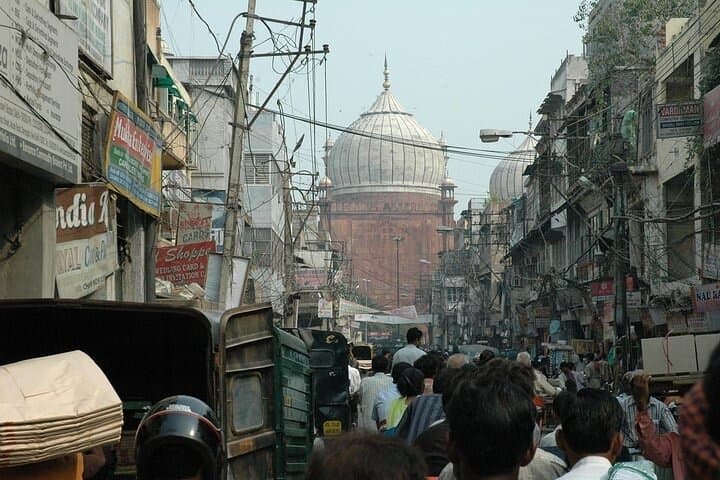
The air tastes of spice and dust as you step from an air‑conditioned vehicle into the narrow arteries of Chandni Chowk. Rickshaw bells, hawkers’ calls and the beat of foot traffic push you forward; above, the red sandstone domes of Jama Masjid frame the sky.
The air tastes of spice and dust as you step from an air‑conditioned vehicle into the narrow arteries of Chandni Chowk. Rickshaw bells, hawkers’ calls and the beat of foot traffic push you forward; above, the red sandstone domes of Jama Masjid frame the sky.
This three‑hour private walk begins and ends at Jama Masjid, taking you along streets historically dedicated to single trades — silks, books, jewelry and utensils — a pattern set during the Mughal era when Shah Jahan laid out Old Delhi in the 17th century. You’ll pass the Digambar Jain Temple and the 18th‑century Gauri Shankar Temple, glimpse the Sisganj Gurdwara and edge toward Khari Baoli, Asia’s largest spice market, where sacks of cumin, chilies and saffron sit in open view.
Geology here is urban: lime plastered façades and Mughal red‑sandstone landmarks, altered by centuries of pollution and repair. Culture is tactile — shopkeepers measuring goods with brass scales, stallholders offering samosas and jalebi. Expect pigeon flocks around Jama Masjid and the constant shuffle of commerce.
Practical guidance: the tour includes round‑trip private transfer, an English‑speaking guide and bottled water; group size is limited. Wear sturdy, comfortable shoes for uneven pavements, dress modestly for visiting religious sites, carry small notes for purchases and keep valuables close. Morning departures avoid peak heat and most of the crowd; plan time afterward to explore rooftop views of the mosque and nearby lanes at a slower pace.