THE ADVENTURE COLLECTIVE® · Independent discovery and booking for outdoor travel

Walk among the brick towers of the Champa kingdom on a half-day tour from Hoi An. This guided visit combines archaeology, a Cham cultural performance, and a local lunch—an efficient, insightful introduction to one of Vietnam’s UNESCO sites.
Walk among the brick towers of the Champa kingdom on a half-day tour from Hoi An. This guided visit combines archaeology, a Cham cultural performance, and a local lunch—an efficient, insightful introduction to one of Vietnam’s UNESCO sites.
You arrive by road into a valley where stone ruins rise like the last pages of a history book—brick towers and lintels mottled with lichen, birds threading vocal lines through the open courtyards. Early morning light slices between columns; the air is warm and smells of damp earth and rice fields as your guide begins the story.
Verified experiences and guided adventures in the surrounding area.
Operated by FawSha Travels · Duy Xuyên, Quang Nam
You arrive by road into a valley where stone ruins rise like the last pages of a history book—brick towers and lintels mottled with lichen, birds threading vocal lines through the open courtyards. Early morning light slices between columns; the air is warm and smells of damp earth and rice fields as your guide begins the story.
My Son was the religious and political heart of the Champa kingdom from roughly the 4th to 13th centuries. Built of fired bricks held together with a plant-based mortar, the site records Hindu-influenced temple architecture adapted to central Vietnam’s monsoon climate and volcanic geology. Much of the complex was damaged in modern conflict; restoration and protective work continue under UNESCO oversight.
Cultural notes echo through the visit: Cham carving motifs, ceremonial stairways, and ritual platforms reveal a society tied to rice agriculture, maritime trade, and Indianized religious forms. Expect a short Cham dance and drum performance staged nearby and a communal lunch at a local house, giving a direct window into contemporary rural life.
Practical guidance: this is an easy half-day outing—plan for uneven grassy paths, scattered shade, and open sun. Wear knees-and-shoulders-covering clothing if you want to respect the site and local customs. Bring water, sun protection, and a light rain layer during the wet months. Transfers are typically shared; confirm pickup times and the excluded entrance fee before departure. Pace your visit to allow quiet time at the main clusters—these ruins reward slow looking.
easy.
5–6 hours.
Suitable for most fitness levels; involves light walking on uneven ground and short standing periods during the tour
No—the My Son entrance fee (VND 150,000 per guest) is typically excluded from the tour price and paid on arrival unless otherwise stated.
From Hoi An expect about 45–60 minutes by road; from Da Nang plan for roughly 1–1.5 hours depending on traffic.
Access within the main clusters involves uneven grassy paths and steps; mobility assistance is limited—contact the operator to discuss specific needs.
Photography is permitted for personal use, but drone use is restricted; check current site rules and follow your guide’s instructions.
My Son was the spiritual center of the Champa kingdom (4th–13th centuries), with temples built from fired brick using local volcanic materials and an organic mortar technique.
UNESCO listing has driven phased restoration and stricter visitor management; stay on designated paths, avoid touching carvings, and respect onsite signage to reduce impact.
FawSha Travels operates guided outdoor trips and adventures with an emphasis on safety, stewardship, and memorable experiences.
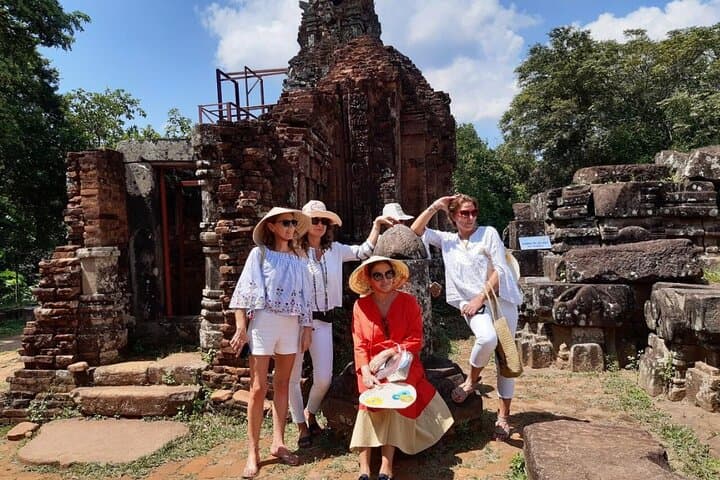
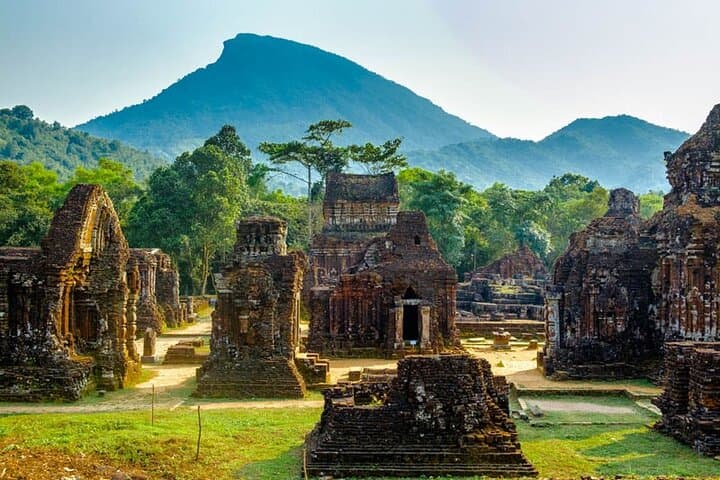
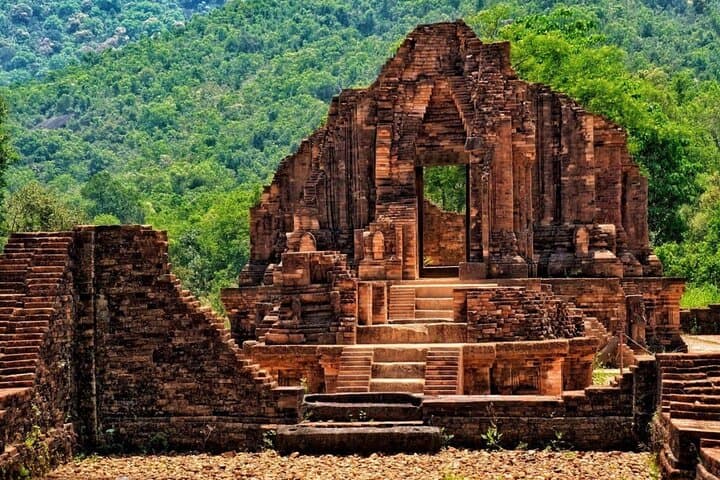
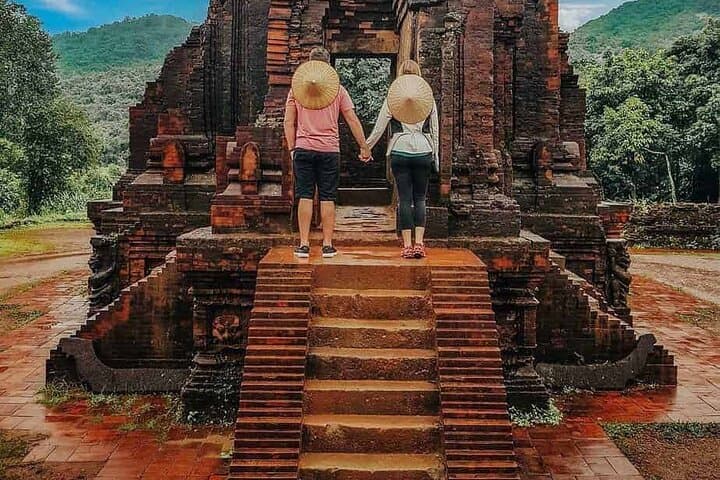
You arrive by road into a valley where stone ruins rise like the last pages of a history book—brick towers and lintels mottled with lichen, birds threading vocal lines through the open courtyards. Early morning light slices between columns; the air is warm and smells of damp earth and rice fields as your guide begins the story.
You arrive by road into a valley where stone ruins rise like the last pages of a history book—brick towers and lintels mottled with lichen, birds threading vocal lines through the open courtyards. Early morning light slices between columns; the air is warm and smells of damp earth and rice fields as your guide begins the story.
My Son was the religious and political heart of the Champa kingdom from roughly the 4th to 13th centuries. Built of fired bricks held together with a plant-based mortar, the site records Hindu-influenced temple architecture adapted to central Vietnam’s monsoon climate and volcanic geology. Much of the complex was damaged in modern conflict; restoration and protective work continue under UNESCO oversight.
Cultural notes echo through the visit: Cham carving motifs, ceremonial stairways, and ritual platforms reveal a society tied to rice agriculture, maritime trade, and Indianized religious forms. Expect a short Cham dance and drum performance staged nearby and a communal lunch at a local house, giving a direct window into contemporary rural life.
Practical guidance: this is an easy half-day outing—plan for uneven grassy paths, scattered shade, and open sun. Wear knees-and-shoulders-covering clothing if you want to respect the site and local customs. Bring water, sun protection, and a light rain layer during the wet months. Transfers are typically shared; confirm pickup times and the excluded entrance fee before departure. Pace your visit to allow quiet time at the main clusters—these ruins reward slow looking.