THE ADVENTURE COLLECTIVE® · Independent discovery and booking for outdoor travel

A compact, immersive visit to MUSA pairs forest trails and hands‑on exhibits—climb the 42‑m tower for treetop views, study orchids and insects, and learn about decades of Amazon research. Ideal for visitors seeking a guided, low‑logistics rainforest experience.
A compact, immersive visit to MUSA pairs forest trails and hands‑on exhibits—climb the 42‑m tower for treetop views, study orchids and insects, and learn about decades of Amazon research. Ideal for visitors seeking a guided, low‑logistics rainforest experience.
You step from an air‑conditioned van into humid understory air and the steady calls of toucans and parrots. A narrow path leads under a canopy that rises and closes like a green roof; orchids and bromeliads hang just out of reach while researchers' catalogues and field notebooks line exhibits in the museum buildings. At dawn the 42‑meter observation tower cleaves the skyline — 242 steps to a crown‑level view of tree tops and the river haze beyond.
Verified experiences and guided adventures in the surrounding area.
Operated by TransferVictor Tours · Manaus, Amazonas
You step from an air‑conditioned van into humid understory air and the steady calls of toucans and parrots. A narrow path leads under a canopy that rises and closes like a green roof; orchids and bromeliads hang just out of reach while researchers' catalogues and field notebooks line exhibits in the museum buildings. At dawn the 42‑meter observation tower cleaves the skyline — 242 steps to a crown‑level view of tree tops and the river haze beyond.
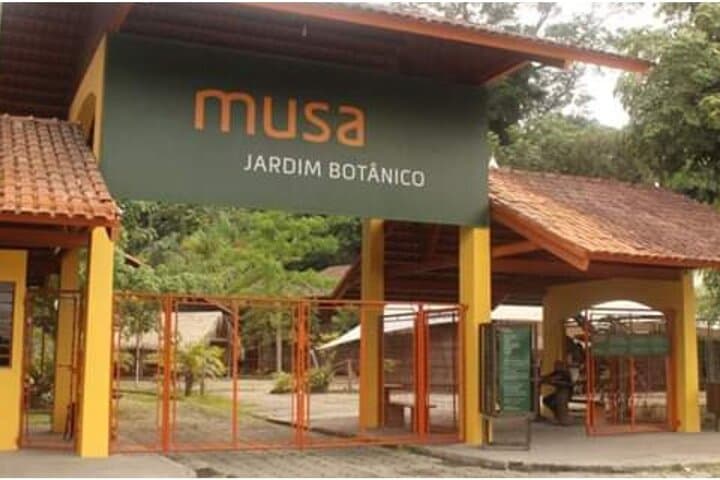
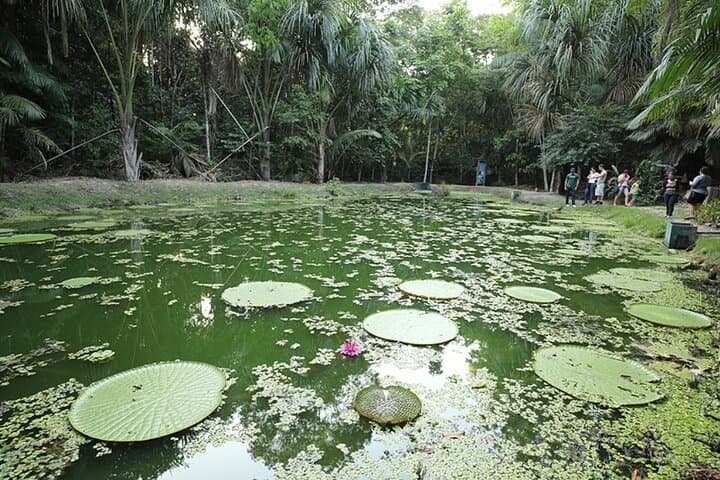
MUSA (Museu da Amazônia) occupies part of the Adolpho Ducke Forest Reserve, a 100‑hectare patch of native terra‑firme forest long studied by INPA (the National Institute for Amazonian Research). Interpretive displays mix natural history, local research, and species collections: aquariums, insect cabinets, and live enclosures for snakes and butterflies make biology tangible. Geologically the area sits on ancient Precambrian shields with nutrient‑poor soils, which explains the forest's open canopy and rich epiphyte life.
Culturally, MUSA bridges urban Manaus and scientific study — guides often point out traditional uses of plants and ongoing conservation projects. Trails are mostly flat but rooty and sometimes muddy; plan for wet conditions and steep, exposed stairways at the tower.
Practical guidance: wear closed, grippy shoes, insect repellent, and a lightweight rain layer. Bring water and allow about three hours to move through exhibits and complete the tower climb. Morning visits give cooler air and better bird activity; the private tour includes transport and an informed guide, making it a compact, accessible way to experience Amazon biodiversity without deep jungle logistics.
moderate.
3 hours.
Moderate fitness recommended—ability to walk uneven ground and climb stairs repeatedly.
Yes — private air‑conditioned transportation is included from specified pickup points in Manaus.
Children are welcome, but infants must sit on an adult’s lap and closed shoes are mandatory for all ages.
The visit is about three hours with uneven trails and a 242‑step tower climb; travelers should have moderate fitness and avoid if they have serious spinal or cardiovascular issues.
Yes — mobile or paper tickets are accepted for entry to MUSA.
MUSA opened in 2009 on land within the Adolpho Ducke Forest Reserve, an INPA research site studied for more than six decades to catalog Amazon biodiversity.
MUSA promotes scientific education and local research projects focused on habitat monitoring and sustainable plant use; visitors are asked to follow Leave No Trace practices to protect fragile understory communities.
TransferVictor Tours operates guided outdoor trips and adventures with an emphasis on safety, stewardship, and memorable experiences.
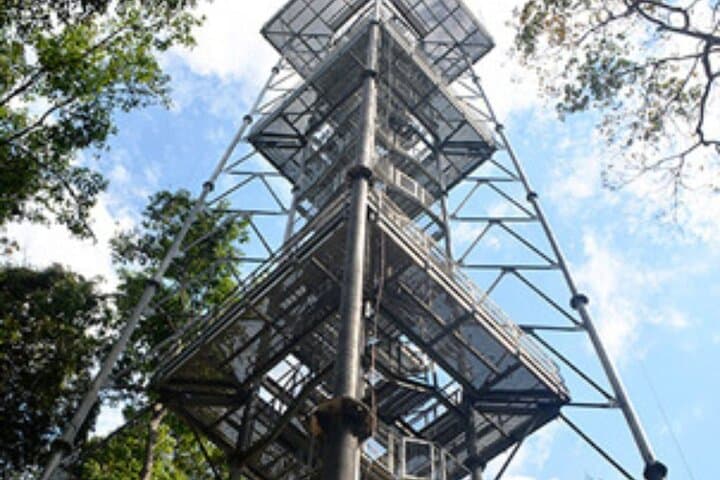
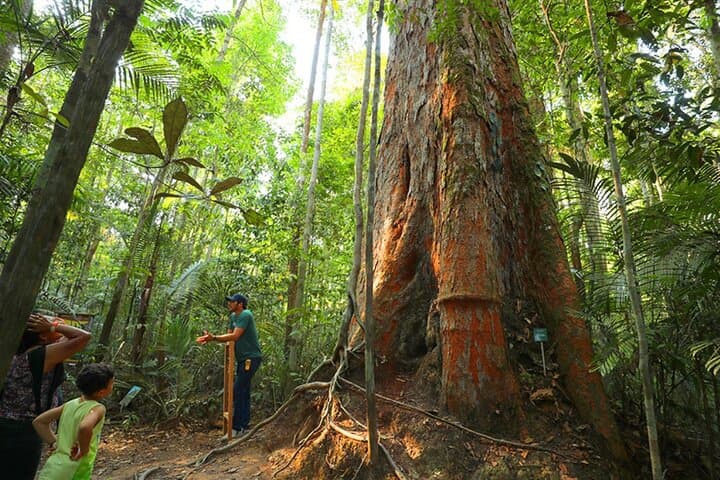
You step from an air‑conditioned van into humid understory air and the steady calls of toucans and parrots. A narrow path leads under a canopy that rises and closes like a green roof; orchids and bromeliads hang just out of reach while researchers' catalogues and field notebooks line exhibits in the museum buildings. At dawn the 42‑meter observation tower cleaves the skyline — 242 steps to a crown‑level view of tree tops and the river haze beyond.
You step from an air‑conditioned van into humid understory air and the steady calls of toucans and parrots. A narrow path leads under a canopy that rises and closes like a green roof; orchids and bromeliads hang just out of reach while researchers' catalogues and field notebooks line exhibits in the museum buildings. At dawn the 42‑meter observation tower cleaves the skyline — 242 steps to a crown‑level view of tree tops and the river haze beyond.
MUSA (Museu da Amazônia) occupies part of the Adolpho Ducke Forest Reserve, a 100‑hectare patch of native terra‑firme forest long studied by INPA (the National Institute for Amazonian Research). Interpretive displays mix natural history, local research, and species collections: aquariums, insect cabinets, and live enclosures for snakes and butterflies make biology tangible. Geologically the area sits on ancient Precambrian shields with nutrient‑poor soils, which explains the forest's open canopy and rich epiphyte life.
Culturally, MUSA bridges urban Manaus and scientific study — guides often point out traditional uses of plants and ongoing conservation projects. Trails are mostly flat but rooty and sometimes muddy; plan for wet conditions and steep, exposed stairways at the tower.
Practical guidance: wear closed, grippy shoes, insect repellent, and a lightweight rain layer. Bring water and allow about three hours to move through exhibits and complete the tower climb. Morning visits give cooler air and better bird activity; the private tour includes transport and an informed guide, making it a compact, accessible way to experience Amazon biodiversity without deep jungle logistics.