THE ADVENTURE COLLECTIVE® · Independent discovery and booking for outdoor travel

Walk through a village built around giant granite boulders and climb to a small medieval castle with sweeping rural views. This full-day experience pairs geology, history, and practical exploration—ideal for travelers based in Coimbra.
Walk through a village built around giant granite boulders and climb to a small medieval castle with sweeping rural views. This full-day experience pairs geology, history, and practical exploration—ideal for travelers based in Coimbra.
A morning wind moves across the granite, carrying the smell of dry earth and pine as the village of Monsanto unfolds under steep slabs of rock.
Verified experiences and guided adventures in the surrounding area.
Operated by Aventuras Forte(s) - Turismo de Natureza · Monsanto, Castelo Branco
A morning wind moves across the granite, carrying the smell of dry earth and pine as the village of Monsanto unfolds under steep slabs of rock.
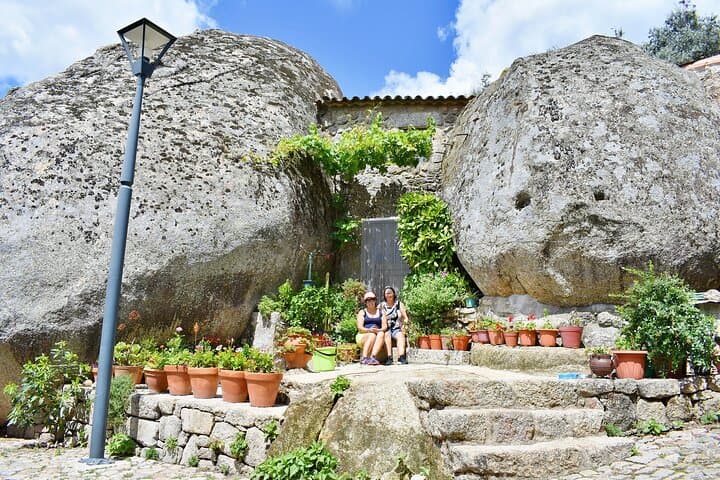
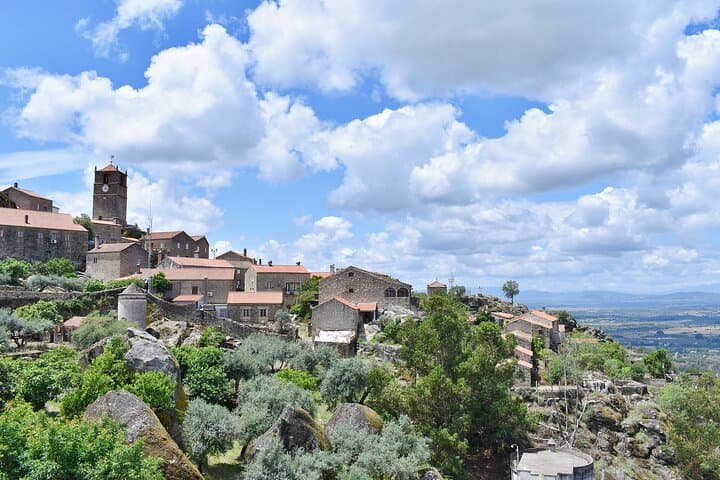
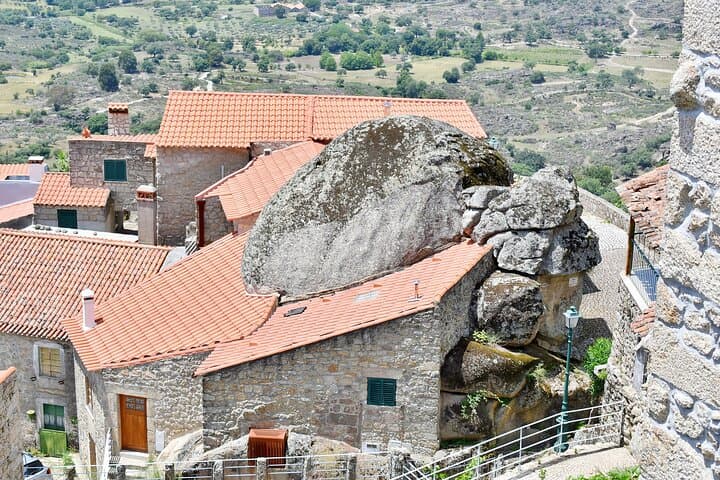
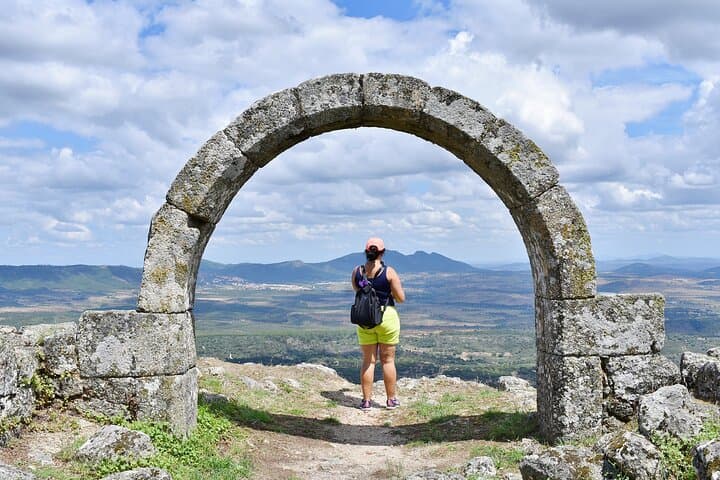
Streets cut between giant boulders feel deliberately improvised — doorways, stairways, and whole façades built around stones that seem to hold the village in place. At the top, the ruined castle crowns the slope, a compact fortress that commands views back toward rolling oak and cork woodlands.
Monsanto’s history is visible in its architecture: medieval walls, the Lucano tower topped by the silver rooster awarded in 1938 when it was named “the most Portuguese village,” and houses that use the outcrop as structural ballast. Geologically, the granite outcrops are part of Portugal’s ancient crystalline massif; weathering and erosion left the rounded blocks villagers incorporated into urban fabric.
Local life remains rural — small gardens, shepherding in nearby fields, and traditional stonework still visible in homes and walls. Recent popular culture has drawn extra attention, but the village’s character comes from slow rhythms and craft.
Practical notes: expect 7–8 hours for the full excursion with transport from Coimbra; much walking is on uneven cobbles and granite steps, some steep. Bring sturdy footwear, sun protection, and water; a mid-morning or late-afternoon visit softens the heat and light for photos. Guides typically include narrated history, short museum or chapel stops, and panoramic breaks at the castle and viewpoints. Mobility-limited visitors should plan for uneven surfaces and short steep climbs. With straightforward preparation, Monsanto rewards with tactile architecture, wide rural views, and the satisfying oddity of houses that seem grown out of rock.
easy.
7–8 hours.
Suitable for most fitness levels but requires ability to walk on uneven surfaces and climb short steep sections
The tour runs about 7–8 hours (420–480 minutes) and typically includes transport with pickup in the Coimbra area.
Monsanto has uneven cobbles and steep sections; those with limited mobility may find parts challenging—contact the operator to discuss accessibility and alternatives.
The standard inclusions list tea/coffee and transport; full meals are not listed, so bring snacks or plan for a local café stop if needed.
Photography is welcome; tours are led by qualified technical guides who provide historical and local context throughout the visit.
Monsanto’s distinctive built environment grew from medieval settlement patterns where residents integrated large granite boulders into homes and fortifications; it was honored in 1938 as an emblem of Portuguese rural identity.
Visitor pressure is managed by keeping paths defined and limiting infrastructure; respect private property, avoid climbing on unstable rockwork, and follow local guidance to protect fragile stone and vegetation.
Aventuras Forte(s) - Turismo de Natureza operates guided outdoor trips and adventures with an emphasis on safety, stewardship, and memorable experiences.
A morning wind moves across the granite, carrying the smell of dry earth and pine as the village of Monsanto unfolds under steep slabs of rock.
A morning wind moves across the granite, carrying the smell of dry earth and pine as the village of Monsanto unfolds under steep slabs of rock.
Streets cut between giant boulders feel deliberately improvised — doorways, stairways, and whole façades built around stones that seem to hold the village in place. At the top, the ruined castle crowns the slope, a compact fortress that commands views back toward rolling oak and cork woodlands.
Monsanto’s history is visible in its architecture: medieval walls, the Lucano tower topped by the silver rooster awarded in 1938 when it was named “the most Portuguese village,” and houses that use the outcrop as structural ballast. Geologically, the granite outcrops are part of Portugal’s ancient crystalline massif; weathering and erosion left the rounded blocks villagers incorporated into urban fabric.
Local life remains rural — small gardens, shepherding in nearby fields, and traditional stonework still visible in homes and walls. Recent popular culture has drawn extra attention, but the village’s character comes from slow rhythms and craft.
Practical notes: expect 7–8 hours for the full excursion with transport from Coimbra; much walking is on uneven cobbles and granite steps, some steep. Bring sturdy footwear, sun protection, and water; a mid-morning or late-afternoon visit softens the heat and light for photos. Guides typically include narrated history, short museum or chapel stops, and panoramic breaks at the castle and viewpoints. Mobility-limited visitors should plan for uneven surfaces and short steep climbs. With straightforward preparation, Monsanto rewards with tactile architecture, wide rural views, and the satisfying oddity of houses that seem grown out of rock.