THE ADVENTURE COLLECTIVE® · Independent discovery and booking for outdoor travel

Wander the red-walled lanes of Marrakech on a focused three-hour historical walking tour that visits Koutoubia, Bahia Palace, Bab Agnaou, and the medina. Practical tips on timing, footwear, and what to expect in the souks help you get the most from the experience.
Wander the red-walled lanes of Marrakech on a focused three-hour historical walking tour that visits Koutoubia, Bahia Palace, Bab Agnaou, and the medina. Practical tips on timing, footwear, and what to expect in the souks help you get the most from the experience.
You push through the medina gate and the city rearranges itself around you: orange vendors lining the alley, the call of vendors threading the square, and the ochre ramparts catching late light like a kiln-fired wall. For three hours the old city leads you by the hand — narrow lanes open into courtyards, courtyards fold into palaces, and the bustle of Jemaa el-Fnaa hangs at the center like a beating heart.
Verified experiences and guided adventures in the surrounding area.
Operated by marrakech-guided · Marrakech, Marrakech-Safi
You push through the medina gate and the city rearranges itself around you: orange vendors lining the alley, the call of vendors threading the square, and the ochre ramparts catching late light like a kiln-fired wall. For three hours the old city leads you by the hand — narrow lanes open into courtyards, courtyards fold into palaces, and the bustle of Jemaa el-Fnaa hangs at the center like a beating heart.
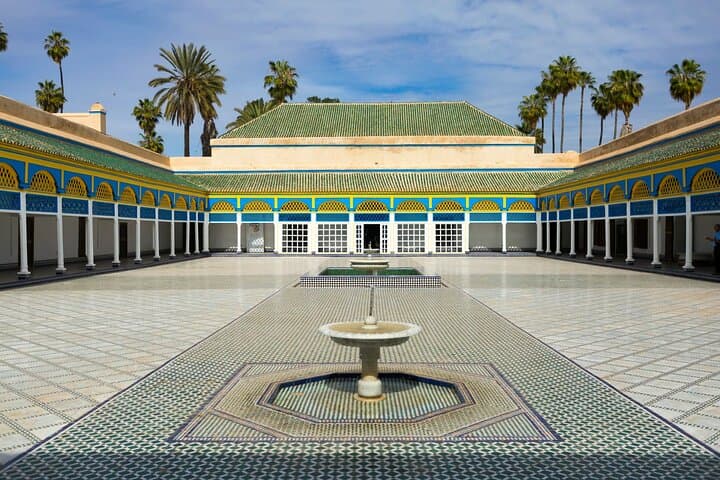
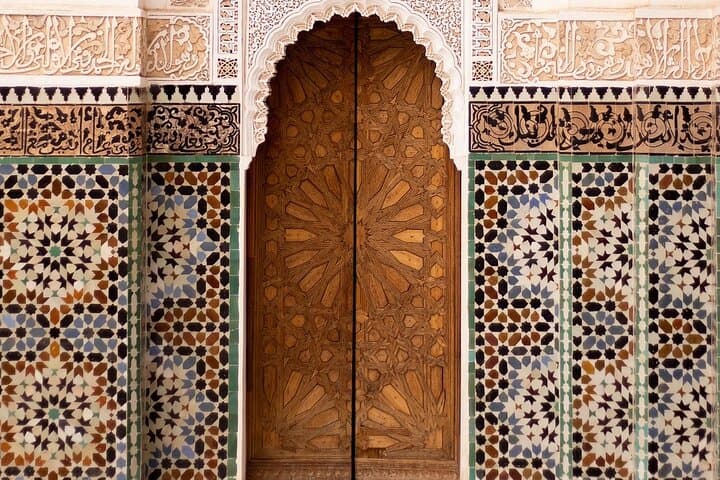
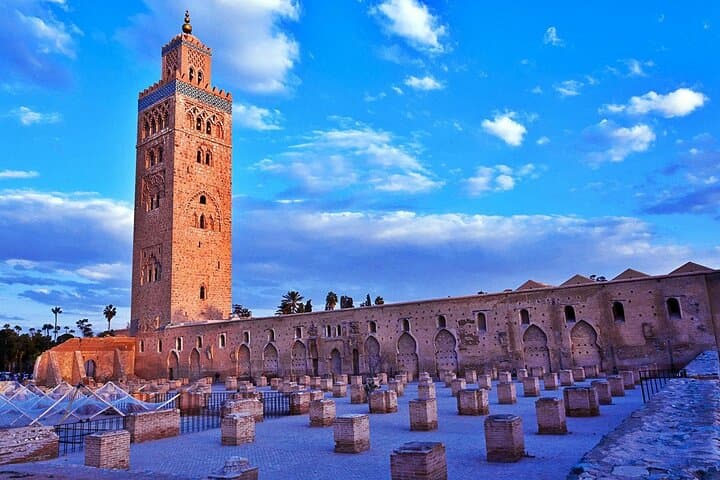
This guided walk traces Marrakech’s big chapters. The Almohad minaret of the Koutoubia dates to the 12th century and still sets the skyline; the walled Kasbah and Bab Agnaou mark the city’s medieval defenses; the 19th-century Bahia Palace shows the decorative excess of the late royal court. Geologically, Marrakech sits where red clay plains meet the lower Atlas, the iron-rich soils giving the city its characteristic color. Culturally expect a mix of Arab and Berber influences, lively souks, and craftspeople whose trades have run generations.
Practical guidance: the tour covers paved and uneven surfaces, so wear sturdy shoes and expect frequent stops for photos and short walks between sites. Mid-afternoon into early evening is best for cooler light and a livelier square. Bring water, small bills for purchases, and a respectful approach to photographing people. The itinerary often includes a tea break at a Berber cooperative, offering a local window into daily life. Because the route moves through crowded lanes, keep valuables close and allow extra time if you plan museum visits before or after the walk. This is a city tour that rewards curiosity: listen, ask, and let the streets direct the rhythm of discovery.
easy.
3 hours.
Suitable for most fitness levels; requires 2–3 hours of walking with periodic standing.
The tour is approximately three hours and covers a few kilometers of walking through the medina with frequent stops at monuments and markets.
Some sites listed on the itinerary include admission while others do not; check the booking details or ask the guide about entrance fees before the tour starts.
The route is generally accessible in parts and the operator lists wheelchair-accessible options, but expect uneven surfaces and steps at some historic sites.
Yes, the itinerary includes time in the medina and souks; guides often provide tips for bargaining and recommend reputable stalls.
Marrakech’s medina dates back to the 11th century and grew under Almoravid and Almohad dynasties; its ramparts and gates reflect medieval urban planning.
Tourism pressure affects narrow medina lanes and historic structures; favor local cooperatives, avoid plastic waste, and follow guide instructions to reduce impact.
marrakech-guided operates guided outdoor trips and adventures with an emphasis on safety, stewardship, and memorable experiences.
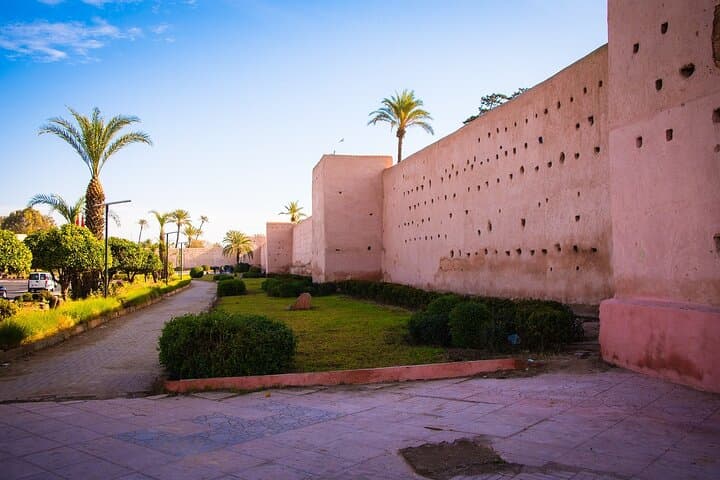
You push through the medina gate and the city rearranges itself around you: orange vendors lining the alley, the call of vendors threading the square, and the ochre ramparts catching late light like a kiln-fired wall. For three hours the old city leads you by the hand — narrow lanes open into courtyards, courtyards fold into palaces, and the bustle of Jemaa el-Fnaa hangs at the center like a beating heart.
You push through the medina gate and the city rearranges itself around you: orange vendors lining the alley, the call of vendors threading the square, and the ochre ramparts catching late light like a kiln-fired wall. For three hours the old city leads you by the hand — narrow lanes open into courtyards, courtyards fold into palaces, and the bustle of Jemaa el-Fnaa hangs at the center like a beating heart.
This guided walk traces Marrakech’s big chapters. The Almohad minaret of the Koutoubia dates to the 12th century and still sets the skyline; the walled Kasbah and Bab Agnaou mark the city’s medieval defenses; the 19th-century Bahia Palace shows the decorative excess of the late royal court. Geologically, Marrakech sits where red clay plains meet the lower Atlas, the iron-rich soils giving the city its characteristic color. Culturally expect a mix of Arab and Berber influences, lively souks, and craftspeople whose trades have run generations.
Practical guidance: the tour covers paved and uneven surfaces, so wear sturdy shoes and expect frequent stops for photos and short walks between sites. Mid-afternoon into early evening is best for cooler light and a livelier square. Bring water, small bills for purchases, and a respectful approach to photographing people. The itinerary often includes a tea break at a Berber cooperative, offering a local window into daily life. Because the route moves through crowded lanes, keep valuables close and allow extra time if you plan museum visits before or after the walk. This is a city tour that rewards curiosity: listen, ask, and let the streets direct the rhythm of discovery.