THE ADVENTURE COLLECTIVE® · Independent discovery and booking for outdoor travel

Walk the sphinx-lined avenue where the great Opet Festival once paraded gods between Karnak and Luxor Temple. This concise, guided visit highlights the temple’s unusual urban siting, ritual alignments and sandstone reliefs.
Walk the sphinx-lined avenue where the great Opet Festival once paraded gods between Karnak and Luxor Temple. This concise, guided visit highlights the temple’s unusual urban siting, ritual alignments and sandstone reliefs.
A low sun gilds the sandstone pylons as you step from an air-conditioned vehicle into the long shadow of Luxor Temple. The stones here still hold the rhythm of ancient processions—sphinx-lined avenues and battered reliefs that seemed to watch the Opet Festival unfold for millennia. Visitors move from gate to inner court with a guide pointing out alignments that once oriented priests, oxen, and the god’s image toward Karnak.
Verified experiences and guided adventures in the surrounding area.
Operated by NORTH AFRICAN SHIPPING AND TOURISM COMPANY (NASCO TOURS) · Luxor, Luxor Governorate
A low sun gilds the sandstone pylons as you step from an air-conditioned vehicle into the long shadow of Luxor Temple. The stones here still hold the rhythm of ancient processions—sphinx-lined avenues and battered reliefs that seemed to watch the Opet Festival unfold for millennia. Visitors move from gate to inner court with a guide pointing out alignments that once oriented priests, oxen, and the god’s image toward Karnak.
Built and rebuilt from the New Kingdom through the Roman period, Luxor Temple (Ipet-resyt) is unusual in its urban siting and its direct link to Karnak by the sphinx-bordered processional way. The complex records changes in kingship and religion: columns carved with Ramesside cartouches, later additions by Roman emperors, and traces of Coptic reuse. Geologically, the temple rises from local Nubian sandstone—soft, warm-toned rock that erodes into readable layers of human activity.
Practical guidance: the standard visit is brief—about 60 minutes inside—so move deliberately. Arrive early or late afternoon to avoid peak heat and to see how light sculpts the hieroglyphs. Wear sturdy closed-toe shoes for uneven flagstones, bring 1–2 liters of water, and carry sun protection; shaded spots are limited. Photography is allowed in most areas but follow your guide on restricted zones. Because this is an active archaeological site and cultural landscape, respect barriers, avoid touching carved reliefs, and keep noise low to preserve the fragile atmosphere. The tour typically includes pickup and return to your Luxor hotel, leaving time to explore nearby Karnak or the Luxor Museum if you want context after the visit.
easy.
1–2 hours.
Suitable for most fitness levels; involves walking on uneven stone and standing for interpretation.
Yes—this specific private tour includes admission to Luxor Temple as noted in the itinerary.
The guided portion inside Luxor Temple is typically about 60 minutes within the 90-minute tour window.
Parts of the complex have uneven stone floors and steps; accessibility is limited—ask the operator about vehicle and entrance options in advance.
Photography is generally permitted in most areas, but follow guide instructions and respect any restricted zones or signs.
Luxor Temple—Ipet-resyt—served as the focus of the Opet Festival when statues of Amun, Mut and Khonsu were paraded from Karnak; its orientation and sphinx avenue emphasize that ceremonial link.
Ongoing preservation focuses on stabilizing soft Nubian sandstone and managing visitor impact—obey barriers and avoid touching carved surfaces to reduce wear.
NORTH AFRICAN SHIPPING AND TOURISM COMPANY (NASCO TOURS) operates guided outdoor trips and adventures with an emphasis on safety, stewardship, and memorable experiences.

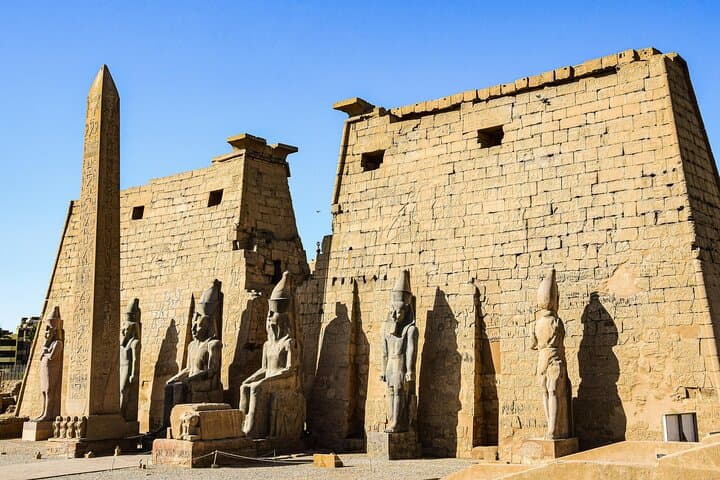
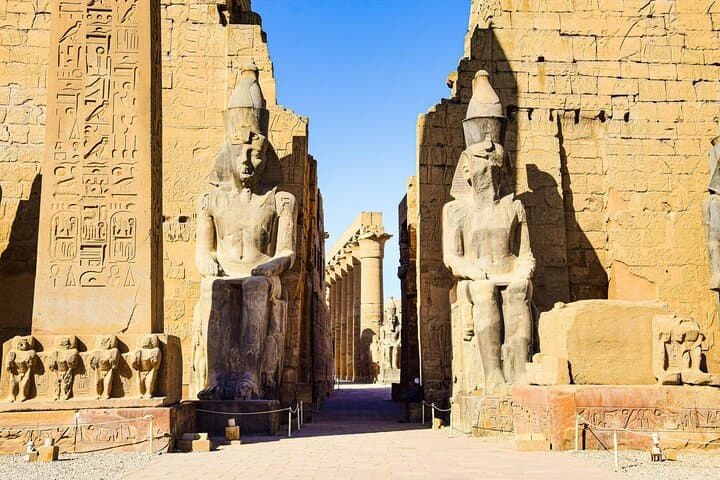

A low sun gilds the sandstone pylons as you step from an air-conditioned vehicle into the long shadow of Luxor Temple. The stones here still hold the rhythm of ancient processions—sphinx-lined avenues and battered reliefs that seemed to watch the Opet Festival unfold for millennia. Visitors move from gate to inner court with a guide pointing out alignments that once oriented priests, oxen, and the god’s image toward Karnak.
A low sun gilds the sandstone pylons as you step from an air-conditioned vehicle into the long shadow of Luxor Temple. The stones here still hold the rhythm of ancient processions—sphinx-lined avenues and battered reliefs that seemed to watch the Opet Festival unfold for millennia. Visitors move from gate to inner court with a guide pointing out alignments that once oriented priests, oxen, and the god’s image toward Karnak.
Built and rebuilt from the New Kingdom through the Roman period, Luxor Temple (Ipet-resyt) is unusual in its urban siting and its direct link to Karnak by the sphinx-bordered processional way. The complex records changes in kingship and religion: columns carved with Ramesside cartouches, later additions by Roman emperors, and traces of Coptic reuse. Geologically, the temple rises from local Nubian sandstone—soft, warm-toned rock that erodes into readable layers of human activity.
Practical guidance: the standard visit is brief—about 60 minutes inside—so move deliberately. Arrive early or late afternoon to avoid peak heat and to see how light sculpts the hieroglyphs. Wear sturdy closed-toe shoes for uneven flagstones, bring 1–2 liters of water, and carry sun protection; shaded spots are limited. Photography is allowed in most areas but follow your guide on restricted zones. Because this is an active archaeological site and cultural landscape, respect barriers, avoid touching carved reliefs, and keep noise low to preserve the fragile atmosphere. The tour typically includes pickup and return to your Luxor hotel, leaving time to explore nearby Karnak or the Luxor Museum if you want context after the visit.