THE ADVENTURE COLLECTIVE® · Independent discovery and booking for outdoor travel

Walk the ladders and alleys of Le Panier with a local guide and watch Marseille’s history unfold through stone façades, marketplaces, and sea-swept viewpoints. This three-hour tour blends architecture, immigrant stories, and local color with clear practical tips for a smooth visit.
Walk the ladders and alleys of Le Panier with a local guide and watch Marseille’s history unfold through stone façades, marketplaces, and sea-swept viewpoints. This three-hour tour blends architecture, immigrant stories, and local color with clear practical tips for a smooth visit.
A narrow stairway opens into light and salt: you step out of the Vieux-Port into Le Panier, Marseille’s oldest quarter, where alleys tilt toward the sea and house facades wear their century-old repairs like badges.
Verified experiences and guided adventures in the surrounding area.
Operated by Les échappées Provençales · Marseille, Provence-Alpes-Côte d'Azur
A narrow stairway opens into light and salt: you step out of the Vieux-Port into Le Panier, Marseille’s oldest quarter, where alleys tilt toward the sea and house facades wear their century-old repairs like badges.
This three-hour walk threads history and urban life. Founded by Greeks from Phocaea around 600 BC, Marseille accrued layers—working-class neighborhoods, waves of immigration, and mid-20th-century demolitions that reshaped streets. Stone matters here: pink La Couronne quarry stone dresses the XVIII-century courthouse; the diamond-cut façade of a 16th-century house survived wartime dynamiting. The Old Charity (La Vieille Charité) by Pierre Puget reads as a civic drama, now a hushed cultural hub, while the Cathedral of the Major throws Romano-Byzantine weight toward the Mediterranean.
The tour moves at foot pace—staircases, narrow lanes, a few small squares that once held windmills—and the city’s scent shifts from frying fish to sea breeze that seems to usher you along. Local anecdotes enliven architecture and immigrant stories; a guide born in Marseille will point out where neighborhoods changed and which buildings told different fates.
Practical note: the route is mostly paved but uneven; expect stairs and tight turns. Bring comfortable, grippy shoes, water, and a light layer—the sea breeze can cool even on warm days. Start early for softer light and fewer crowds at Place de Lenche and the Vieux-Port viewpoint. Public transport is easy to reach the meeting point; tipping the guide and keeping noise low around residential alleys respects local life. This is an urban hike for curious walkers who want context as much as views.
easy.
3 hours.
Suitable for most fitness levels; you should be comfortable walking and standing for up to three hours and navigating stairs.
Most tours meet near the Vieux-Port (Old Port) area and finish at Place de Lenche or back at the Vieux-Port—confirm exact pickup on your ticket.
The district has many stairs and narrow passages; the tour is described as physically easy generally but is not fully wheelchair accessible.
This listing uses a local French guide; check with the operator for available languages or private tours in English or other languages.
Tours typically run in light rain; cancellation policy allows full refund if you cancel at least 24 hours before departure—contact the operator for weather decisions.
Le Panier is Marseille’s oldest neighbourhood with roots back to the Greek settlement of Phocaea (circa 600 BC); its urban fabric reflects centuries of maritime trade and successive immigrant communities.
The old quarter faces pressures from tourism and gentrification; stick to marked paths, respect private property, and support local businesses to help keep the neighbourhood sustainable.
Les échappées Provençales operates guided outdoor trips and adventures with an emphasis on safety, stewardship, and memorable experiences.
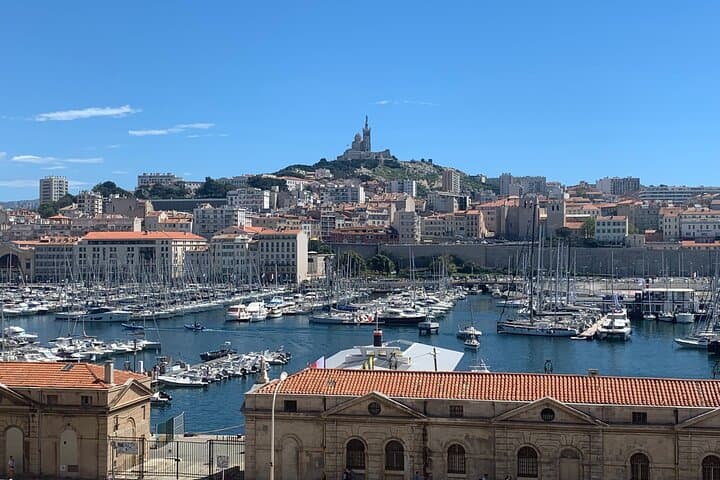


A narrow stairway opens into light and salt: you step out of the Vieux-Port into Le Panier, Marseille’s oldest quarter, where alleys tilt toward the sea and house facades wear their century-old repairs like badges.
A narrow stairway opens into light and salt: you step out of the Vieux-Port into Le Panier, Marseille’s oldest quarter, where alleys tilt toward the sea and house facades wear their century-old repairs like badges.
This three-hour walk threads history and urban life. Founded by Greeks from Phocaea around 600 BC, Marseille accrued layers—working-class neighborhoods, waves of immigration, and mid-20th-century demolitions that reshaped streets. Stone matters here: pink La Couronne quarry stone dresses the XVIII-century courthouse; the diamond-cut façade of a 16th-century house survived wartime dynamiting. The Old Charity (La Vieille Charité) by Pierre Puget reads as a civic drama, now a hushed cultural hub, while the Cathedral of the Major throws Romano-Byzantine weight toward the Mediterranean.
The tour moves at foot pace—staircases, narrow lanes, a few small squares that once held windmills—and the city’s scent shifts from frying fish to sea breeze that seems to usher you along. Local anecdotes enliven architecture and immigrant stories; a guide born in Marseille will point out where neighborhoods changed and which buildings told different fates.
Practical note: the route is mostly paved but uneven; expect stairs and tight turns. Bring comfortable, grippy shoes, water, and a light layer—the sea breeze can cool even on warm days. Start early for softer light and fewer crowds at Place de Lenche and the Vieux-Port viewpoint. Public transport is easy to reach the meeting point; tipping the guide and keeping noise low around residential alleys respects local life. This is an urban hike for curious walkers who want context as much as views.