THE ADVENTURE COLLECTIVE® · Independent discovery and booking for outdoor travel

Trade Chiang Mai's markets for centuries-old temples on a six- to seven-hour drive south to Lamphun. Visit Wat Phra That Hariphunchai and Wat Phra That Lampang Luang while learning the story of the Hariphunchai kingdom and Lanna culture.
Trade Chiang Mai's markets for centuries-old temples on a six- to seven-hour drive south to Lamphun. Visit Wat Phra That Hariphunchai and Wat Phra That Lampang Luang while learning the story of the Hariphunchai kingdom and Lanna culture.
You leave Chiang Mai's bustle behind as the road unfurls southward, rice paddies and low hills grazing the edges of the windshield. By the time Lamphun's faded city wall and moat come into view, the modern noise thins and the day's focus sharpens on temples, teak, and old stone.
Verified experiences and guided adventures in the surrounding area.
Operated by Sunleisure World · Lamphun, Lamphun Province
You leave Chiang Mai's bustle behind as the road unfurls southward, rice paddies and low hills grazing the edges of the windshield. By the time Lamphun's faded city wall and moat come into view, the modern noise thins and the day's focus sharpens on temples, teak, and old stone.
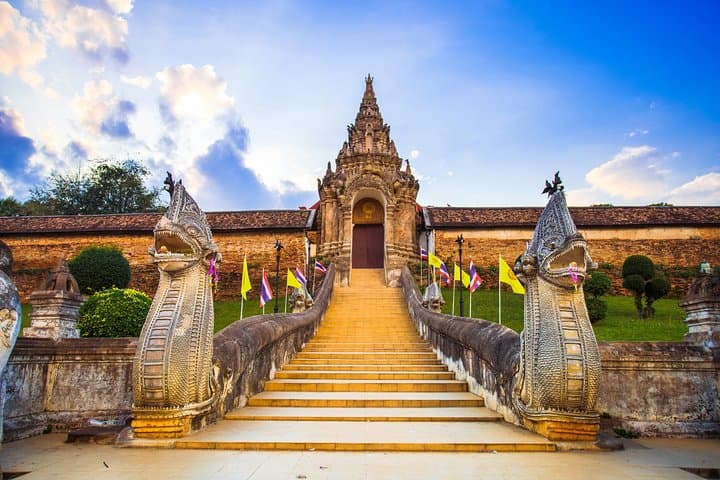
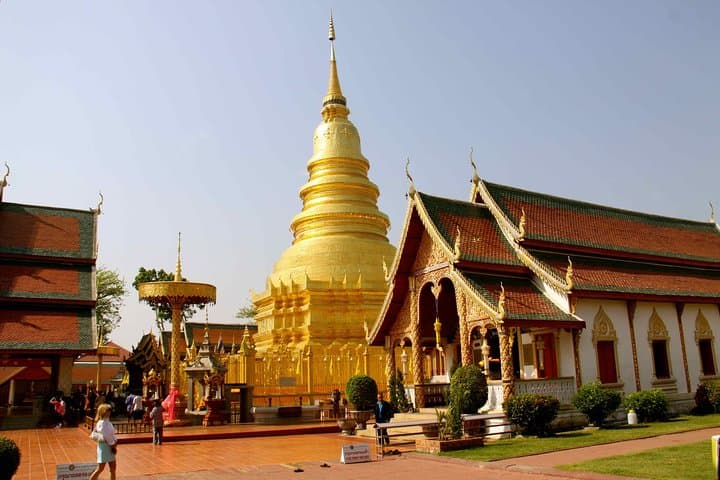
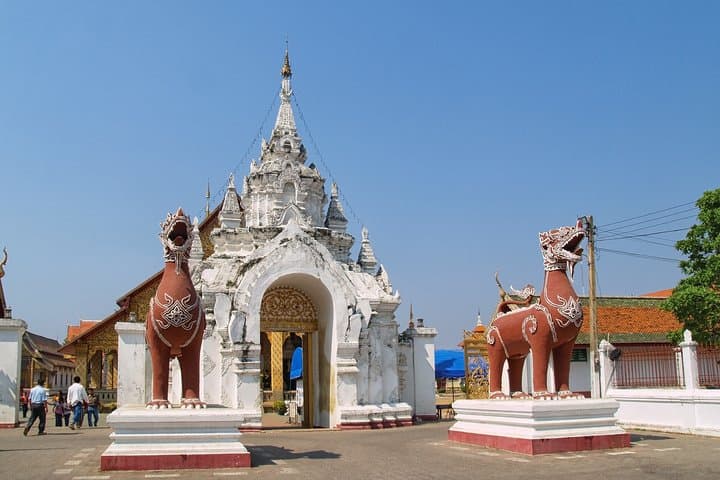
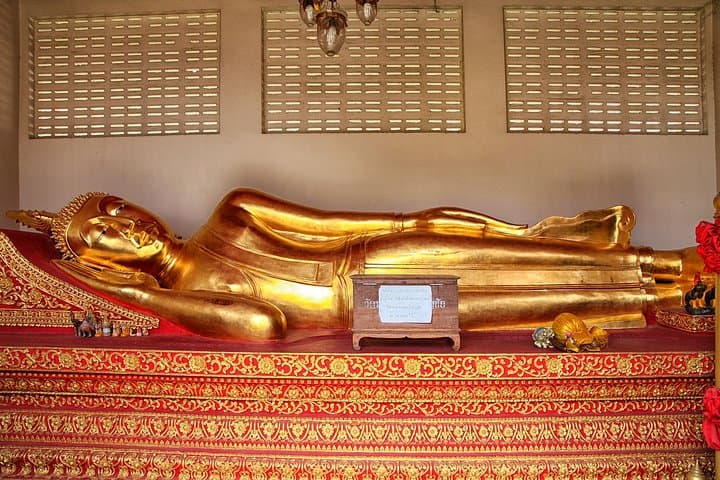
Lamphun was founded in the 7th century as the Mon kingdom of Hariphunchai and later absorbed into the Lanna world; its religious architecture records that slow confluence. Wat Phra That Hariphunchai's 51‑meter golden chedi—built in the 9th century—dominates the skyline, housing a Buddha relic and a carved teak library of ancient Pali texts. Nearby Wat Jammathevee (Wat Ku Kut) carries the curious mark of lightning: a chedi missing its top that locals still point to when recounting storms of the past. In the afternoon, Wat Phra That Lampang Luang presents a different face—sprawling Lanna wooden buildings, a quiet viharn, and lacquered murals preserved in cool shade.
Practicalities: this is a 6–7 hour shared tour with air‑conditioned transfers and an English guide; expect short walks on flat, often shaded temple grounds and steps into ordination halls. Dress respectfully—shoulders and knees covered—and bring water, sun protection, and small bills for temple offerings. Timing a morning temple visit avoids the hottest hours and gives better light for photography. The tour balances history, quiet moments of reflection, and the simple joy of rural northern Thailand slipping past the window.
easy.
6–7 hours.
Light walking on mostly flat temple grounds; suitable for most fitness levels
Yes—pickup and drop-off from selected Chiang Mai hotels are included; confirm your pickup point during booking.
Admission fees are listed as included in the tour inclusions, but small donations at temples are customary and not covered.
Expect short, mostly flat walks and stairs at temple sites—no long hikes; the tour is rated easy and suitable for most travelers.
Modest attire is required: cover shoulders and knees, remove shoes before entering indoor areas, and avoid revealing clothing.
Lamphun began as the Hariphunchai Mon kingdom in the 7th century and later integrated into the Lanna kingdom; its temples preserve religious and artistic exchanges across centuries.
Temples depend on respectful tourism—avoid litter, use marked paths, and consider small donations to maintenance funds; support local eateries to keep the cultural economy sustainable.
Sunleisure World operates guided outdoor trips and adventures with an emphasis on safety, stewardship, and memorable experiences.
You leave Chiang Mai's bustle behind as the road unfurls southward, rice paddies and low hills grazing the edges of the windshield. By the time Lamphun's faded city wall and moat come into view, the modern noise thins and the day's focus sharpens on temples, teak, and old stone.
You leave Chiang Mai's bustle behind as the road unfurls southward, rice paddies and low hills grazing the edges of the windshield. By the time Lamphun's faded city wall and moat come into view, the modern noise thins and the day's focus sharpens on temples, teak, and old stone.
Lamphun was founded in the 7th century as the Mon kingdom of Hariphunchai and later absorbed into the Lanna world; its religious architecture records that slow confluence. Wat Phra That Hariphunchai's 51‑meter golden chedi—built in the 9th century—dominates the skyline, housing a Buddha relic and a carved teak library of ancient Pali texts. Nearby Wat Jammathevee (Wat Ku Kut) carries the curious mark of lightning: a chedi missing its top that locals still point to when recounting storms of the past. In the afternoon, Wat Phra That Lampang Luang presents a different face—sprawling Lanna wooden buildings, a quiet viharn, and lacquered murals preserved in cool shade.
Practicalities: this is a 6–7 hour shared tour with air‑conditioned transfers and an English guide; expect short walks on flat, often shaded temple grounds and steps into ordination halls. Dress respectfully—shoulders and knees covered—and bring water, sun protection, and small bills for temple offerings. Timing a morning temple visit avoids the hottest hours and gives better light for photography. The tour balances history, quiet moments of reflection, and the simple joy of rural northern Thailand slipping past the window.