THE ADVENTURE COLLECTIVE® · Independent discovery and booking for outdoor travel

Walk Hakata’s sacred circuit with a local guide—from the monumental reclining Buddha at Nanzoin to the historic halls of Tōchō-ji and the seasonal calm of Rakusuien. This full-day guided tour blends history, garden culture, and practical local insight for travelers ready to explore Fukuoka beyond the station.
Walk Hakata’s sacred circuit with a local guide—from the monumental reclining Buddha at Nanzoin to the historic halls of Tōchō-ji and the seasonal calm of Rakusuien. This full-day guided tour blends history, garden culture, and practical local insight for travelers ready to explore Fukuoka beyond the station.
You step out of Hakata Station and the city exhales around you: neon signs give way to low temple roofs, and the steady river of commuters parts for torii gates that seem to mark a quieter time.
Verified experiences and guided adventures in the surrounding area.
Operated by DeepExperience · Fukuoka, Fukuoka Prefecture
You step out of Hakata Station and the city exhales around you: neon signs give way to low temple roofs, and the steady river of commuters parts for torii gates that seem to mark a quieter time.
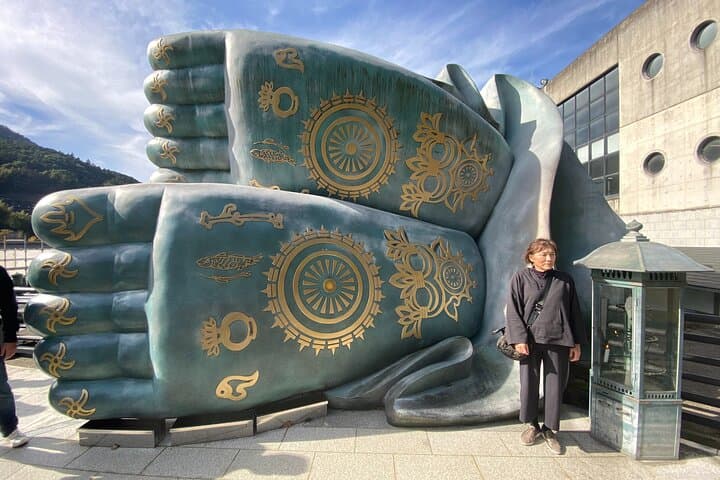
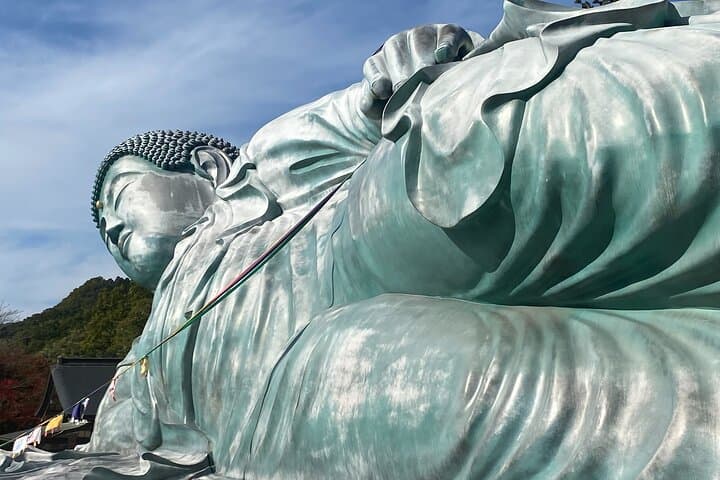
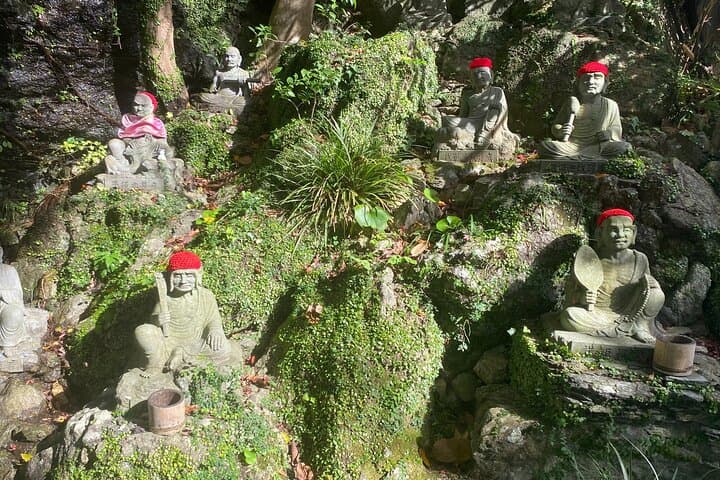
The day unfolds as a measured walk through Fukuoka’s spiritual heart. At Nanzoin the reclining Buddha dominates a broad clearing—so large you can walk its flank and, if the guide permits, enter a hollowed interior for a closer look. Elsewhere stone Jizō statues keep silent vigil beside a small waterfall; their stacked rows feel like a neighborhood of guardians watching the city.
Tōchō-ji brings older layers: founded by Kūkai in the early ninth century, it houses one of Japan’s largest seated wooden Buddhas and a red pagoda visible from the street. Shōfukuji recalls Zen’s arrival with its restrained gate and teak beams, while Sumiyoshi Shrine points to Hakata’s maritime past with ancient Sumiyoshi-zukuri architecture. Rakusuien’s Meiji-era garden and teahouse offer a green pause before the festival-rich energy of Kushida Shrine, the epicenter of Hakata Gion Yamakasa.
Practical bits: expect 7–8 hours of walking on mostly paved temple grounds and city sidewalks with intermittent steps and gravel paths; moderate fitness is recommended. Bring modest clothing for shrines, removable footwear for indoor spaces, cash for small entrance fees and offerings, and a compact umbrella in rainy season. Mornings are best for light and thinner crowds; the local guide handles transit between Nanzoin and central Hakata. This is a culturally rich, low-impact day that pairs history, quiet architecture, and pockets of nature within the city.
moderate.
7–8 hours.
Moderate fitness—comfortable walking for several hours with occasional steps and short transit segments.
Entrance to see the Great Buddha at Tōchō-ji and entry to Rakusuien are included as noted; small optional donations at shrines are not included.
A local lunch stop is included in the itinerary, though you may pay for specialty items—advise dietary needs when booking.
The tour involves steps and uneven surfaces; it is not recommended for people with serious spinal or cardiovascular conditions—contact the operator to discuss accommodations.
The tour starts at Hakata Station and generally returns to central Hakata near Kushida Shrine—public transportation options are available nearby.
Hakata’s religious sites span centuries: Tōchō-ji dates to 806 under Kūkai, Shōfukuji was founded in 1195 by the monk Eisai, and Kushida Shrine anchors local festival culture.
Temples and gardens rely on visitor fees and respectful behavior—stick to paths, avoid feeding wildlife, and follow signage to help preserve fragile features.
DeepExperience operates guided outdoor trips and adventures with an emphasis on safety, stewardship, and memorable experiences.
You step out of Hakata Station and the city exhales around you: neon signs give way to low temple roofs, and the steady river of commuters parts for torii gates that seem to mark a quieter time.
You step out of Hakata Station and the city exhales around you: neon signs give way to low temple roofs, and the steady river of commuters parts for torii gates that seem to mark a quieter time.
The day unfolds as a measured walk through Fukuoka’s spiritual heart. At Nanzoin the reclining Buddha dominates a broad clearing—so large you can walk its flank and, if the guide permits, enter a hollowed interior for a closer look. Elsewhere stone Jizō statues keep silent vigil beside a small waterfall; their stacked rows feel like a neighborhood of guardians watching the city.
Tōchō-ji brings older layers: founded by Kūkai in the early ninth century, it houses one of Japan’s largest seated wooden Buddhas and a red pagoda visible from the street. Shōfukuji recalls Zen’s arrival with its restrained gate and teak beams, while Sumiyoshi Shrine points to Hakata’s maritime past with ancient Sumiyoshi-zukuri architecture. Rakusuien’s Meiji-era garden and teahouse offer a green pause before the festival-rich energy of Kushida Shrine, the epicenter of Hakata Gion Yamakasa.
Practical bits: expect 7–8 hours of walking on mostly paved temple grounds and city sidewalks with intermittent steps and gravel paths; moderate fitness is recommended. Bring modest clothing for shrines, removable footwear for indoor spaces, cash for small entrance fees and offerings, and a compact umbrella in rainy season. Mornings are best for light and thinner crowds; the local guide handles transit between Nanzoin and central Hakata. This is a culturally rich, low-impact day that pairs history, quiet architecture, and pockets of nature within the city.