THE ADVENTURE COLLECTIVE® · Independent discovery and booking for outdoor travel

Enter Grotta Serracozzo and step onto the scarred slopes of Valle del Bove on Mount Etna. This four-hour guided hike pairs cave exploration with panoramic volcanic terrain—expect loose lava surfaces, vivid geology, and dramatic rim views.
Enter Grotta Serracozzo and step onto the scarred slopes of Valle del Bove on Mount Etna. This four-hour guided hike pairs cave exploration with panoramic volcanic terrain—expect loose lava surfaces, vivid geology, and dramatic rim views.
You reach for the handle of a battered gate and step from black pumice onto a slope that still remembers fire. Pine and low pioneer shrubs give way to open lava fields as the path climbs; the ground crunches underfoot and a cool draft draws you toward the dark mouth of Grotta Serracozzo. Inside, the cave narrows and light becomes a tool—torches and helmets carve a path through folded rock and mineral-streaked walls. Outside, the Valle del Bove opens like a vast horseshoe, a raw scar of collapsed flank that frames distant sea and sky.
Verified experiences and guided adventures in the surrounding area.
Operated by Francesca Laganà · Nicolosi, Sicily
You reach for the handle of a battered gate and step from black pumice onto a slope that still remembers fire. Pine and low pioneer shrubs give way to open lava fields as the path climbs; the ground crunches underfoot and a cool draft draws you toward the dark mouth of Grotta Serracozzo. Inside, the cave narrows and light becomes a tool—torches and helmets carve a path through folded rock and mineral-streaked walls. Outside, the Valle del Bove opens like a vast horseshoe, a raw scar of collapsed flank that frames distant sea and sky.
This stretch of Mount Etna tells a layered story: recent basalt flows sit atop older strata, and Valle del Bove formed during large flank eruptions and collapses that rerouted lava for centuries. Local villages—Nicolosi and Zafferana Etnea—have lived with eruptions for generations, shaping agricultural terraces and a culture built around the volcano’s rhythms. Geologically unique, Etna hosts rapid plant succession: pioneer flowers color black fields each spring.
Expect uneven volcanic terrain, short scrambles and sections of loose lapilli; the itinerary runs about four hours and requires moderate fitness. Guides provide helmets and torches; bring sturdy boots, sun protection and 2 liters of water. Weather can swing quickly at elevation—start early for cooler conditions and clearer views toward the Ionian coast.
Practical tips: stay on marked trails, respect closures after recent lava events, and leave no trace—volcanic soils and rare pioneer plants recover slowly. Whether studying fresh lava, peering into cave passages, or standing at the rim of Valle del Bove, the experience balances stark geology with immediate sensory detail: wind pulling at your jacket, the crater’s breath, and the ground that keeps reminding you it was molten not long ago.
moderate.
4 hours.
Requires a moderate level of fitness—comfortable on uneven terrain, short scrambles, and sustained walking over loose volcanic rock.
Yes—guides supply helmets and torches (torches often mean headlamps) for Grotta Serracozzo visits.
The tour requires moderate fitness with uneven ground and some scrambling; it's not recommended for travelers with spinal, heart, or mobility constraints.
Most travelers base in Catania or Nicolosi; public transport and transfers are available toward the Etna south/sapienza areas—confirm meeting details with the operator.
Active lava visibility depends on recent eruptive activity; guides update participants on safe viewing zones and closures linked to recent flows.
Valle del Bove formed through major flank collapses and repeated eruptions; the zone funnels lava and records Etna’s episodic behavior.
Mount Etna is a protected park—stay on marked routes, avoid collecting rocks or plants, and respect seasonal closures to protect fragile pioneer vegetation.
Francesca Laganà operates guided outdoor trips and adventures with an emphasis on safety, stewardship, and memorable experiences.


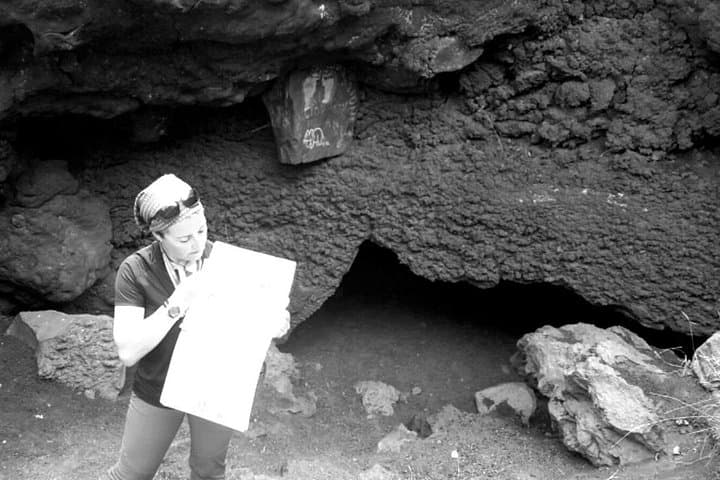
You reach for the handle of a battered gate and step from black pumice onto a slope that still remembers fire. Pine and low pioneer shrubs give way to open lava fields as the path climbs; the ground crunches underfoot and a cool draft draws you toward the dark mouth of Grotta Serracozzo. Inside, the cave narrows and light becomes a tool—torches and helmets carve a path through folded rock and mineral-streaked walls. Outside, the Valle del Bove opens like a vast horseshoe, a raw scar of collapsed flank that frames distant sea and sky.
You reach for the handle of a battered gate and step from black pumice onto a slope that still remembers fire. Pine and low pioneer shrubs give way to open lava fields as the path climbs; the ground crunches underfoot and a cool draft draws you toward the dark mouth of Grotta Serracozzo. Inside, the cave narrows and light becomes a tool—torches and helmets carve a path through folded rock and mineral-streaked walls. Outside, the Valle del Bove opens like a vast horseshoe, a raw scar of collapsed flank that frames distant sea and sky.
This stretch of Mount Etna tells a layered story: recent basalt flows sit atop older strata, and Valle del Bove formed during large flank eruptions and collapses that rerouted lava for centuries. Local villages—Nicolosi and Zafferana Etnea—have lived with eruptions for generations, shaping agricultural terraces and a culture built around the volcano’s rhythms. Geologically unique, Etna hosts rapid plant succession: pioneer flowers color black fields each spring.
Expect uneven volcanic terrain, short scrambles and sections of loose lapilli; the itinerary runs about four hours and requires moderate fitness. Guides provide helmets and torches; bring sturdy boots, sun protection and 2 liters of water. Weather can swing quickly at elevation—start early for cooler conditions and clearer views toward the Ionian coast.
Practical tips: stay on marked trails, respect closures after recent lava events, and leave no trace—volcanic soils and rare pioneer plants recover slowly. Whether studying fresh lava, peering into cave passages, or standing at the rim of Valle del Bove, the experience balances stark geology with immediate sensory detail: wind pulling at your jacket, the crater’s breath, and the ground that keeps reminding you it was molten not long ago.