THE ADVENTURE COLLECTIVE® · Independent discovery and booking for outdoor travel

A full-day private tour that pairs the ancient drama of the Giza Plateau with a first look at the Grand Egyptian Museum. Expect up-close encounters with the Great Pyramid, the Sphinx, and curated museum spaces—plus practical tips for a hot, dusty day outdoors.
A full-day private tour that pairs the ancient drama of the Giza Plateau with a first look at the Grand Egyptian Museum. Expect up-close encounters with the Great Pyramid, the Sphinx, and curated museum spaces—plus practical tips for a hot, dusty day outdoors.
You step out of an air-conditioned van onto a wind-scoured plain and the scale of the place hits you first: a skyline of geometric giants rising from yellow limestone, the Sphinx watching over them as if weighing the day’s visitors. The guide—an English-speaking Egyptologist—draws a line from the desert floor to the stones and begins to unpack millennia.
Verified experiences and guided adventures in the surrounding area.
Operated by Egyptravel Tours · Giza, Giza Governorate
You step out of an air-conditioned van onto a wind-scoured plain and the scale of the place hits you first: a skyline of geometric giants rising from yellow limestone, the Sphinx watching over them as if weighing the day’s visitors. The guide—an English-speaking Egyptologist—draws a line from the desert floor to the stones and begins to unpack millennia.
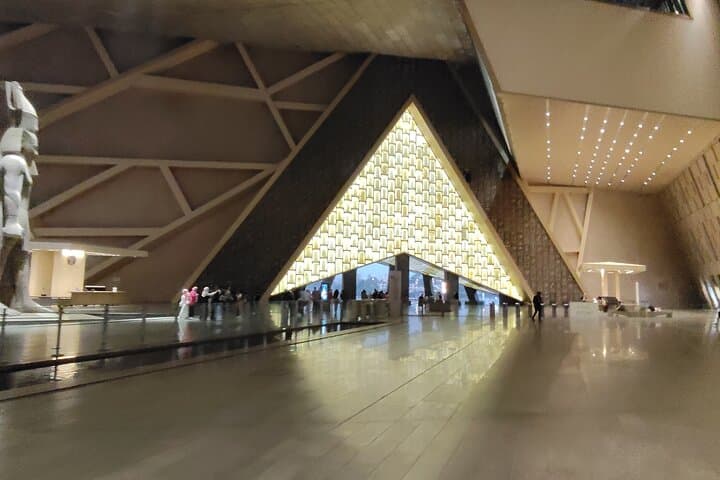
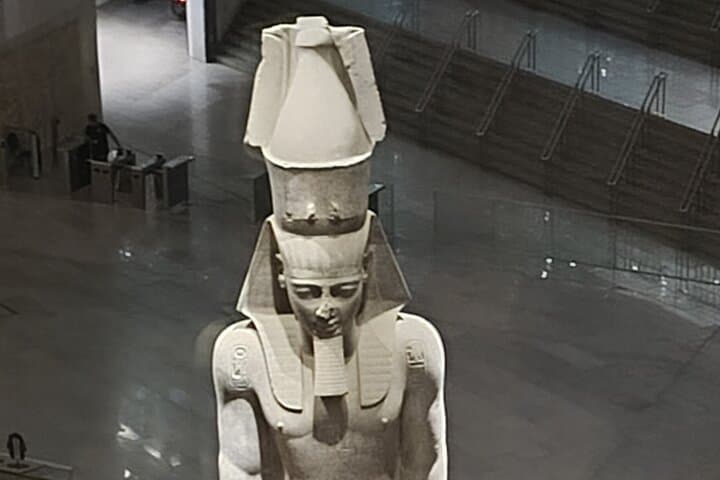
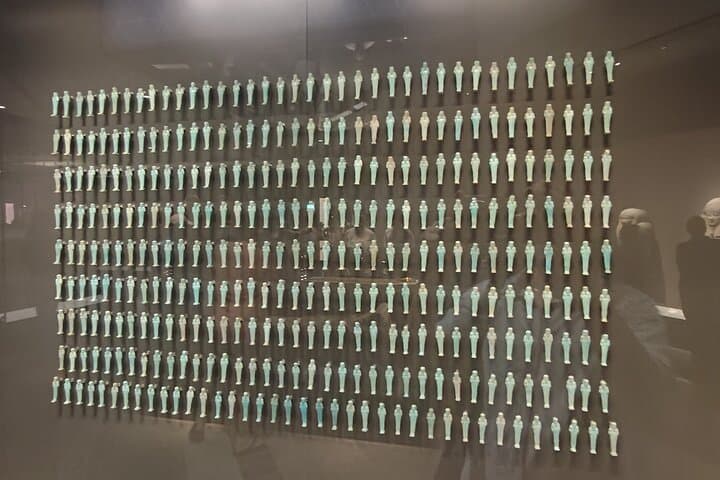
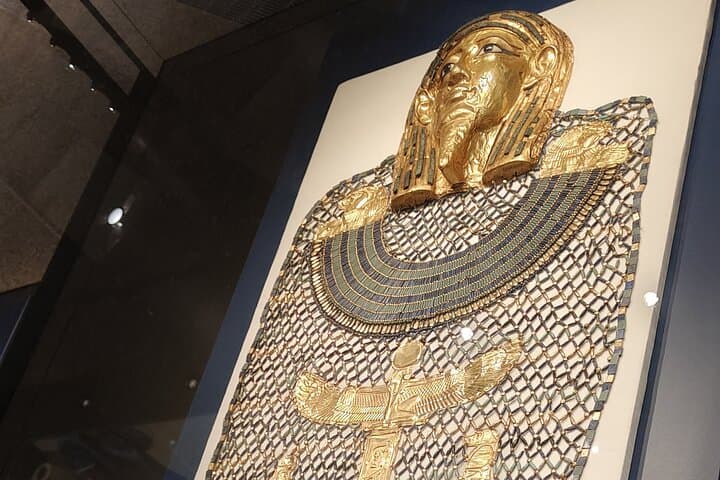
The Giza Plateau is both an archaeological stage and a geological record. The Great Pyramid of Khufu, built of quarried limestone and core blocks, stands as the largest of the trio; Khafre’s pyramid keeps a sharper profile, while Menkaure’s is smaller but finely finished. Nearby, the Valley Temple’s dressed stone and alignment with the Nile’s ancient floodplain speak to funerary logistics and ritual. The newly-built Grand Egyptian Museum (GEM), a short drive away, concentrates finds like the Tutankhamun group—though current tours focus on the Grand Hall, staircase, exterior gardens and selected displays as the museum phases openings.
Expect broad, uneven stone paths, sandy stretches, and powerful sun. Photograph the pyramids from the panoramic viewpoint, study the Sphinx’s eroded face, and allow time at GEM to see conservation approaches and large-scale exhibits.
Practical notes: this is a full-day, private tour with hotel pickup and bottled water provided; wear sturdy closed-toe shoes, a sun hat, and comfortable layers. Carry a printed or mobile ticket and your passport for entry; plan for security checks and moderate walking on uneven terrain. Morning visits avoid the worst heat and produce the best light for photos.
easy.
7–8 hours.
Suitable for most fitness levels; requires standing and walking on uneven terrain for several hours
This private full-day tour lasts about 7–8 hours and includes hotel pickup/drop-off, a licensed Egyptologist guide, bottled water, visits to the Giza pyramids, the Sphinx and the Grand Egyptian Museum public areas.
Admission to listed sites is included per the itinerary; confirm at booking and have your passport available for entry verification.
The tour notes wheelchair-accessible transportation and surfaces in some areas, but the Giza Plateau itself has uneven terrain—contact the operator ahead to arrange appropriate support.
Wear closed-toe shoes, sun protection, and bring a refillable water bottle, passport, and a camera; lightweight layers help with temperature shifts.
The Giza complex dates to the 26th century BC and served as royal funerary landscapes; the GEM centralizes artifacts from across Egypt, including the Tutankhamun material.
The GEM emphasizes conservation and climate-controlled storage for fragile items; visitors are asked to avoid touching ancient stone and follow marked paths to limit erosion.
Egyptravel Tours operates guided outdoor trips and adventures with an emphasis on safety, stewardship, and memorable experiences.
You step out of an air-conditioned van onto a wind-scoured plain and the scale of the place hits you first: a skyline of geometric giants rising from yellow limestone, the Sphinx watching over them as if weighing the day’s visitors. The guide—an English-speaking Egyptologist—draws a line from the desert floor to the stones and begins to unpack millennia.
You step out of an air-conditioned van onto a wind-scoured plain and the scale of the place hits you first: a skyline of geometric giants rising from yellow limestone, the Sphinx watching over them as if weighing the day’s visitors. The guide—an English-speaking Egyptologist—draws a line from the desert floor to the stones and begins to unpack millennia.
The Giza Plateau is both an archaeological stage and a geological record. The Great Pyramid of Khufu, built of quarried limestone and core blocks, stands as the largest of the trio; Khafre’s pyramid keeps a sharper profile, while Menkaure’s is smaller but finely finished. Nearby, the Valley Temple’s dressed stone and alignment with the Nile’s ancient floodplain speak to funerary logistics and ritual. The newly-built Grand Egyptian Museum (GEM), a short drive away, concentrates finds like the Tutankhamun group—though current tours focus on the Grand Hall, staircase, exterior gardens and selected displays as the museum phases openings.
Expect broad, uneven stone paths, sandy stretches, and powerful sun. Photograph the pyramids from the panoramic viewpoint, study the Sphinx’s eroded face, and allow time at GEM to see conservation approaches and large-scale exhibits.
Practical notes: this is a full-day, private tour with hotel pickup and bottled water provided; wear sturdy closed-toe shoes, a sun hat, and comfortable layers. Carry a printed or mobile ticket and your passport for entry; plan for security checks and moderate walking on uneven terrain. Morning visits avoid the worst heat and produce the best light for photos.