THE ADVENTURE COLLECTIVE® · Independent discovery and booking for outdoor travel

Stand beneath a three‑storey natural arch carved by wind and time: Elephant Rock (Jabal AlFil) delivers dramatic desert views and a close look at sandstone erosion in a compact two‑hour visit. Learn the geology, local history, and how to prepare for an early‑morning desert outing.
Stand beneath a three‑storey natural arch carved by wind and time: Elephant Rock (Jabal AlFil) delivers dramatic desert views and a close look at sandstone erosion in a compact two‑hour visit. Learn the geology, local history, and how to prepare for an early‑morning desert outing.
At first light the slabby red sandstone of Elephant Rock throws a long, cool shadow across low dunes. You approach a three‑storey natural arch whose curved “trunk” hangs over a shallow bowl of sand; wind and grit have chiselled ribs and hollows that read like a slow, geological heartbeat. The place feels big and silent, the sky a hard blue, and the rock almost a patient animal watching the desert.
Verified experiences and guided adventures in the surrounding area.
Operated by Gray Line - Kurban Tours · AlUla, Al Madinah Region
At first light the slabby red sandstone of Elephant Rock throws a long, cool shadow across low dunes. You approach a three‑storey natural arch whose curved “trunk” hangs over a shallow bowl of sand; wind and grit have chiselled ribs and hollows that read like a slow, geological heartbeat. The place feels big and silent, the sky a hard blue, and the rock almost a patient animal watching the desert.
This formation—Jabal AlFil—owes its shape to millions of years of wind and seasonal water runoff that scoured softer layers of sandstone away. The monument sits in a landscape threaded with the same geology that hosted Nabataean Hegra (Madâin Sâlih) and earlier caravan routes; you’ll find petroglyphs, old caravan waypoints and the living culture of AlUla’s Bedouin and farming heritage nearby. Unlike ornate tomb facades in the region, Elephant Rock is pure geomorphology: raw, exposed, and instructive.
Practically: the shared tour runs about two hours and requires a moderate level of fitness—expect short sandy approaches and gentle rock stepping. Visit early morning or late afternoon for cooler temperatures and stronger light for photos. Dress respectfully (light, breathable layers and sun protection), carry at least 1–2 liters of water, and follow guides’ instructions; climbing fragile formations is prohibited to protect the stone and archaeology. Pickup from AlUla hotels is commonly included, and tours are short enough to pair with nearby stops like Old Town AlUla or short walks to lesser viewpoints. Elephant Rock is an accessible, photogenic example of desert erosion—immediate in its drama and quietly educational about the forces that shaped this region.
moderate.
2 hours.
Expect short sandy walks and minor rock stepping; a basic to moderate level of fitness is recommended.
The advertised tour visit is about two hours, typically including hotel pickup and a short guided exploration around the formation.
No—climbing on the formation is prohibited to preserve the sandstone and protect archaeological context; follow guides’ directions for photo spots.
Early morning or late afternoon offers cooler temperatures and more dramatic light for photography; midday can be very hot, especially in summer.
Yes—AlUla is in Saudi Arabia; dress modestly (covered shoulders and knees are standard), and be respectful when photographing local people or private property.
The region around AlUla served as a crossroad for caravan trade and later as a Nabataean city‑state; nearby Hegra preserves monumental rock‑cut tombs contemporary with Petra.
Visitors should stay on designated paths, avoid touching fragile rock faces, and follow site rules—tourism is managed to protect both geology and archaeological remains.
Gray Line - Kurban Tours operates guided outdoor trips and adventures with an emphasis on safety, stewardship, and memorable experiences.
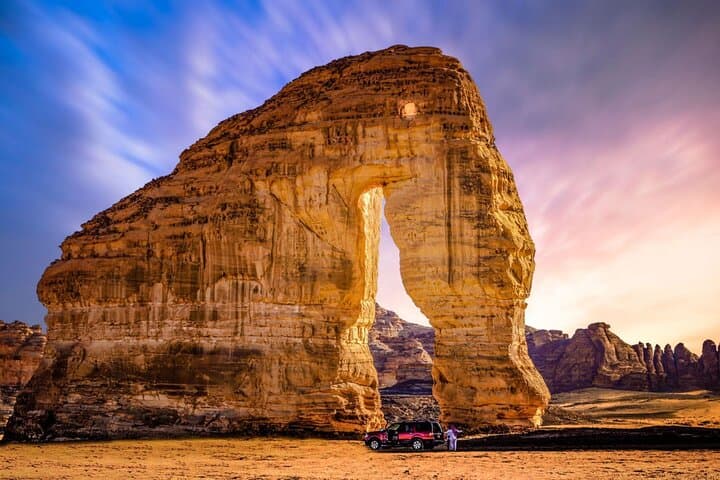
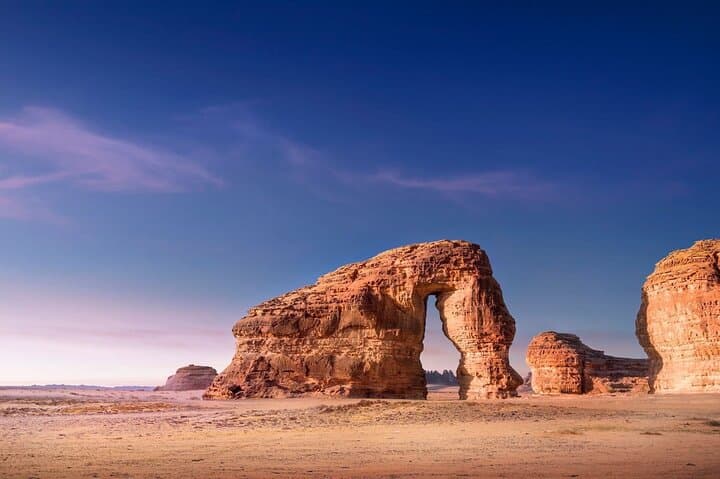
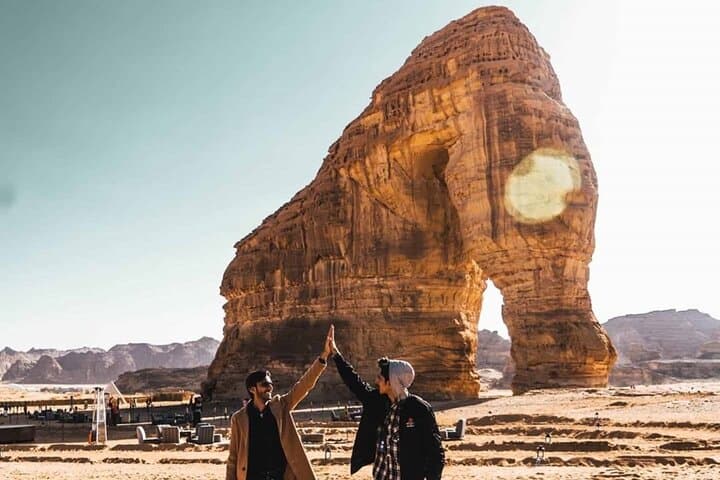
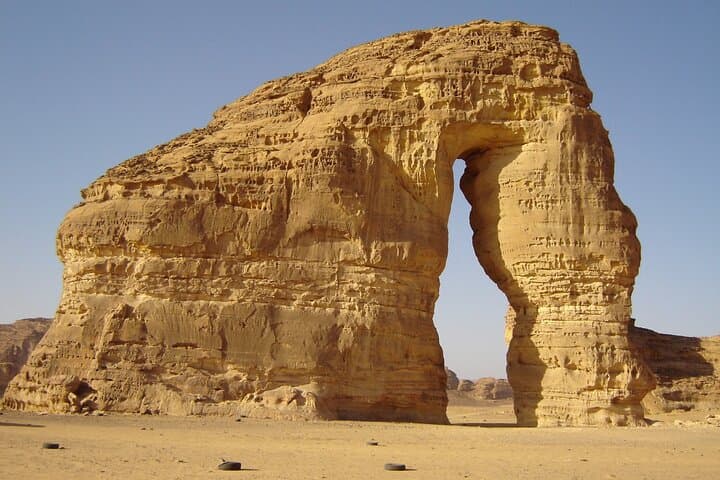
At first light the slabby red sandstone of Elephant Rock throws a long, cool shadow across low dunes. You approach a three‑storey natural arch whose curved “trunk” hangs over a shallow bowl of sand; wind and grit have chiselled ribs and hollows that read like a slow, geological heartbeat. The place feels big and silent, the sky a hard blue, and the rock almost a patient animal watching the desert.
At first light the slabby red sandstone of Elephant Rock throws a long, cool shadow across low dunes. You approach a three‑storey natural arch whose curved “trunk” hangs over a shallow bowl of sand; wind and grit have chiselled ribs and hollows that read like a slow, geological heartbeat. The place feels big and silent, the sky a hard blue, and the rock almost a patient animal watching the desert.
This formation—Jabal AlFil—owes its shape to millions of years of wind and seasonal water runoff that scoured softer layers of sandstone away. The monument sits in a landscape threaded with the same geology that hosted Nabataean Hegra (Madâin Sâlih) and earlier caravan routes; you’ll find petroglyphs, old caravan waypoints and the living culture of AlUla’s Bedouin and farming heritage nearby. Unlike ornate tomb facades in the region, Elephant Rock is pure geomorphology: raw, exposed, and instructive.
Practically: the shared tour runs about two hours and requires a moderate level of fitness—expect short sandy approaches and gentle rock stepping. Visit early morning or late afternoon for cooler temperatures and stronger light for photos. Dress respectfully (light, breathable layers and sun protection), carry at least 1–2 liters of water, and follow guides’ instructions; climbing fragile formations is prohibited to protect the stone and archaeology. Pickup from AlUla hotels is commonly included, and tours are short enough to pair with nearby stops like Old Town AlUla or short walks to lesser viewpoints. Elephant Rock is an accessible, photogenic example of desert erosion—immediate in its drama and quietly educational about the forces that shaped this region.