THE ADVENTURE COLLECTIVE® · Independent discovery and booking for outdoor travel

Leave Cairo behind for an eight-hour private tour through El Fayoum Oasis to see Wadi El Hitan’s fossil beds, the waters of Lake Qarun, and the ruins of Medinet Madi. Expect desert vistas, short hikes on uneven terrain, and guided insights into Egypt’s ancient marine past.
Leave Cairo behind for an eight-hour private tour through El Fayoum Oasis to see Wadi El Hitan’s fossil beds, the waters of Lake Qarun, and the ruins of Medinet Madi. Expect desert vistas, short hikes on uneven terrain, and guided insights into Egypt’s ancient marine past.
You step out of Cairo’s traffic ring and into a skyline of low dunes and sun-bleached limestone; the air changes, the city’s noise gives way to wind and the distant cry of gulls over a desert lake. The road to El Fayoum opens like a map of Egypt’s quieter past—salt flats, irrigated farmland, and, eventually, the wide mirror of Lake Qarun.
Verified experiences and guided adventures in the surrounding area.
Operated by Kemet Experience · Faiyum, Faiyum Governorate
You step out of Cairo’s traffic ring and into a skyline of low dunes and sun-bleached limestone; the air changes, the city’s noise gives way to wind and the distant cry of gulls over a desert lake. The road to El Fayoum opens like a map of Egypt’s quieter past—salt flats, irrigated farmland, and, eventually, the wide mirror of Lake Qarun.
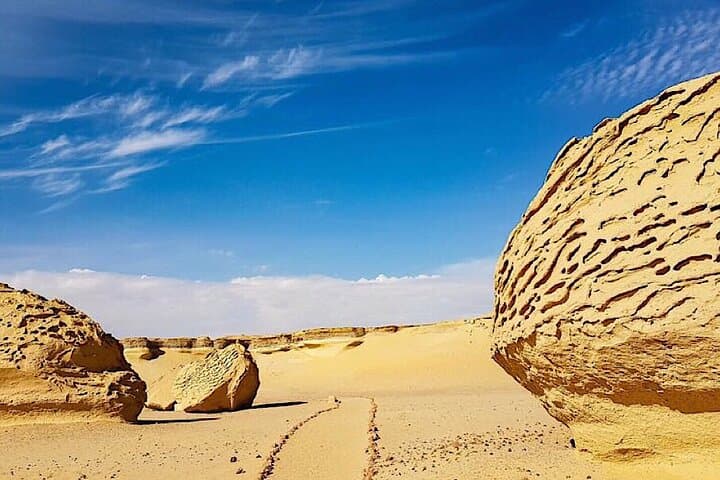
This private day tour threads natural history and archaeology. Wadi El Hitan (Valley of the Whales) lies within Wadi El Rayan Protected Area and preserves 40-million-year-old whale fossils exposed in the desert—bones that tell of an ancient sea. Lake Qarun, one of Egypt’s oldest lakes, frames fishing villages and reedbeds; nearby Medinet Madi reveals stone remains from the Middle Kingdom, linked to Amenemhat III’s irrigation works.
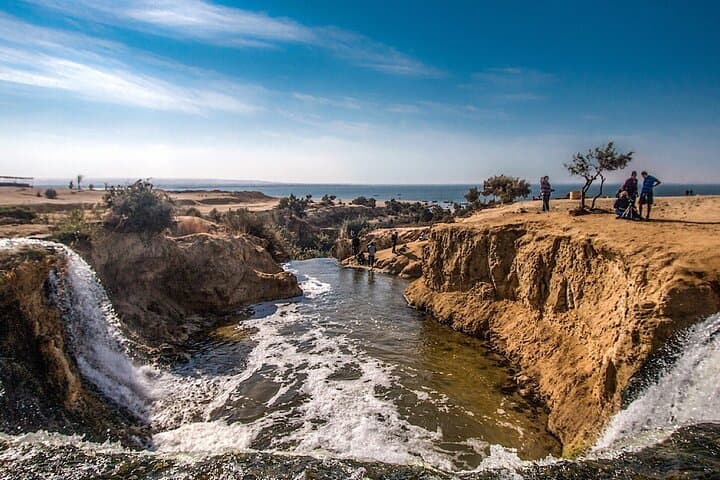
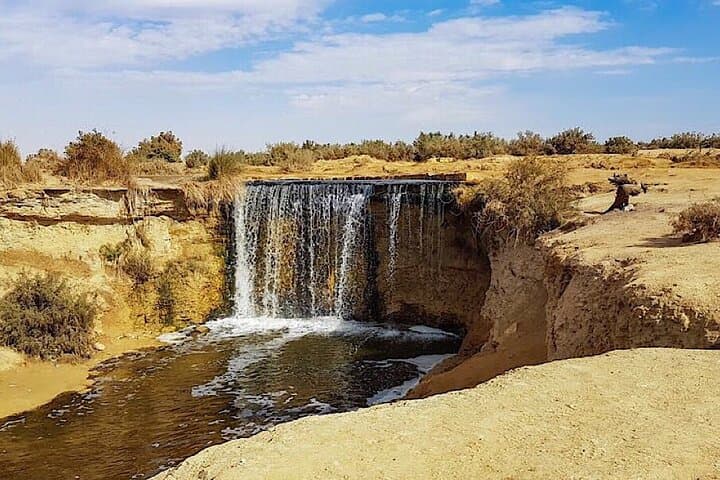
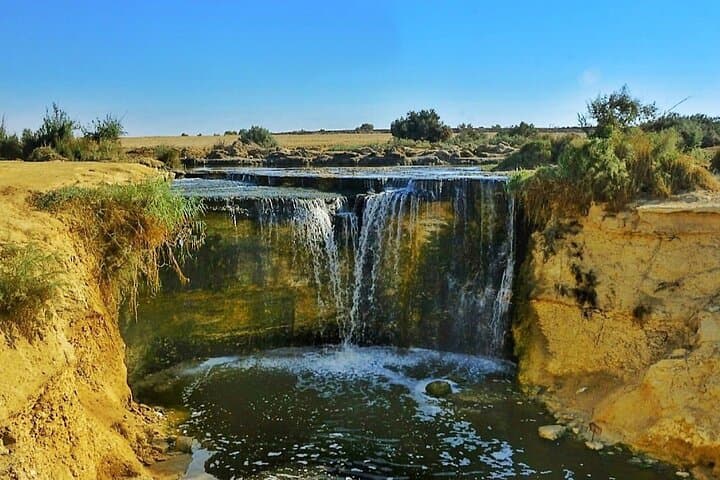
Geologically, the area records a shift from marine to desert environments, with fossil beds of compressed shale and sandstone. Culturally, Fayoum has long been a farming and fishing landscape, retaining Nubian and Pharaonic layers visible in pottery shards and temple remains. Local guides explain how modern irrigation reshaped lakes and waterfalls in the 20th century.
Practicalities: this is an eight-hour private outing with hotel pickup from Cairo; expect moderate road time (≈90–120 minutes each way) and short, sometimes uneven walks at sites. Bring sun protection, plenty of water, and sturdy shoes for rocky slopes around fossil sites. Respect signage at Wadi El Hitan—collecting fossils is illegal and damages an irreplaceable record.
easy.
8 hours.
Suitable for most fitness levels; involves short walks on uneven ground and some climbing over low rock outcrops.
The one-way drive is roughly 90–120 minutes depending on traffic; total tour time is about eight hours with pickup and drop-off in Cairo.
This private tour description states that admission is included; confirm with the operator when booking.
Yes—operator notes infant seats are available and the tour is marked as suitable for all physical fitness levels, though parents should account for heat and long drives.
No—Wadi El Hitan is a protected UNESCO site; removing or disturbing fossils is illegal and harmful to conservation efforts.
Wadi El Hitan became a UNESCO World Heritage Site for its exceptional Eocene whale fossils; Medinet Madi includes remains from the Middle Kingdom linked to Amenemhat III’s irrigation projects.
The area is a protected reserve—visitors must stay on trails, avoid collecting specimens, and follow guide instructions to prevent erosion and fossil damage.
Kemet Experience operates guided outdoor trips and adventures with an emphasis on safety, stewardship, and memorable experiences.
You step out of Cairo’s traffic ring and into a skyline of low dunes and sun-bleached limestone; the air changes, the city’s noise gives way to wind and the distant cry of gulls over a desert lake. The road to El Fayoum opens like a map of Egypt’s quieter past—salt flats, irrigated farmland, and, eventually, the wide mirror of Lake Qarun.
You step out of Cairo’s traffic ring and into a skyline of low dunes and sun-bleached limestone; the air changes, the city’s noise gives way to wind and the distant cry of gulls over a desert lake. The road to El Fayoum opens like a map of Egypt’s quieter past—salt flats, irrigated farmland, and, eventually, the wide mirror of Lake Qarun.
This private day tour threads natural history and archaeology. Wadi El Hitan (Valley of the Whales) lies within Wadi El Rayan Protected Area and preserves 40-million-year-old whale fossils exposed in the desert—bones that tell of an ancient sea. Lake Qarun, one of Egypt’s oldest lakes, frames fishing villages and reedbeds; nearby Medinet Madi reveals stone remains from the Middle Kingdom, linked to Amenemhat III’s irrigation works.
Geologically, the area records a shift from marine to desert environments, with fossil beds of compressed shale and sandstone. Culturally, Fayoum has long been a farming and fishing landscape, retaining Nubian and Pharaonic layers visible in pottery shards and temple remains. Local guides explain how modern irrigation reshaped lakes and waterfalls in the 20th century.
Practicalities: this is an eight-hour private outing with hotel pickup from Cairo; expect moderate road time (≈90–120 minutes each way) and short, sometimes uneven walks at sites. Bring sun protection, plenty of water, and sturdy shoes for rocky slopes around fossil sites. Respect signage at Wadi El Hitan—collecting fossils is illegal and damages an irreplaceable record.