THE ADVENTURE COLLECTIVE® · Independent discovery and booking for outdoor travel

Glide through centuries of trade on Klong Damnoen Saduak in a long‑tailed boat, sample coconut brown sugar made by a local family, and navigate a bustling canal where boats stack with fruit, snacks, and handcrafts. This six‑hour small‑group tour pairs history and hands‑on culture with practical tips for timing and packing.
Glide through centuries of trade on Klong Damnoen Saduak in a long‑tailed boat, sample coconut brown sugar made by a local family, and navigate a bustling canal where boats stack with fruit, snacks, and handcrafts. This six‑hour small‑group tour pairs history and hands‑on culture with practical tips for timing and packing.
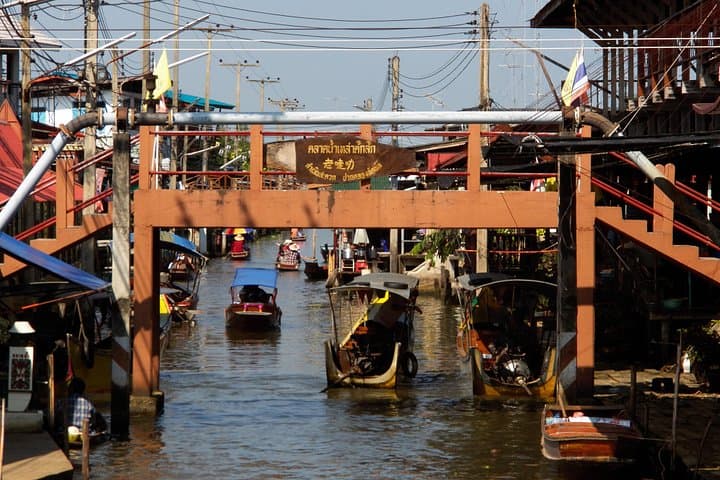
The boat slips forward and the canal exhales—wooden hulls brushing against wooden hulls, vendors calling, steam rising from noodle pots. On a six-hour small-group tour you glide along Klong Damnoen Saduak in a long-tailed boat, threading the straight, narrow artery King Rama IV ordered dug in the 19th century to speed trade across central Thailand.
Verified experiences and guided adventures in the surrounding area.
Operated by Bigcountry Experience · Damnoen Saduak, Ratchaburi Province
The boat slips forward and the canal exhales—wooden hulls brushing against wooden hulls, vendors calling, steam rising from noodle pots. On a six-hour small-group tour you glide along Klong Damnoen Saduak in a long-tailed boat, threading the straight, narrow artery King Rama IV ordered dug in the 19th century to speed trade across central Thailand.
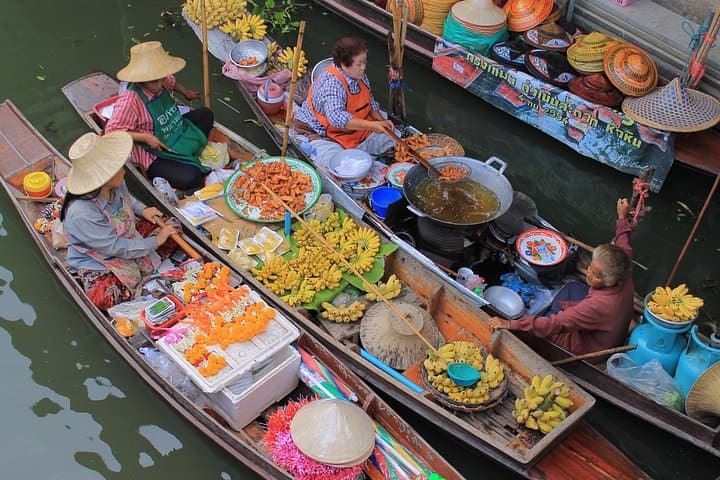
Damnoen Saduak is both living market and living history: the canal runs roughly 32 km with dozens of branching klongs where farmers once transported goods by boat and where trade rhythms remain largely unchanged. You’ll pass low wooden houses, plastic tarps folded like sails, and clusters of boats piled with fruit, woven baskets, and grilled fish—each merchant a line in a conversation between river and buyer.
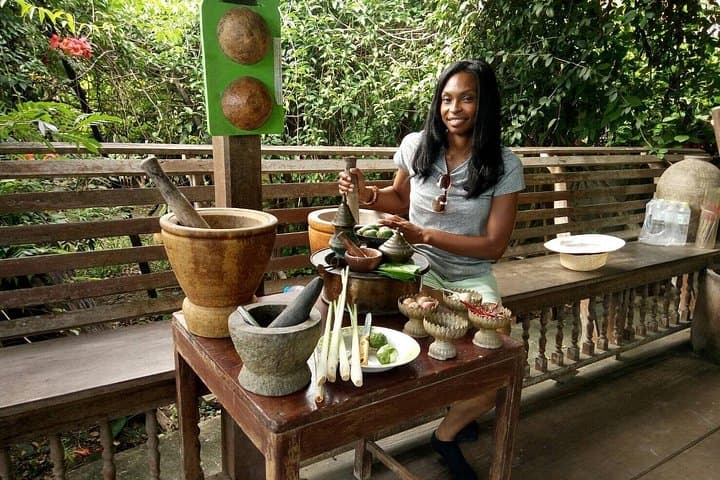
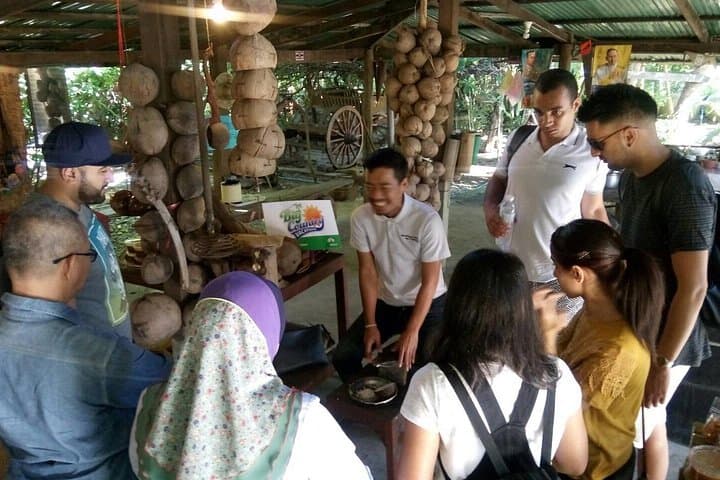
Beyond commerce there’s craft: the tour often includes a visit to a family workshop to watch coconut palm sap reduced into brown sugar, a tactile lesson in traditional foodways tied to the canal’s economy. Birdsong and the occasional water buffalo on distant banks punctuate the scene; the water seems to push you forward with a will of its own.
Practicalities: expect narrow boat benches, close quarters with up to a dozen travelers, and repeated stops for photos and shopping. Wear quick-dry clothing, sun protection, and slip-resistant shoes; carry cash (small bills) and a small dry bag for gear. Morning departures are cooler and less crowded; late-morning runs are brighter for food stalls and color. Bottled water and optional hotel pick-up are usually included—confirm pickup point when you book. Move slowly, haggle politely, and keep a light touch with souvenirs: the market rewards curiosity and patience.
easy.
6 hours.
Suitable for most fitness levels; ability to climb into low-sided boats and stay seated for stretches is required.
The full excursion is approximately six hours, including travel time, the canal boat trip, and the coconut sugar demonstration.
Yes; the long‑tailed boats are generally stable but require boarding assistance and seating for the trip—minimum age is typically five years.
Bottled water is usually included; food at the market is available to purchase a la carte but not included by default—check the tour’s inclusions.
Many tours offer one‑way hotel pick up as an option—confirm your pickup point during booking to ensure timely transfer.
Klong Damnoen Saduak was dug in the mid‑19th century under royal initiative to link river systems for trade; the floating market pattern intensified in the 20th century as boat commerce grew.
The market and canal face pressure from plastic waste and heavy tourism—support vendors who reduce single‑use packaging and avoid throwing trash into the water.
Bigcountry Experience operates guided outdoor trips and adventures with an emphasis on safety, stewardship, and memorable experiences.
The boat slips forward and the canal exhales—wooden hulls brushing against wooden hulls, vendors calling, steam rising from noodle pots. On a six-hour small-group tour you glide along Klong Damnoen Saduak in a long-tailed boat, threading the straight, narrow artery King Rama IV ordered dug in the 19th century to speed trade across central Thailand.
The boat slips forward and the canal exhales—wooden hulls brushing against wooden hulls, vendors calling, steam rising from noodle pots. On a six-hour small-group tour you glide along Klong Damnoen Saduak in a long-tailed boat, threading the straight, narrow artery King Rama IV ordered dug in the 19th century to speed trade across central Thailand.
Damnoen Saduak is both living market and living history: the canal runs roughly 32 km with dozens of branching klongs where farmers once transported goods by boat and where trade rhythms remain largely unchanged. You’ll pass low wooden houses, plastic tarps folded like sails, and clusters of boats piled with fruit, woven baskets, and grilled fish—each merchant a line in a conversation between river and buyer.
Beyond commerce there’s craft: the tour often includes a visit to a family workshop to watch coconut palm sap reduced into brown sugar, a tactile lesson in traditional foodways tied to the canal’s economy. Birdsong and the occasional water buffalo on distant banks punctuate the scene; the water seems to push you forward with a will of its own.
Practicalities: expect narrow boat benches, close quarters with up to a dozen travelers, and repeated stops for photos and shopping. Wear quick-dry clothing, sun protection, and slip-resistant shoes; carry cash (small bills) and a small dry bag for gear. Morning departures are cooler and less crowded; late-morning runs are brighter for food stalls and color. Bottled water and optional hotel pick-up are usually included—confirm pickup point when you book. Move slowly, haggle politely, and keep a light touch with souvenirs: the market rewards curiosity and patience.