THE ADVENTURE COLLECTIVE® · Independent discovery and booking for outdoor travel

A five-hour circuit through Cappadocia’s emblematic valleys and villages: photograph Devrent’s odd rock shapes, watch potters spin Avanos clay, and step inside Byzantine rock churches at Göreme Open-Air Museum. Practical, compact and rich in context, this day tour is an efficient primer on a landscape shaped by fire and human hands.
A five-hour circuit through Cappadocia’s emblematic valleys and villages: photograph Devrent’s odd rock shapes, watch potters spin Avanos clay, and step inside Byzantine rock churches at Göreme Open-Air Museum. Practical, compact and rich in context, this day tour is an efficient primer on a landscape shaped by fire and human hands.
You step out before the sun fully softens the horizon and the valley exhales a cool, mineral scent. The coach eases through a landscape that seems to have been carved by both time and myth: mushroom-shaped towers of volcanic tuff rise like punctuation marks across fields of ochre. In Devrent Valley the rock forms play tricks—camels, seals, a long-necked animal—each fossilized suggestion coaxing a smile and a camera click.
Verified experiences and guided adventures in the surrounding area.
Operated by Deren Koray Tourism · Göreme, Nevşehir Province
You step out before the sun fully softens the horizon and the valley exhales a cool, mineral scent. The coach eases through a landscape that seems to have been carved by both time and myth: mushroom-shaped towers of volcanic tuff rise like punctuation marks across fields of ochre. In Devrent Valley the rock forms play tricks—camels, seals, a long-necked animal—each fossilized suggestion coaxing a smile and a camera click.
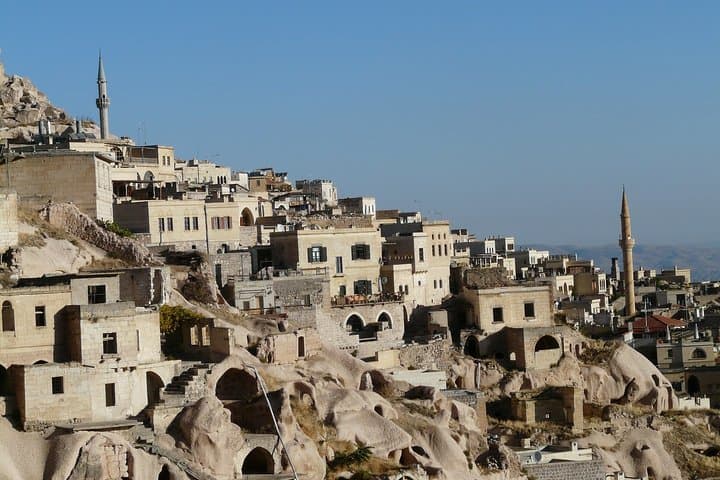
This five-hour loop—Devrent, Paşabağı (Monk's Valley), Avanos, Göreme Open-Air Museum and views toward Uçhisar—is a compact primer on Cappadocia's geology and human improvisation. The soft tuff is the product of eruptions from ancient stratovolcanoes (Erciyes, Hasandağ, Güllüdağ). Layered ash compacted into stone that wind and rain later eroded into the ‘fairy chimneys’ that dominate the skyline. Once soft enough to carve, those same rocks became shelter: homes, churches and entire underground towns where early Christians sought refuge.
Avanos interrupts the lunar landscape with a red ribbon—the Kızılırmak, or Red River. Its fine iron-rich clay has fed pottery traditions since Hittite times. Potters still work at a kick wheel, coaxing bowls and jars with the same motions their grandparents used, an everyday continuity that makes the town feel less like a stop on a circuit and more like a living workshop.
At the Göreme Open-Air Museum the tour slows. Byzantine frescoes—10th to 13th century—shine behind low vestibules and carved naves. The painted scenes are abrasions of color, theological stories preserved on tuff. Guides will point out stylistic details and explain why the Dark Church often requires a separate ticket: its pigments are unusually well-preserved.
Practicalities: this is a moderate, largely accessible day with short walks on uneven footpaths and paved village streets. Comfortable walking shoes and sun protection are non-negotiable; mornings can be cool and bright, afternoons warm. If you want photographs without crowds, ask to linger at panoramas near Göreme or time pickup for early in the morning. The tour includes a traditional lunch and bottled water and offers private transport, which keeps the pace efficient.
Local rhythm is small and hands-on: try a pottery lesson in Avanos, taste a homemade manti at lunch, or climb the steps of Uçhisar Fortress for the clearest atlas of the region. Respect the fragile frescoes, keep to marked paths, and pack out what you bring in—the soft rock erodes faster than you think.
In five hours you’ll have walked through millions of years of geology, centuries of faith, and threads of living craft—an introduction that leaves you wanting more.
moderate.
5 hours.
Moderate—able to walk short uneven sections, climb steps at viewpoints and churches
No—entrance to the Dark Church at Göreme Open-Air Museum typically requires a separate ticket paid on site.
Yes—private hotel pickup and drop-off within Göreme and nearby towns are included; confirm your pickup point 24 hours before the tour.
Transport options can be wheelchair accessible, but some sites have uneven ground and stairs; notify the operator of specific needs when booking.
This standard five-hour itinerary focuses on surface valleys, Avanos and Göreme Museum—most underground cities are pass-by items unless a longer private tour is arranged.
Yes— a traditional local lunch and bottled water are included in the tour price.
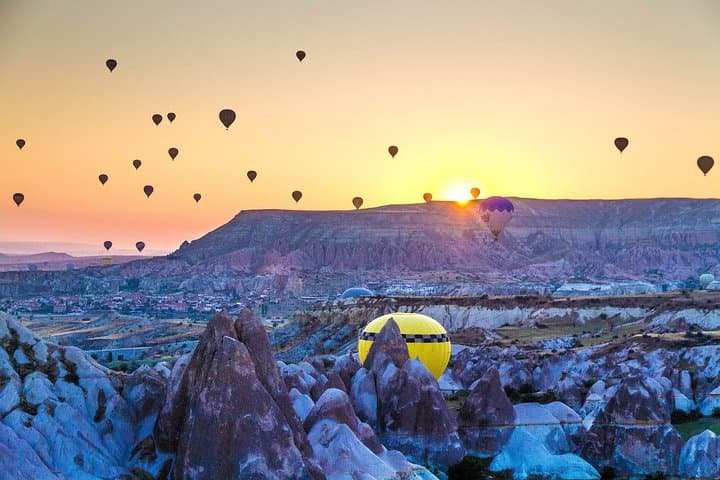
Golden hour—early morning or late afternoon—provides the softest light on the chimneys; sunrise also often coincides with hot-air balloons for dramatic shots.
Cappadocia’s soft tuff allowed inhabitants across millennia—from Hittites to Byzantine Christians—to carve dwellings, churches and entire underground refuges into the rock.
The tuff is fragile; stick to marked paths, avoid touching frescoes and support local guides and workshops that use sustainable tourism practices.
Deren Koray Tourism operates guided outdoor trips and adventures with an emphasis on safety, stewardship, and memorable experiences.
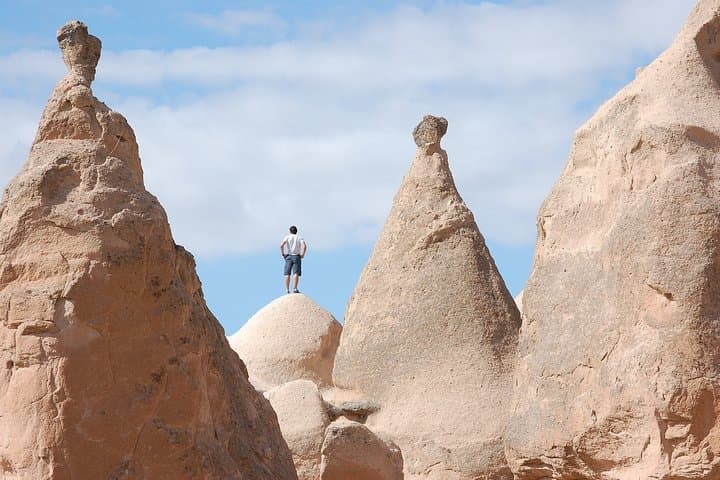
You step out before the sun fully softens the horizon and the valley exhales a cool, mineral scent. The coach eases through a landscape that seems to have been carved by both time and myth: mushroom-shaped towers of volcanic tuff rise like punctuation marks across fields of ochre. In Devrent Valley the rock forms play tricks—camels, seals, a long-necked animal—each fossilized suggestion coaxing a smile and a camera click.
You step out before the sun fully softens the horizon and the valley exhales a cool, mineral scent. The coach eases through a landscape that seems to have been carved by both time and myth: mushroom-shaped towers of volcanic tuff rise like punctuation marks across fields of ochre. In Devrent Valley the rock forms play tricks—camels, seals, a long-necked animal—each fossilized suggestion coaxing a smile and a camera click.
This five-hour loop—Devrent, Paşabağı (Monk's Valley), Avanos, Göreme Open-Air Museum and views toward Uçhisar—is a compact primer on Cappadocia's geology and human improvisation. The soft tuff is the product of eruptions from ancient stratovolcanoes (Erciyes, Hasandağ, Güllüdağ). Layered ash compacted into stone that wind and rain later eroded into the ‘fairy chimneys’ that dominate the skyline. Once soft enough to carve, those same rocks became shelter: homes, churches and entire underground towns where early Christians sought refuge.
Avanos interrupts the lunar landscape with a red ribbon—the Kızılırmak, or Red River. Its fine iron-rich clay has fed pottery traditions since Hittite times. Potters still work at a kick wheel, coaxing bowls and jars with the same motions their grandparents used, an everyday continuity that makes the town feel less like a stop on a circuit and more like a living workshop.
At the Göreme Open-Air Museum the tour slows. Byzantine frescoes—10th to 13th century—shine behind low vestibules and carved naves. The painted scenes are abrasions of color, theological stories preserved on tuff. Guides will point out stylistic details and explain why the Dark Church often requires a separate ticket: its pigments are unusually well-preserved.
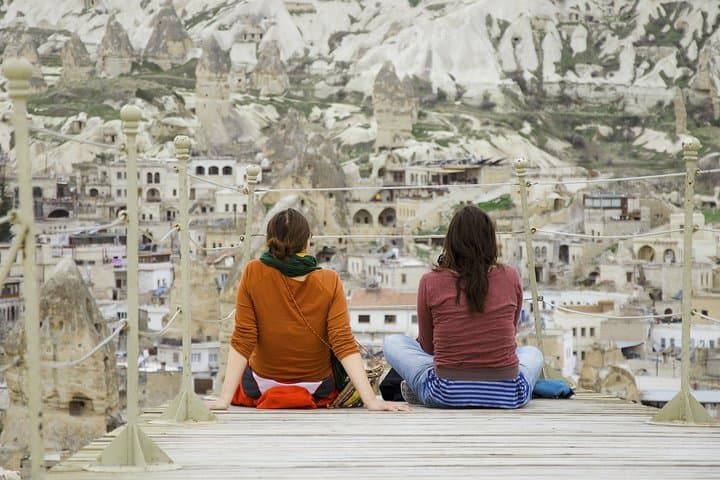
Practicalities: this is a moderate, largely accessible day with short walks on uneven footpaths and paved village streets. Comfortable walking shoes and sun protection are non-negotiable; mornings can be cool and bright, afternoons warm. If you want photographs without crowds, ask to linger at panoramas near Göreme or time pickup for early in the morning. The tour includes a traditional lunch and bottled water and offers private transport, which keeps the pace efficient.
Local rhythm is small and hands-on: try a pottery lesson in Avanos, taste a homemade manti at lunch, or climb the steps of Uçhisar Fortress for the clearest atlas of the region. Respect the fragile frescoes, keep to marked paths, and pack out what you bring in—the soft rock erodes faster than you think.
In five hours you’ll have walked through millions of years of geology, centuries of faith, and threads of living craft—an introduction that leaves you wanting more.