THE ADVENTURE COLLECTIVE® · Independent discovery and booking for outdoor travel

Walk the Barbican Highwalks and hear the story of post‑war London through a self‑guided audio tour. Explore raw concrete forms, hidden gardens and elevated promenades at your own pace.
Walk the Barbican Highwalks and hear the story of post‑war London through a self‑guided audio tour. Explore raw concrete forms, hidden gardens and elevated promenades at your own pace.
A flat slab of concrete catches the light as you step off the tube and onto the Barbican Highwalk. The audio cue begins, and the estate’s raw geometry — terraces, exposed bays and punctured walkways — comes into focus. Walkers move along elevated promenades that frame Lauderdale, Shakespeare and Cromwell towers, their silhouettes once the tallest residential forms in the city.
Verified experiences and guided adventures in the surrounding area.
Operated by VoiceMap Audio Tours · London, England
A flat slab of concrete catches the light as you step off the tube and onto the Barbican Highwalk. The audio cue begins, and the estate’s raw geometry — terraces, exposed bays and punctured walkways — comes into focus. Walkers move along elevated promenades that frame Lauderdale, Shakespeare and Cromwell towers, their silhouettes once the tallest residential forms in the city.
The Barbican grew from post‑war necessity and a 20th‑century planning ethos: architects Chamberlin, Powell and Bon rebuilt a war‑scarred block between the 1960s and 1980s using béton brut and a modular urban grid. The estate sits atop the remains of London Wall, so the tour often shifts from modernist horizontals to fragments of medieval fabric, offering a layered view of history and infrastructure.
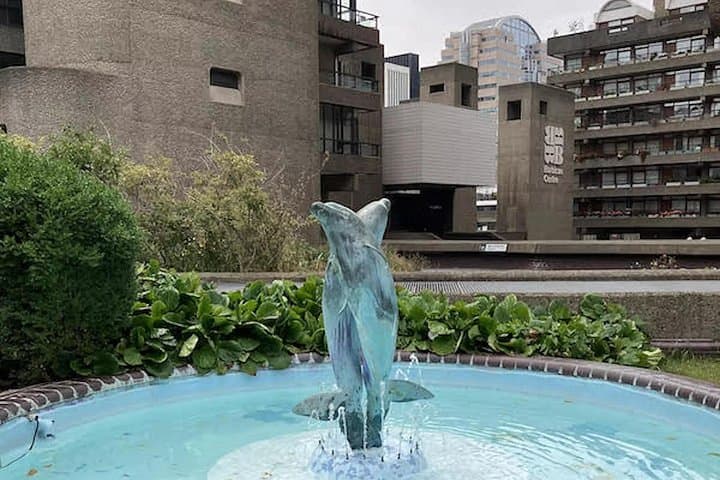
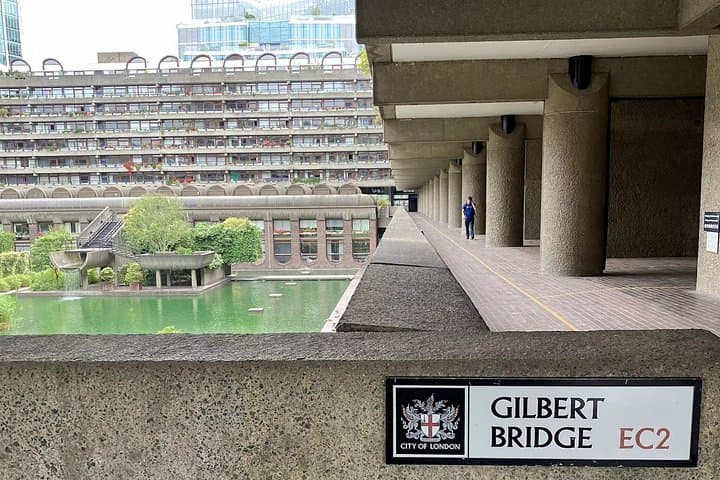
Expect cultural waypoints: the Barbican Centre with its galleries and the hidden Conservatory, the amphitheatre on the Podium and the Highwalk system that rewrites street level into an elevated circuit. The audio tour lets you pause at bronze sculptures, cross Gilbert Bridge and finish on Seddon Highwalk where the city opens out.
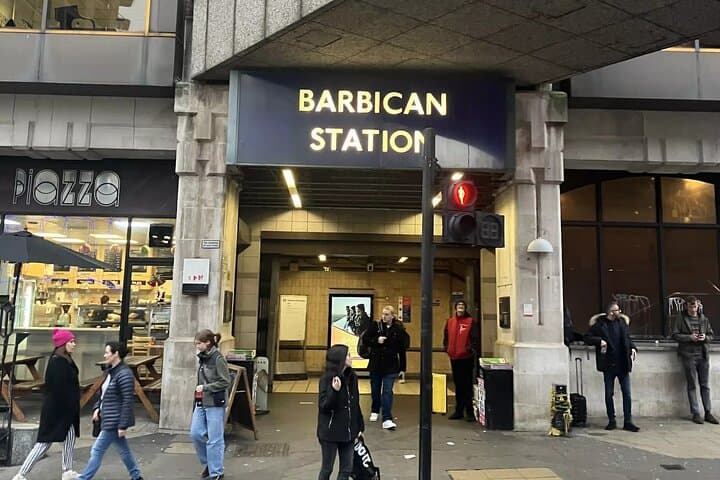
Practical guidance: allow 60–90 minutes, download audio and maps for offline use, and wear supportive shoes—the Highwalks include stairs and some uneven edges. Respect residential entrances and quiet hours; the estate is lived in. Public transport is close; start at Barbican Station. This is a compact, urban walk that pairs architectural observation with straightforward logistics — ideal for curious visitors who prefer to set their own pace.
easy.
1–1.5 hours.
Suitable for most fitness levels; requires light urban walking and negotiating stairs or ramps.
The tour runs about 60–90 minutes depending on stops; most visitors complete it within an hour and a half.
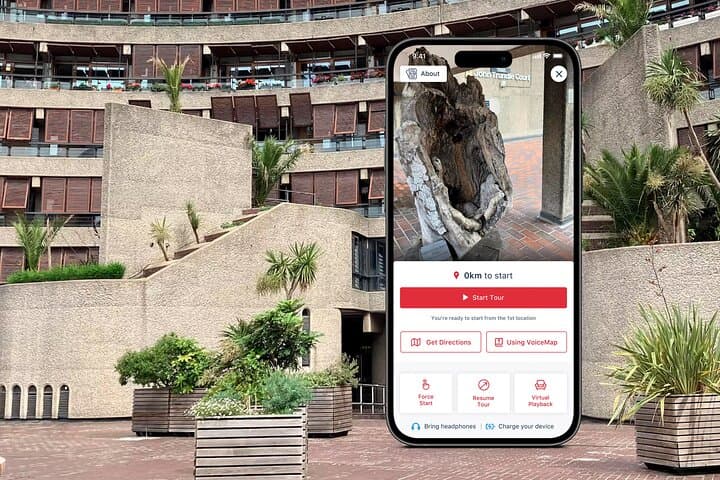
This is a self‑guided audio tour delivered via the VoiceMap app, letting you set your own pace.
Many parts of the Barbican have ramps and lifts, but some Highwalk sections include stairs—check specific access points and plan a step‑free route if needed.
Yes, but the Conservatory has separate opening hours and admission; plan any indoor visits around its schedule as it is not included in the audio route.
The Barbican Estate was conceived in the post‑WWII rebuilding period and designed mainly by Chamberlin, Powell and Bon; major construction took place from the late 1960s into the early 1980s.
Concrete conservation and sensitive maintenance are ongoing challenges; stay on public routes, avoid graffiti and follow local signage to help preserve the estate.
VoiceMap Audio Tours operates guided outdoor trips and adventures with an emphasis on safety, stewardship, and memorable experiences.
A flat slab of concrete catches the light as you step off the tube and onto the Barbican Highwalk. The audio cue begins, and the estate’s raw geometry — terraces, exposed bays and punctured walkways — comes into focus. Walkers move along elevated promenades that frame Lauderdale, Shakespeare and Cromwell towers, their silhouettes once the tallest residential forms in the city.
A flat slab of concrete catches the light as you step off the tube and onto the Barbican Highwalk. The audio cue begins, and the estate’s raw geometry — terraces, exposed bays and punctured walkways — comes into focus. Walkers move along elevated promenades that frame Lauderdale, Shakespeare and Cromwell towers, their silhouettes once the tallest residential forms in the city.
The Barbican grew from post‑war necessity and a 20th‑century planning ethos: architects Chamberlin, Powell and Bon rebuilt a war‑scarred block between the 1960s and 1980s using béton brut and a modular urban grid. The estate sits atop the remains of London Wall, so the tour often shifts from modernist horizontals to fragments of medieval fabric, offering a layered view of history and infrastructure.
Expect cultural waypoints: the Barbican Centre with its galleries and the hidden Conservatory, the amphitheatre on the Podium and the Highwalk system that rewrites street level into an elevated circuit. The audio tour lets you pause at bronze sculptures, cross Gilbert Bridge and finish on Seddon Highwalk where the city opens out.
Practical guidance: allow 60–90 minutes, download audio and maps for offline use, and wear supportive shoes—the Highwalks include stairs and some uneven edges. Respect residential entrances and quiet hours; the estate is lived in. Public transport is close; start at Barbican Station. This is a compact, urban walk that pairs architectural observation with straightforward logistics — ideal for curious visitors who prefer to set their own pace.