THE ADVENTURE COLLECTIVE® · Independent discovery and booking for outdoor travel

Set out from Placencia for a full-day descent into Actun Tunichil Muknal (ATM), an archaeological cave where Maya rituals and formations remain largely untouched. Expect swimming, crawling and a cathedral-green chamber filled with artifacts.
Set out from Placencia for a full-day descent into Actun Tunichil Muknal (ATM), an archaeological cave where Maya rituals and formations remain largely untouched. Expect swimming, crawling and a cathedral-green chamber filled with artifacts.
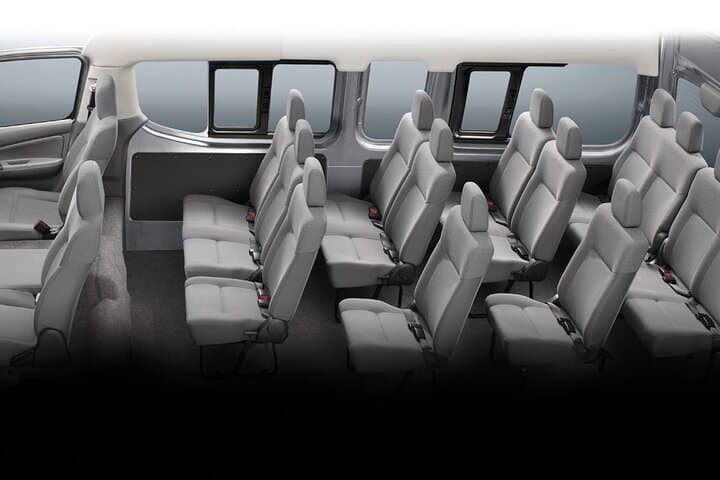
You push off from Placencia before dawn, the van humming north while the coast shrinks behind you and the jungle grows louder. Two hours later the road narrows to dirt and the canopy leans over the track like a slow-moving roof. By the time you step out at the trailhead near Teakettle, heat and humidity are already active, vines dripping as if testing your resolve.
Verified experiences and guided adventures in the surrounding area.
Operated by Truly Wild Belize · Teakettle, Cayo District
You push off from Placencia before dawn, the van humming north while the coast shrinks behind you and the jungle grows louder. Two hours later the road narrows to dirt and the canopy leans over the track like a slow-moving roof. By the time you step out at the trailhead near Teakettle, heat and humidity are already active, vines dripping as if testing your resolve.
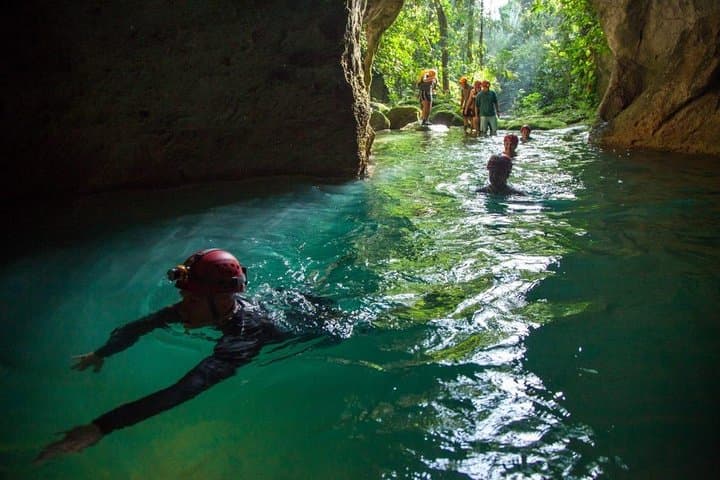
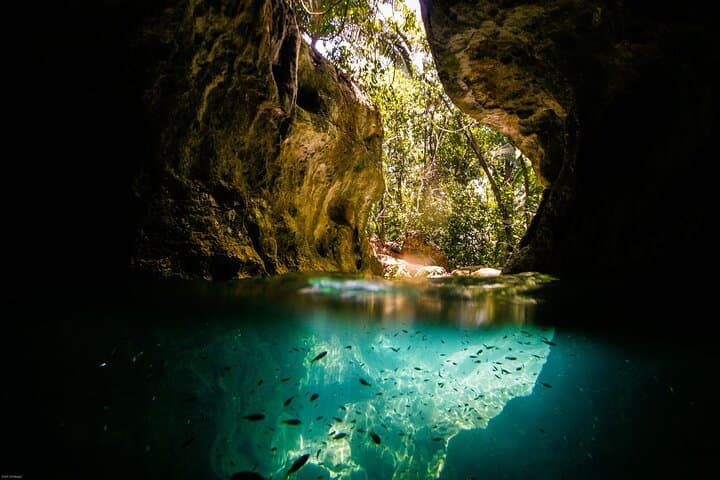
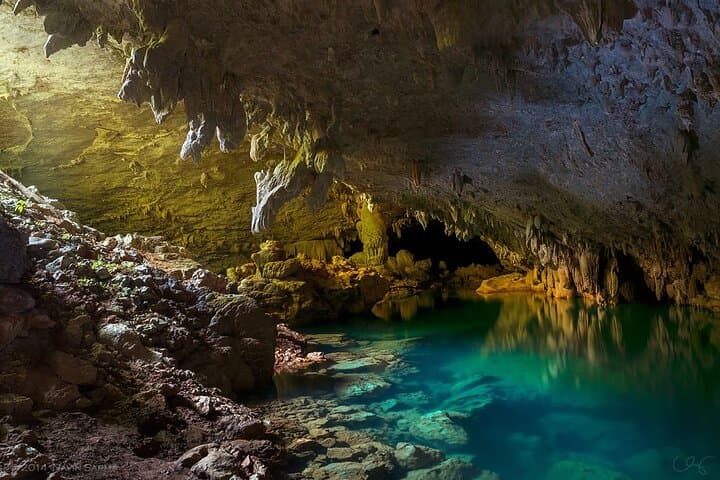
The ATM — Actun Tunichil Muknal — is not a cave for spectators. It demands movement: wading through cool river runs, shimmying over slick boulders, crouching through low limestone tubeways and climbing into chambers that hold the weight of centuries. Light from helmets skitters across flowstone and calcite, revealing bowls, altars and the bleached outline of the so-called Crystal Maiden. In the cathedral-like main chamber — 350 meters long and up to 50 meters wide — the silence feels curated; you’re in a place where the Maya left offerings and lives in layered sediment and mineral.
Geology here is blunt and patient. Limestone bedrock dissolved over eons by acidic groundwater carved the passages you traverse today; calcite curtains and chandeliers drip slow stories. Culturally, ATM sits in the Maya cosmology as a threshold to Xibalba, the underworld. Archaeologists treating the site with strict protocols have left artifacts in situ; the experience is less a museum visit and more a step into a preserved ritual landscape.
Tapir Mountain’s fringe forests add a rural Belizean rhythm: mahogany groves, small cacao plots and the occasional village dog. Wildlife lingers at the edges — howler monkeys and toucans call, and the reserve’s namesake, the Baird’s tapir, roams nights here though sightings are rare.
Practical notes: this is a full-day, physically demanding cave expedition. Guides supply helmets, headlamps and life jackets; you will be asked to remove shoes and proceed in socks on the interior passages to protect fragile floor deposits. Be ready for cold water crossings, wet slick rock and confined spaces. People with heart or spinal conditions, pregnant travelers and children under seven are advised not to join. Bring a durable dry bag, extra socks, and plan for sun and mosquitoes between water crossings.
Timing matters: start early in Placencia to avoid the midday heat and to give yourself a relaxed return. Treat the cave with restraint — no touching, no markers, and limit flash photography to reduce impact on both artifacts and fellow visitors. When you emerge, the jungle will feel alive in a new register: rivers daring you to cool off, leaves pushing you forward. That push is part of the draw — ATM is an archaeological adventure that asks for effort and returns a rare kind of stillness and perspective.
challenging.
9 hours.
You should be in good physical condition with the ability to swim short distances, climb over wet rock, and crawl through low passages.
Allow about nine hours total including a roughly two-hour drive each way and three hours inside the cave complex.
Yes—there are shallow swims and river crossings; basic swimming ability and comfort in moving water are required.
No—guides require visitors to remove shoes and proceed in socks to prevent damage to artifacts and cave floor deposits.
Yes, but flash use may be restricted to protect artifacts and other visitors; follow your guide’s directions in sensitive chambers.
Yes—guided tours include helmets, headlamps and life jackets; guides also brief on route and archaeological rules.
People with heart or spinal problems, pregnant travelers, and children under seven should not participate due to strenuous and confined conditions.
Actun Tunichil Muknal served as a ceremonial site for the Maya; archaeologists have found altars and human remains left intact, offering rare insight into ritual practices.
The site is delicate—strict leave-no-trace rules (including socks-only interior policy) and guided-only access help limit impact on artifacts and cave ecology.
Truly Wild Belize operates guided outdoor trips and adventures with an emphasis on safety, stewardship, and memorable experiences.
You push off from Placencia before dawn, the van humming north while the coast shrinks behind you and the jungle grows louder. Two hours later the road narrows to dirt and the canopy leans over the track like a slow-moving roof. By the time you step out at the trailhead near Teakettle, heat and humidity are already active, vines dripping as if testing your resolve.
You push off from Placencia before dawn, the van humming north while the coast shrinks behind you and the jungle grows louder. Two hours later the road narrows to dirt and the canopy leans over the track like a slow-moving roof. By the time you step out at the trailhead near Teakettle, heat and humidity are already active, vines dripping as if testing your resolve.
The ATM — Actun Tunichil Muknal — is not a cave for spectators. It demands movement: wading through cool river runs, shimmying over slick boulders, crouching through low limestone tubeways and climbing into chambers that hold the weight of centuries. Light from helmets skitters across flowstone and calcite, revealing bowls, altars and the bleached outline of the so-called Crystal Maiden. In the cathedral-like main chamber — 350 meters long and up to 50 meters wide — the silence feels curated; you’re in a place where the Maya left offerings and lives in layered sediment and mineral.
Geology here is blunt and patient. Limestone bedrock dissolved over eons by acidic groundwater carved the passages you traverse today; calcite curtains and chandeliers drip slow stories. Culturally, ATM sits in the Maya cosmology as a threshold to Xibalba, the underworld. Archaeologists treating the site with strict protocols have left artifacts in situ; the experience is less a museum visit and more a step into a preserved ritual landscape.
Tapir Mountain’s fringe forests add a rural Belizean rhythm: mahogany groves, small cacao plots and the occasional village dog. Wildlife lingers at the edges — howler monkeys and toucans call, and the reserve’s namesake, the Baird’s tapir, roams nights here though sightings are rare.
Practical notes: this is a full-day, physically demanding cave expedition. Guides supply helmets, headlamps and life jackets; you will be asked to remove shoes and proceed in socks on the interior passages to protect fragile floor deposits. Be ready for cold water crossings, wet slick rock and confined spaces. People with heart or spinal conditions, pregnant travelers and children under seven are advised not to join. Bring a durable dry bag, extra socks, and plan for sun and mosquitoes between water crossings.
Timing matters: start early in Placencia to avoid the midday heat and to give yourself a relaxed return. Treat the cave with restraint — no touching, no markers, and limit flash photography to reduce impact on both artifacts and fellow visitors. When you emerge, the jungle will feel alive in a new register: rivers daring you to cool off, leaves pushing you forward. That push is part of the draw — ATM is an archaeological adventure that asks for effort and returns a rare kind of stillness and perspective.