THE ADVENTURE COLLECTIVE® · Independent discovery and booking for outdoor travel

Experience Angkor Wat’s monumental stonework at sunrise, walk courtyards that chart a shift from Hindu temple to Buddhist center, and learn practical tips on timing, dress code, and terrain. This guide helps you plan a respectful, efficient visit to Cambodia’s largest religious complex.
Experience Angkor Wat’s monumental stonework at sunrise, walk courtyards that chart a shift from Hindu temple to Buddhist center, and learn practical tips on timing, dress code, and terrain. This guide helps you plan a respectful, efficient visit to Cambodia’s largest religious complex.
Dawn slips over a rectangular moat and the stone towers of Angkor Wat throw long, precise shadows across the causeway. Morning light lays out every bas‑relief—dancers, gods, and battle scenes carved into warm sandstone—while the air carries the faint, steady scent of wet earth from nearby rice paddies. Walking the wide courtyards you feel the scale: the complex spreads across roughly 400 acres, the central tower rising about 65 meters (213 feet) above the ground.
Verified experiences and guided adventures in the surrounding area.
Operated by Van Express Tours · Siem Reap, Siem Reap
Dawn slips over a rectangular moat and the stone towers of Angkor Wat throw long, precise shadows across the causeway. Morning light lays out every bas‑relief—dancers, gods, and battle scenes carved into warm sandstone—while the air carries the faint, steady scent of wet earth from nearby rice paddies. Walking the wide courtyards you feel the scale: the complex spreads across roughly 400 acres, the central tower rising about 65 meters (213 feet) above the ground.
Built in the early 12th century for King Suryavarman II as a temple to Vishnu, Angkor Wat later became a Buddhist site; its layers of religious history are visible in carved narratives and later-added iconography. Geologically the site sits on sandstone and laterite platforms lifted and arranged by Khmer engineers; the surrounding moat and barays regulated water and reinforced the temple’s symbolic role as a cosmic mountain.
Expect extensive walking on uneven, weathered stone and steep temple steps. Local culture favors modest dress—shoulders and knees covered—and guides often explain Khmer symbolism: apsaras, cosmological motifs, and the fusion of Hindu and Buddhist traditions. Practicalities: buy your Angkor Pass at the official ticket center, allow 5–8 hours for a thorough visit, and plan early or late to avoid the heat and crowds. Hydrate, wear supportive shoes, and move deliberately around carved reliefs—respectful observation preserves both the art and your visit.
easy.
5–8 hours.
Suitable for most fitness levels but requires sustained walking, stair climbing, and balance on uneven stone.
Passes are purchased at the official ticket center near the entrance; buying on arrival day is common, but allow time—multi‑day passes are also available.
Photography is generally permitted, including tripods in some areas, but flash and touching carvings are discouraged; rules can vary by structure, so follow guide instructions.
Most of the complex has uneven stone and staircases; select areas and viewpoints are reachable but overall accessibility is limited—check with operators for specific arrangements.
Sunrise draws crowds for the main causeway; late afternoon light is cooler and quieter—plan a full morning or combine morning and late afternoon for different light.
Constructed under King Suryavarman II in the early 12th century as a Hindu temple dedicated to Vishnu, Angkor Wat later incorporated Buddhist elements and served as both political and religious heart of the Khmer Empire.
Heavy visitation stresses fragile sandstone and ancient mortar; follow established paths, avoid touching bas‑reliefs, and support local guides and conservation initiatives to protect the site.
Van Express Tours operates guided outdoor trips and adventures with an emphasis on safety, stewardship, and memorable experiences.
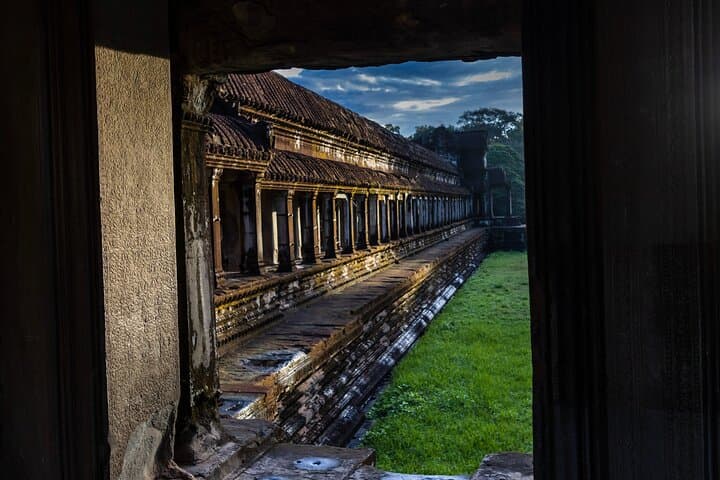
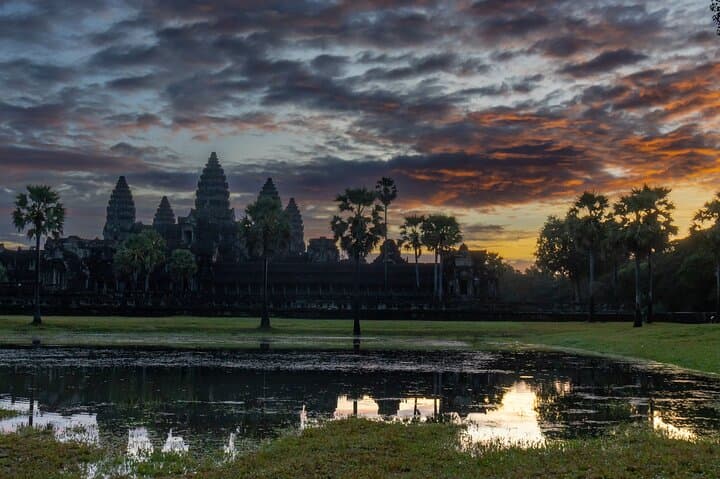
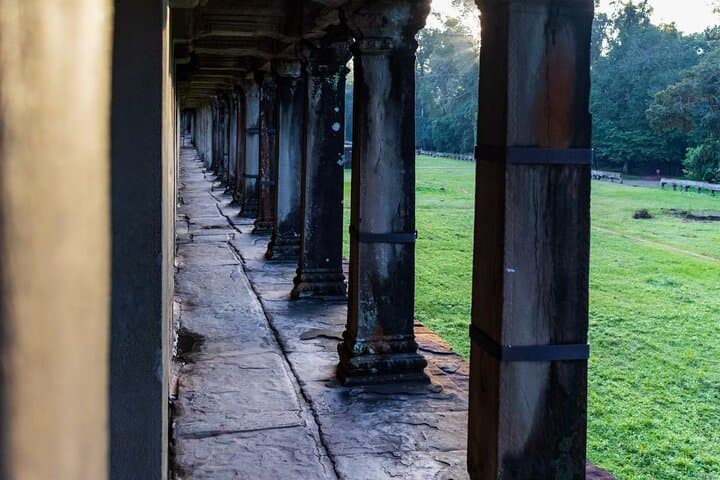
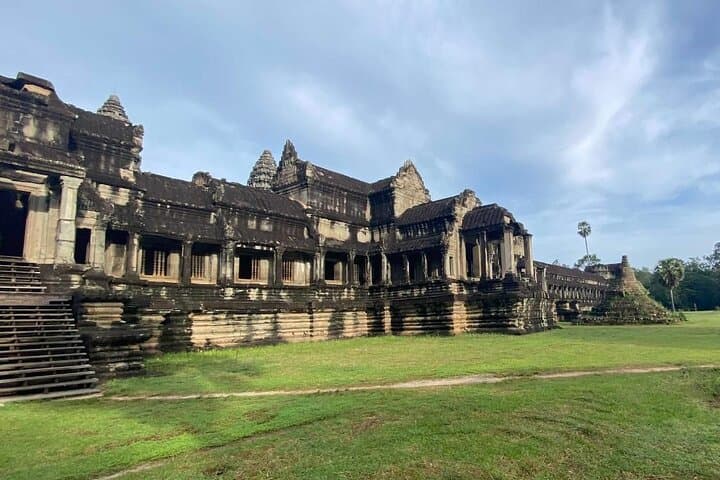
Dawn slips over a rectangular moat and the stone towers of Angkor Wat throw long, precise shadows across the causeway. Morning light lays out every bas‑relief—dancers, gods, and battle scenes carved into warm sandstone—while the air carries the faint, steady scent of wet earth from nearby rice paddies. Walking the wide courtyards you feel the scale: the complex spreads across roughly 400 acres, the central tower rising about 65 meters (213 feet) above the ground.
Dawn slips over a rectangular moat and the stone towers of Angkor Wat throw long, precise shadows across the causeway. Morning light lays out every bas‑relief—dancers, gods, and battle scenes carved into warm sandstone—while the air carries the faint, steady scent of wet earth from nearby rice paddies. Walking the wide courtyards you feel the scale: the complex spreads across roughly 400 acres, the central tower rising about 65 meters (213 feet) above the ground.
Built in the early 12th century for King Suryavarman II as a temple to Vishnu, Angkor Wat later became a Buddhist site; its layers of religious history are visible in carved narratives and later-added iconography. Geologically the site sits on sandstone and laterite platforms lifted and arranged by Khmer engineers; the surrounding moat and barays regulated water and reinforced the temple’s symbolic role as a cosmic mountain.
Expect extensive walking on uneven, weathered stone and steep temple steps. Local culture favors modest dress—shoulders and knees covered—and guides often explain Khmer symbolism: apsaras, cosmological motifs, and the fusion of Hindu and Buddhist traditions. Practicalities: buy your Angkor Pass at the official ticket center, allow 5–8 hours for a thorough visit, and plan early or late to avoid the heat and crowds. Hydrate, wear supportive shoes, and move deliberately around carved reliefs—respectful observation preserves both the art and your visit.