THE ADVENTURE COLLECTIVE® · Independent discovery and booking for outdoor travel

A short drive from Sharjah, Al Madam’s ghost village offers a stark, peaceful look at desert reclamation. Visit for low-sun photography, crumbling tilework, and a lesson in how wind reshapes human habitats.
A short drive from Sharjah, Al Madam’s ghost village offers a stark, peaceful look at desert reclamation. Visit for low-sun photography, crumbling tilework, and a lesson in how wind reshapes human habitats.
You step out of the 4x4 and the desert greets you like a slow, patient tide — wind pushing grains into doorways, swallowing stairs and softening corners. Two neat rows of low concrete houses and a single mosque sit half-buried; where paint once glowed, only painted plaster and tile fragments peek through the sand.
Verified experiences and guided adventures in the surrounding area.
Operated by Clifton Tours · Al Madam, Sharjah
You step out of the 4x4 and the desert greets you like a slow, patient tide — wind pushing grains into doorways, swallowing stairs and softening corners. Two neat rows of low concrete houses and a single mosque sit half-buried; where paint once glowed, only painted plaster and tile fragments peek through the sand.
The story here is part archaeology, part oral history. Locals link the abandonment to the Al Kutbi tribe and to extreme weather; others tell of jinn that drove families away. Geologically, the site sits on shifting aeolian deposits: wind-driven sand migrates across flat plains, periodically reclaiming built surfaces. Culturally, the village is a reminder that modern infrastructure and old settlement patterns sometimes collide with an uncompromising environment.
Expect about two hours on-site walking between shallow dunes and collapsed thresholds. Look for intact floor tiles, carved lintels, and the mosque’s low mihrab; these small details speak louder than the silence. The sand has agency here — it will fill your boots, obscure steps, and demand careful footing.
Practical notes: tours typically include hotel pickup in Sharjah or Dubai and run about four hours total. Wear closed shoes with good traction, sun protection, and bring 1–2 liters of water. Photography is rewarding at low sun — sunrise or late afternoon — but be respectful of local sensitivities and don’t enter structurally unstable rooms. Leave no trace: the site is fragile and easily damaged by climbers or vehicle tracks. With straightforward preparation, the Al Madam visit is a compact, atmospheric window into desert life and the forces that shape it.
easy.
4 hours total (2 hours on site).
Basic mobility and ability to walk short distances on sand and uneven ground; suitable for most fitness levels
The on-site visit is typically around two hours; most tours run four hours including hotel pickup and drop-off.
Much of the village is accessible, but avoid entering rooms filled with sand or unstable structures—follow your guide’s instructions.
Access is remote and the road conditions favor a 4x4; many visitors choose guided tours that include hotel transfer for convenience and safety.
Early morning or late afternoon for cooler temperatures and better light for photography.
The village was inhabited by members of the Al Kutbi tribe; houses date from the late 20th century and local lore offers multiple explanations for its abandonment.
The site is fragile: avoid disturbing rooms and surfaces, stick to existing paths, and support operators that practice leave-no-trace and limit vehicle impact.
Clifton Tours operates guided outdoor trips and adventures with an emphasis on safety, stewardship, and memorable experiences.
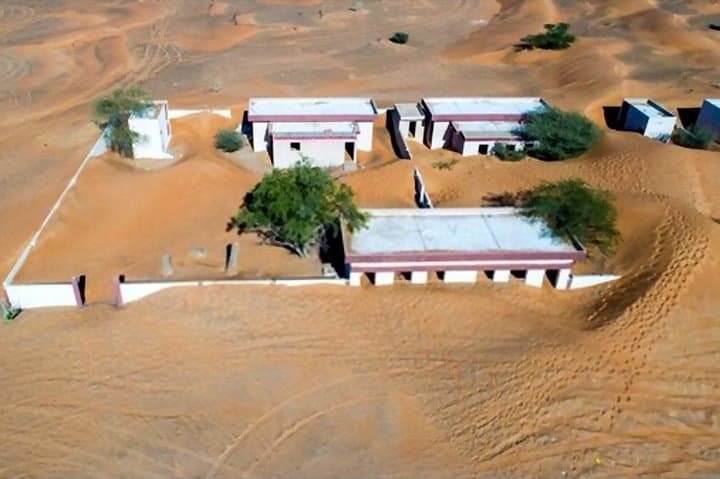
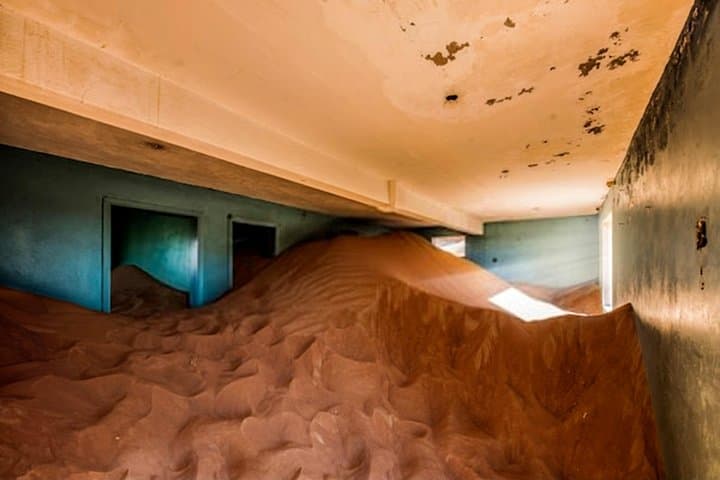
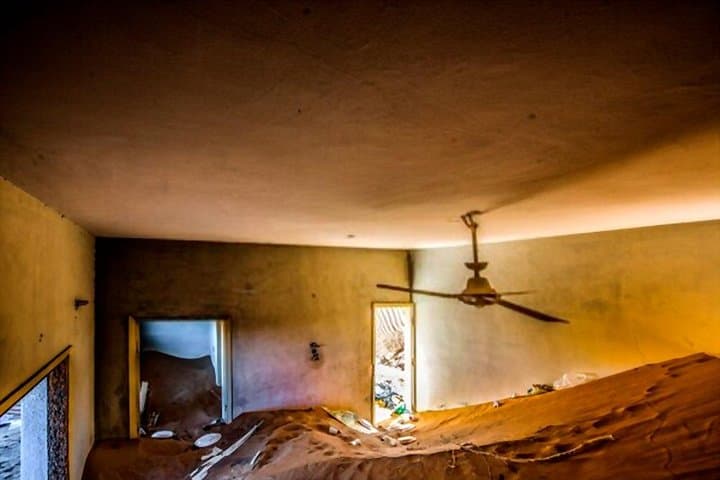
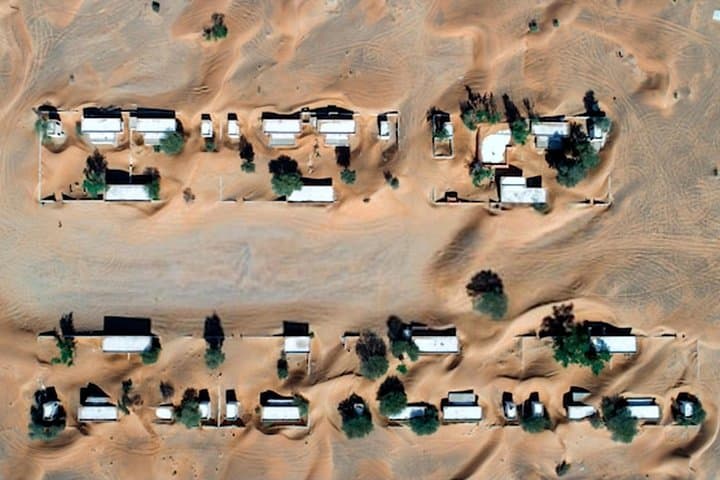
You step out of the 4x4 and the desert greets you like a slow, patient tide — wind pushing grains into doorways, swallowing stairs and softening corners. Two neat rows of low concrete houses and a single mosque sit half-buried; where paint once glowed, only painted plaster and tile fragments peek through the sand.
You step out of the 4x4 and the desert greets you like a slow, patient tide — wind pushing grains into doorways, swallowing stairs and softening corners. Two neat rows of low concrete houses and a single mosque sit half-buried; where paint once glowed, only painted plaster and tile fragments peek through the sand.
The story here is part archaeology, part oral history. Locals link the abandonment to the Al Kutbi tribe and to extreme weather; others tell of jinn that drove families away. Geologically, the site sits on shifting aeolian deposits: wind-driven sand migrates across flat plains, periodically reclaiming built surfaces. Culturally, the village is a reminder that modern infrastructure and old settlement patterns sometimes collide with an uncompromising environment.
Expect about two hours on-site walking between shallow dunes and collapsed thresholds. Look for intact floor tiles, carved lintels, and the mosque’s low mihrab; these small details speak louder than the silence. The sand has agency here — it will fill your boots, obscure steps, and demand careful footing.
Practical notes: tours typically include hotel pickup in Sharjah or Dubai and run about four hours total. Wear closed shoes with good traction, sun protection, and bring 1–2 liters of water. Photography is rewarding at low sun — sunrise or late afternoon — but be respectful of local sensitivities and don’t enter structurally unstable rooms. Leave no trace: the site is fragile and easily damaged by climbers or vehicle tracks. With straightforward preparation, the Al Madam visit is a compact, atmospheric window into desert life and the forces that shape it.