THE ADVENTURE COLLECTIVE® · Independent discovery and booking for outdoor travel

A full-day private trip from Tabuk into Wadi Al Disah that combines towering sandstone cliffs, Nabataean rock carvings and a lunch beside palm-lined springs. Ideal for travelers seeking accessible nature, history, and vivid desert scenery in one easy day.
A full-day private trip from Tabuk into Wadi Al Disah that combines towering sandstone cliffs, Nabataean rock carvings and a lunch beside palm-lined springs. Ideal for travelers seeking accessible nature, history, and vivid desert scenery in one easy day.
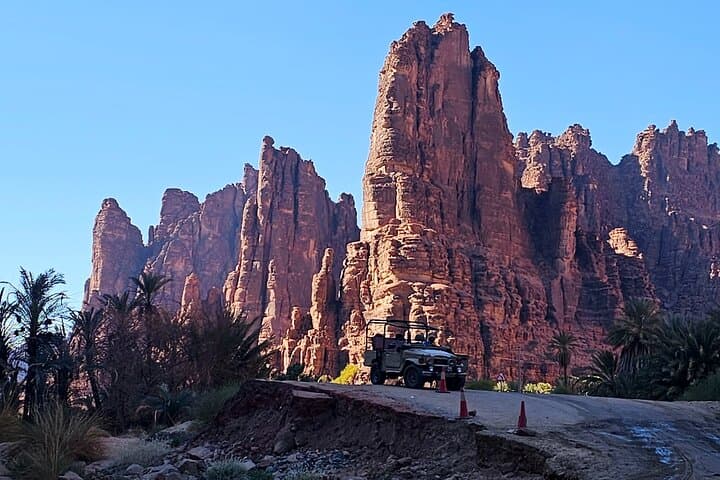
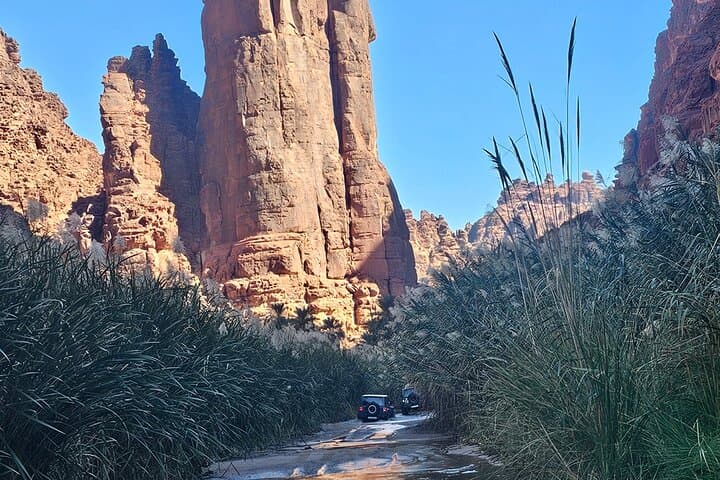
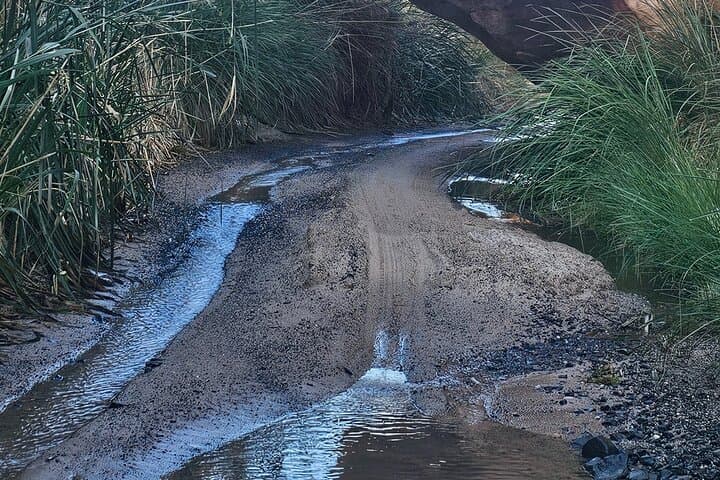
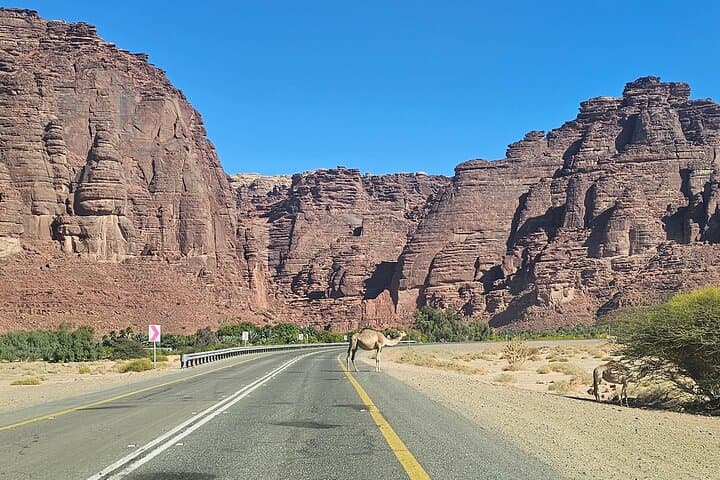
You arrive before the valley opens fully—sandstone cliffs tower like carved pages, the road slipping between palm clusters and low scrub. A private vehicle eases into a shaded pullout; the guide points toward a stream threaded through the canyon floor and the ruins scored into rock faces. The air smells faintly of date palms and tea.
Verified experiences and guided adventures in the surrounding area.
Operated by ADEL · Tabuk, Tabuk Province
You arrive before the valley opens fully—sandstone cliffs tower like carved pages, the road slipping between palm clusters and low scrub. A private vehicle eases into a shaded pullout; the guide points toward a stream threaded through the canyon floor and the ruins scored into rock faces. The air smells faintly of date palms and tea.
Wadi Al Disah sits on the southwestern edge of Tabuk Province and forms part of the Prince Mohammed bin Salman Natural Reserve. The valley’s geology is exposed sandstone and conglomerate shaped by ancient flows, producing narrow gorges, freestanding pillars and smooth cliff faces that hold Nabataean tomb facades and Kufic inscriptions—evidence of centuries of caravan traffic and early settled life in the northwestern Arabian Peninsula.
Local culture is visible at the margins: tea shared at the entrance, simple snacks, and guides who explain the inscriptions and spring-fed pools. Wildlife is discreet—ibex scale ledges and migratory birds use the palms as a stopover.
Practical side: the tour runs about 8–9 hours including private transport, snacks and a set lunch. Access is by paved road then short, mostly level walks; expect some uneven sandy or rocky surfaces. Bring 2 liters of water, sun protection and sturdy shoes. Morning or late afternoon visits keep temperatures comfortable and light better for photographing rock reliefs. Respect signage and archaeological features—climbing on tomb facades or removing artifacts damages the site and is illegal. The excursion suits travelers looking for an accessible nature-and-history day trip from Tabuk with minimal technical hiking but maximum landscape payoff.
easy.
8–9 hours.
Suitable for most adults with basic mobility; includes short, mostly level walks with occasional rocky footing.
The full experience is about 8–9 hours including private transport, guided time in the valley, and lunch.
No—walks are short and generally easy but surfaces can be sandy or uneven; wear sturdy shoes.
You can view Nabataean facades and Kufic inscriptions from designated paths; touching or climbing is prohibited to protect the sites.
The tour is family-friendly and wheelchair-accessible in some areas, but some viewpoints require short walks over uneven ground—check with the operator about specific mobility needs.
The valley contains Nabataean tomb facades and Kufic inscriptions indicating its place on ancient trade and travel routes across northwest Arabia.
Wadi Al Disah lies within the Prince Mohammed bin Salman Natural Reserve; visitors should stay on paths, avoid disturbing springs or wildlife, and follow guide instructions to minimize impact.
ADEL operates guided outdoor trips and adventures with an emphasis on safety, stewardship, and memorable experiences.
You arrive before the valley opens fully—sandstone cliffs tower like carved pages, the road slipping between palm clusters and low scrub. A private vehicle eases into a shaded pullout; the guide points toward a stream threaded through the canyon floor and the ruins scored into rock faces. The air smells faintly of date palms and tea.
You arrive before the valley opens fully—sandstone cliffs tower like carved pages, the road slipping between palm clusters and low scrub. A private vehicle eases into a shaded pullout; the guide points toward a stream threaded through the canyon floor and the ruins scored into rock faces. The air smells faintly of date palms and tea.
Wadi Al Disah sits on the southwestern edge of Tabuk Province and forms part of the Prince Mohammed bin Salman Natural Reserve. The valley’s geology is exposed sandstone and conglomerate shaped by ancient flows, producing narrow gorges, freestanding pillars and smooth cliff faces that hold Nabataean tomb facades and Kufic inscriptions—evidence of centuries of caravan traffic and early settled life in the northwestern Arabian Peninsula.
Local culture is visible at the margins: tea shared at the entrance, simple snacks, and guides who explain the inscriptions and spring-fed pools. Wildlife is discreet—ibex scale ledges and migratory birds use the palms as a stopover.
Practical side: the tour runs about 8–9 hours including private transport, snacks and a set lunch. Access is by paved road then short, mostly level walks; expect some uneven sandy or rocky surfaces. Bring 2 liters of water, sun protection and sturdy shoes. Morning or late afternoon visits keep temperatures comfortable and light better for photographing rock reliefs. Respect signage and archaeological features—climbing on tomb facades or removing artifacts damages the site and is illegal. The excursion suits travelers looking for an accessible nature-and-history day trip from Tabuk with minimal technical hiking but maximum landscape payoff.