THE ADVENTURE COLLECTIVE® · Independent discovery and booking for outdoor travel

Traverse Vietnam from Hanoi to Ho Chi Minh City in 14 days, combining UNESCO-listed landscapes, imperial history and hands-on local experiences. This private tour mixes guided cultural sites, boat cruises and domestic flights for seamless travel.
Traverse Vietnam from Hanoi to Ho Chi Minh City in 14 days, combining UNESCO-listed landscapes, imperial history and hands-on local experiences. This private tour mixes guided cultural sites, boat cruises and domestic flights for seamless travel.
You step out into Hanoi’s humid morning and the city immediately takes you in—motorbikes thrumming, street vendors arranging herbs, and the old quarter threaded with alleys that open to unexpected courtyards.
Verified experiences and guided adventures in the surrounding area.
Operated by BARBIL TOURS · Hanoi, Hanoi
You step out into Hanoi’s humid morning and the city immediately takes you in—motorbikes thrumming, street vendors arranging herbs, and the old quarter threaded with alleys that open to unexpected courtyards.
Over 14 days this route moves like a tide: from the limestone karsts of Ha Long Bay—boats slipping through emerald water—to the inland rice valleys of Ninh Binh and the imperial monuments of Hue. Travel southward across the Hai Van Pass, where the road crests at roughly 500 m and the coastline unfolds, then descend into Da Nang and the lantern-lit lanes of Hoi An. Ba Na Hills lifts you higher (around 1,400 m) for cooler air and the Golden Bridge. In the south, the Mekong’s braided channels and floating markets show a different, water-shaped rhythm.
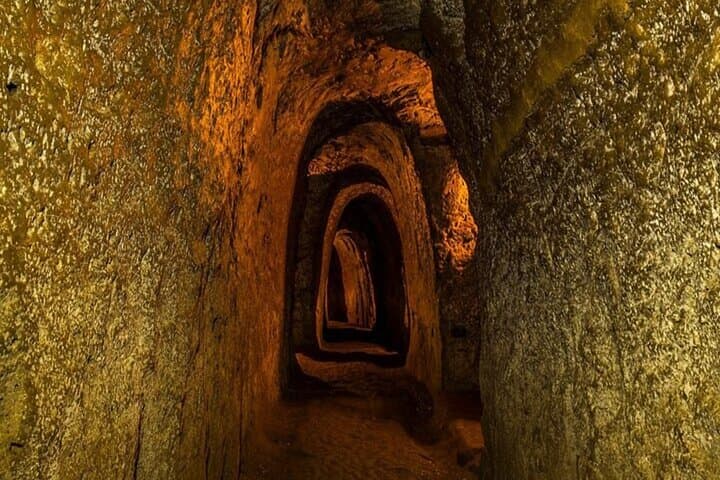
History and geology are visible at every turn: karst towers rising from rice paddies, imperial citadels and colonial facades, and the Cu Chi tunnel network that reveals wartime ingenuity. Local culture centers on markets, street-food networks and family-run workshops—expect hands-on moments like a Hoi An cooking class and a homestay lunch in the Delta.
Practical guidance: this is a guided, private tour with domestic flights, 4–5 star hotels and most meals included; plan for frequent transfers and daily walking of 2–5 miles. Pack breathable layers, a light rain shell, insect repellent and comfortable walking shoes. Bring cash for markets, a universal adapter, and photocopies of your passport. Best time to travel is generally late winter to spring or autumn for milder temperatures and clearer seas.
moderate.
14 days.
Suitable for travelers who can walk 2–5 miles a day, handle stairs and multiple transfers; comfortable mobility recommended.
Yes—this tour includes domestic flights as part of the itinerary, simplifying long transfers between regions.
Accommodations are 4–5 star hotels with private transfers and typical hotel amenities included.
The itinerary is labeled physically easy and suitable for many ages, but it involves frequent transfers and some walking—consult the operator about mobility needs.
Visa requirements vary by nationality; check Vietnam’s current entry rules well before travel and carry passport copies.
Vietnam’s landscape preserves layers of history—from Champa and imperial dynasties in central Vietnam to colonial-era architecture and the wartime Cu Chi tunnels in the south.
Tourism pressures on Ha Long Bay and the Mekong Delta have prompted local conservation efforts; travelers should avoid single-use plastics and follow guide instructions in sensitive sites.
BARBIL TOURS operates guided outdoor trips and adventures with an emphasis on safety, stewardship, and memorable experiences.



You step out into Hanoi’s humid morning and the city immediately takes you in—motorbikes thrumming, street vendors arranging herbs, and the old quarter threaded with alleys that open to unexpected courtyards.
You step out into Hanoi’s humid morning and the city immediately takes you in—motorbikes thrumming, street vendors arranging herbs, and the old quarter threaded with alleys that open to unexpected courtyards.
Over 14 days this route moves like a tide: from the limestone karsts of Ha Long Bay—boats slipping through emerald water—to the inland rice valleys of Ninh Binh and the imperial monuments of Hue. Travel southward across the Hai Van Pass, where the road crests at roughly 500 m and the coastline unfolds, then descend into Da Nang and the lantern-lit lanes of Hoi An. Ba Na Hills lifts you higher (around 1,400 m) for cooler air and the Golden Bridge. In the south, the Mekong’s braided channels and floating markets show a different, water-shaped rhythm.
History and geology are visible at every turn: karst towers rising from rice paddies, imperial citadels and colonial facades, and the Cu Chi tunnel network that reveals wartime ingenuity. Local culture centers on markets, street-food networks and family-run workshops—expect hands-on moments like a Hoi An cooking class and a homestay lunch in the Delta.
Practical guidance: this is a guided, private tour with domestic flights, 4–5 star hotels and most meals included; plan for frequent transfers and daily walking of 2–5 miles. Pack breathable layers, a light rain shell, insect repellent and comfortable walking shoes. Bring cash for markets, a universal adapter, and photocopies of your passport. Best time to travel is generally late winter to spring or autumn for milder temperatures and clearer seas.