THE ADVENTURE COLLECTIVE® · Independent discovery and booking for outdoor travel

Three hours of streets, bridges and hilltop terraces: this guided e‑bike tour moves from Rome-era arches and Juliet’s balcony to panoramic views above Verona. It’s an accessible way to cover wide terrain while learning local history and riding the Torricelle hills with electric assist.
Three hours of streets, bridges and hilltop terraces: this guided e‑bike tour moves from Rome-era arches and Juliet’s balcony to panoramic views above Verona. It’s an accessible way to cover wide terrain while learning local history and riding the Torricelle hills with electric assist.
The cobbles of Verona rattle under rubber as the motor gently assists your pedal—enough to lift you up Torricelle without breaking stride. Morning light glances off the Arena’s stone rings and the Adige dares you to follow its bend; bikes thread narrow streets where Roman inscriptions still read like stage directions.
Verified experiences and guided adventures in the surrounding area.
Operated by Ways · Verona, Veneto
The cobbles of Verona rattle under rubber as the motor gently assists your pedal—enough to lift you up Torricelle without breaking stride. Morning light glances off the Arena’s stone rings and the Adige dares you to follow its bend; bikes thread narrow streets where Roman inscriptions still read like stage directions.
This three-hour loop stitches together layers of history: a Roman triumphal arch marks a once-fortified gateway, medieval basilicas keep their frescoed watch, and the Arena speaks of gladiators and later opera. Geology here is quiet but firm—the city sits on a floodplain carved by the Adige with low morainic hills to the north that offer the terraces and viewpoints of Castel San Pietro.
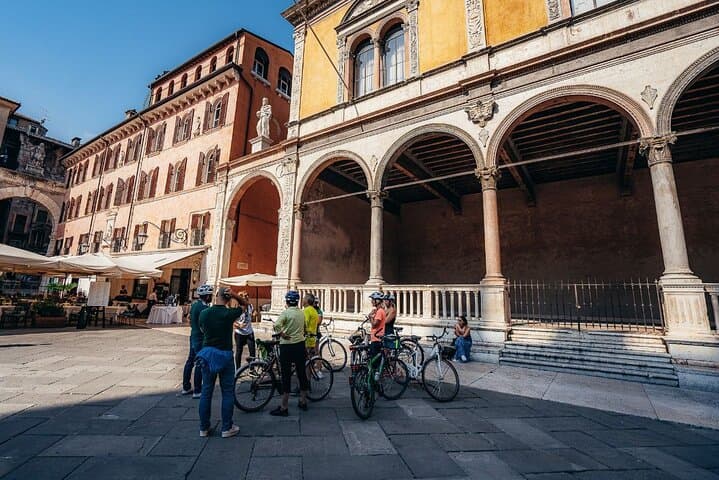
Culturally, the ride moves from lively piazzas and market chatter to the hushed courtyards around San Zeno; local cafés and bakeries make for low-key stops. Guides usually point out details many miss—stonework repairs from Roman times, the Gothic tomb canopies at San Fermo, and the subtle river restoration efforts along Sottoriva.
Practical guidance: helmets are provided but bring closed-toe shoes and a light jacket for hilltop breezes. Traffic is real—expect short stretches on city roads and obey signals; children under 14 are not permitted and riders must be at least 155 cm tall. Best times are early morning or late afternoon to avoid peak traffic and heat. Hydrate, keep your phone charged for photos and maps, and let the e-assist do the climbs so you can enjoy the view over terracotta roofs and the slow, confident curve of the Adige.
moderate.
3 hours.
Suitable for people in reasonable walking/cycling shape; e-assist reduces climbing effort but you should be comfortable riding 3 hours with short urban stops.
No — basic bike-handling skills are sufficient; guides will brief you on the e-bike controls before departure.
Children under 14 are not permitted; minimum rider height is 155 cm (approx. 5 ft) for safe e-bike use.
The tour operates in light rain with an alternative route chosen by the guide; in severe weather the operator may reschedule or cancel per their policy.
Yes — helmets are provided and their use is mandatory for all participants.
Verona grew from Roman foundations—gates, baths and the Arena reflect its imperial past—then layered medieval churches and Renaissance palaces over centuries of urban life.
E-biking reduces local emissions compared with vehicle tours; stay on designated paths and follow local waste rules to limit impact on riverbanks and historic stonework.
Ways operates guided outdoor trips and adventures with an emphasis on safety, stewardship, and memorable experiences.
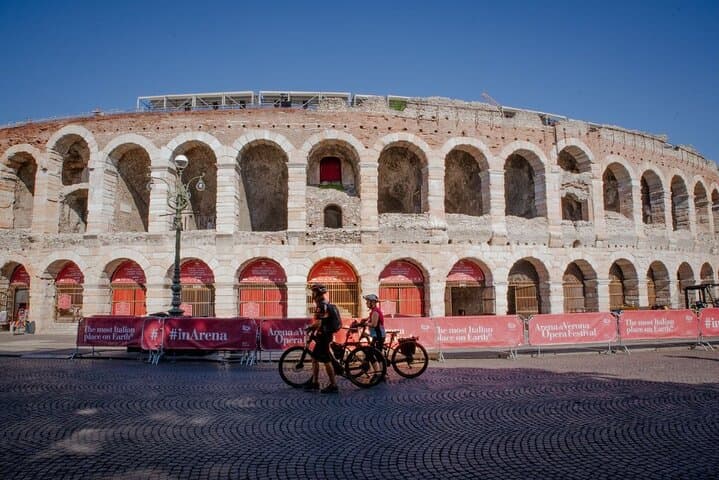
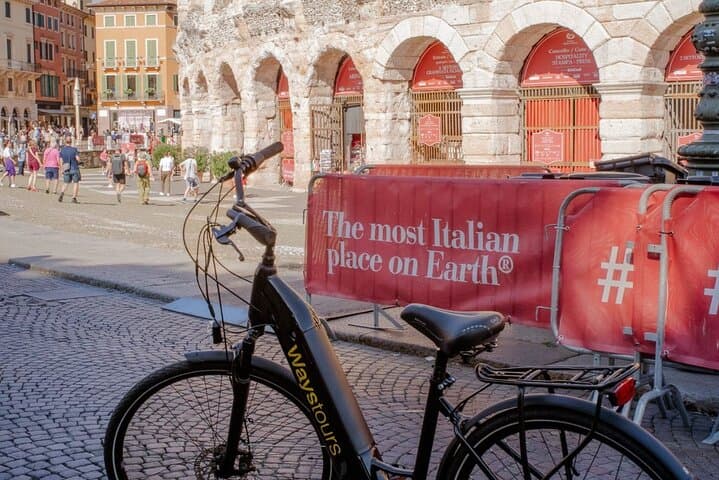
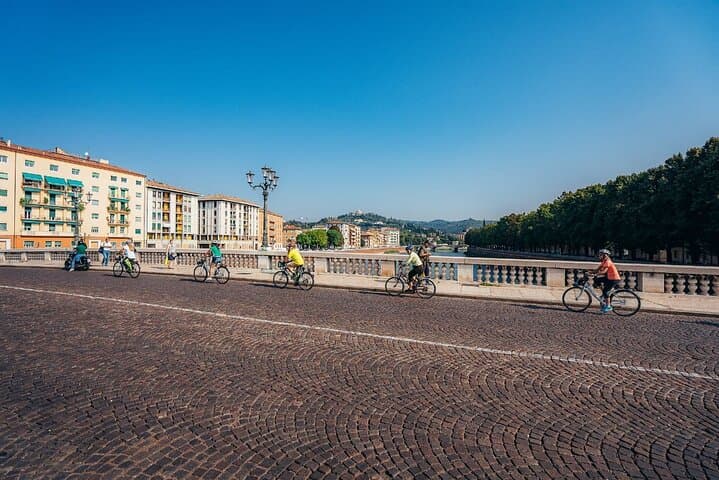
The cobbles of Verona rattle under rubber as the motor gently assists your pedal—enough to lift you up Torricelle without breaking stride. Morning light glances off the Arena’s stone rings and the Adige dares you to follow its bend; bikes thread narrow streets where Roman inscriptions still read like stage directions.
The cobbles of Verona rattle under rubber as the motor gently assists your pedal—enough to lift you up Torricelle without breaking stride. Morning light glances off the Arena’s stone rings and the Adige dares you to follow its bend; bikes thread narrow streets where Roman inscriptions still read like stage directions.
This three-hour loop stitches together layers of history: a Roman triumphal arch marks a once-fortified gateway, medieval basilicas keep their frescoed watch, and the Arena speaks of gladiators and later opera. Geology here is quiet but firm—the city sits on a floodplain carved by the Adige with low morainic hills to the north that offer the terraces and viewpoints of Castel San Pietro.
Culturally, the ride moves from lively piazzas and market chatter to the hushed courtyards around San Zeno; local cafés and bakeries make for low-key stops. Guides usually point out details many miss—stonework repairs from Roman times, the Gothic tomb canopies at San Fermo, and the subtle river restoration efforts along Sottoriva.
Practical guidance: helmets are provided but bring closed-toe shoes and a light jacket for hilltop breezes. Traffic is real—expect short stretches on city roads and obey signals; children under 14 are not permitted and riders must be at least 155 cm tall. Best times are early morning or late afternoon to avoid peak traffic and heat. Hydrate, keep your phone charged for photos and maps, and let the e-assist do the climbs so you can enjoy the view over terracotta roofs and the slow, confident curve of the Adige.