THE ADVENTURE COLLECTIVE® · Independent discovery and booking for outdoor travel

Board a motorboat from Puno and cross the high, luminous waters of Lake Titicaca to meet the Uros people on their legendary reed islands. This compact half-day tour combines a short boat crossing, a guided island visit and a reed-boat ride between islets.
Board a motorboat from Puno and cross the high, luminous waters of Lake Titicaca to meet the Uros people on their legendary reed islands. This compact half-day tour combines a short boat crossing, a guided island visit and a reed-boat ride between islets.
A thin windslides across Lake Titicaca as the motorboat pulls away from Puno’s harbor, the city shrinking into pastel rooftops and the high plain opening into a blue so wide it feels like altitude made visible.
Verified experiences and guided adventures in the surrounding area.
Operated by Machupicchu USA · Puno, Puno
A thin windslides across Lake Titicaca as the motorboat pulls away from Puno’s harbor, the city shrinking into pastel rooftops and the high plain opening into a blue so wide it feels like altitude made visible.
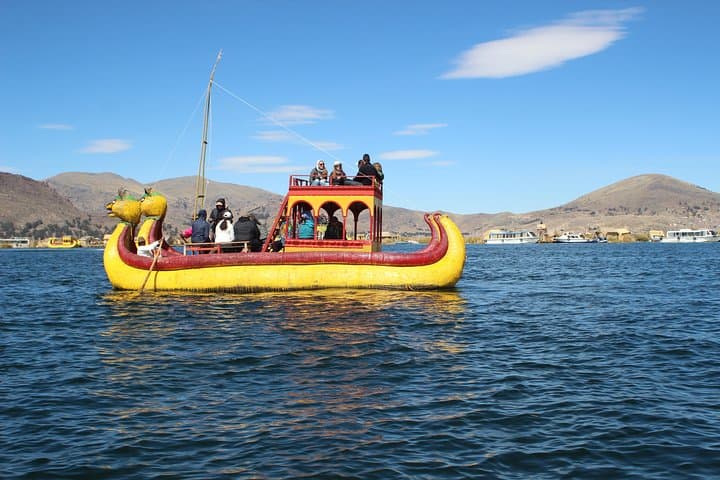
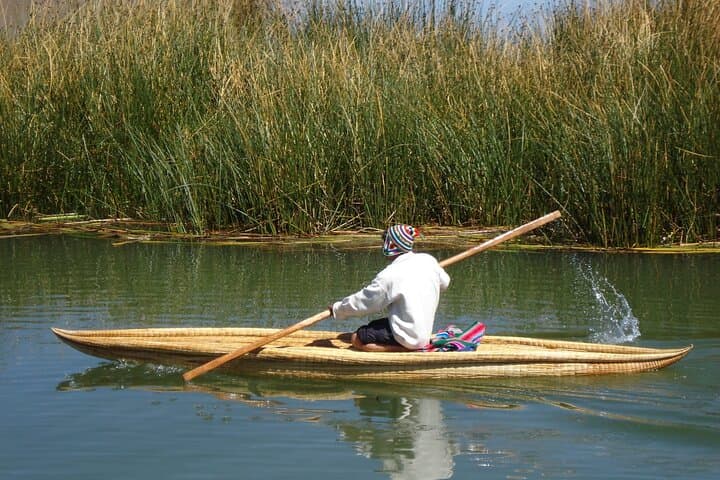
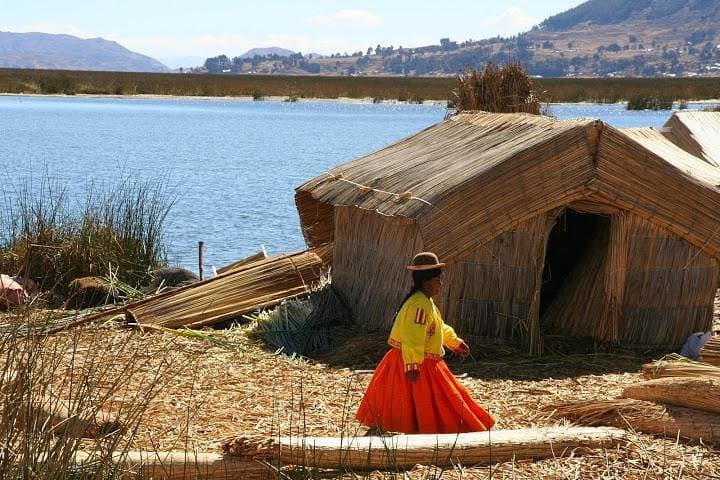
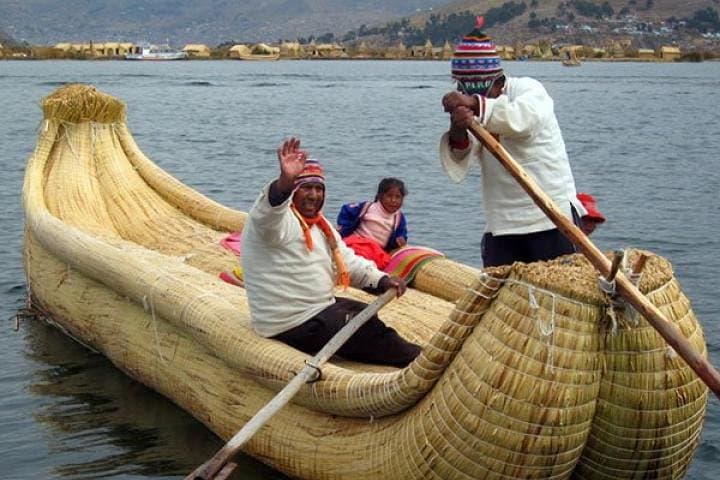
You arrive at the Uros islands not to stone or timber but to mounds of totora reed—floors that rise and fall with the lake, houses and walkways bound together by generations of practical craft. The Uros people built these floating islands centuries before modern borders, using the same reeds that feed, shelter and buoy their lives. Lake Titicaca itself sits at roughly 3,800 meters (12,500 ft), a highland basin carved by glacial action and bordered by Andean ranges whose slopes frame every view.
On a typical half-day tour (about four hours), expect a roughly 25–30 minute motorboat crossing, a guided walk, a short reed-boat ride between islets, and time to meet artisans selling handwoven textiles and carved souvenirs. Guides explain reed maintenance, island rotation and cultural continuity—how language, weaving patterns and barter sustain a small community on water.
Practical notes: altitude affects breath and energy—move slowly, drink water and avoid heavy meals before departure. Pack sun protection and a warm layer; wind and reflective water make mornings deceptively cold. Tours often include hotel pickup, a bilingual guide and entrance fees; bring small local currency for purchases and a passport for identification if required. This is a compact cultural cruise—accessible, photogenic and rooted in living tradition.
easy.
4 hours.
Suitable for most fitness levels; requires stable balance for short boat transfers and walking on uneven reed platforms.
Yes—most operators require a valid passport for identification on the day of travel.
The lake is about 3,800 m (12,500 ft). Many people feel mild symptoms like shortness of breath; acclimate slowly and drink water.
Islands are semi-fixed—made from layers of totora reed that are continuously repaired and re-tied; some sections may shift and require maintenance.
Yes—Uros artisans sell textiles, carvings and small souvenirs; bring small bills in Peruvian soles and expect to bargain gently.
The Uros predate the Inca and maintained a distinct culture by living on totora reed islands to stay independent from upland groups.
Rising tourism puts pressure on reed resources and waste management; choose operators who support sustainable reed harvesting and local stewardship.
Machupicchu USA operates guided outdoor trips and adventures with an emphasis on safety, stewardship, and memorable experiences.
A thin windslides across Lake Titicaca as the motorboat pulls away from Puno’s harbor, the city shrinking into pastel rooftops and the high plain opening into a blue so wide it feels like altitude made visible.
A thin windslides across Lake Titicaca as the motorboat pulls away from Puno’s harbor, the city shrinking into pastel rooftops and the high plain opening into a blue so wide it feels like altitude made visible.
You arrive at the Uros islands not to stone or timber but to mounds of totora reed—floors that rise and fall with the lake, houses and walkways bound together by generations of practical craft. The Uros people built these floating islands centuries before modern borders, using the same reeds that feed, shelter and buoy their lives. Lake Titicaca itself sits at roughly 3,800 meters (12,500 ft), a highland basin carved by glacial action and bordered by Andean ranges whose slopes frame every view.
On a typical half-day tour (about four hours), expect a roughly 25–30 minute motorboat crossing, a guided walk, a short reed-boat ride between islets, and time to meet artisans selling handwoven textiles and carved souvenirs. Guides explain reed maintenance, island rotation and cultural continuity—how language, weaving patterns and barter sustain a small community on water.
Practical notes: altitude affects breath and energy—move slowly, drink water and avoid heavy meals before departure. Pack sun protection and a warm layer; wind and reflective water make mornings deceptively cold. Tours often include hotel pickup, a bilingual guide and entrance fees; bring small local currency for purchases and a passport for identification if required. This is a compact cultural cruise—accessible, photogenic and rooted in living tradition.