THE ADVENTURE COLLECTIVE® · Independent discovery and booking for outdoor travel

Step into one of the Americas' largest oceanographic museums in Balneário Piçarras: fossils, live aquaria and a hands‑on Sensory Experience illuminate Brazil's marine life. Plan 60–90 minutes, follow staff guidance in touch exhibits, and bring a light layer for the cool galleries.
Step into one of the Americas' largest oceanographic museums in Balneário Piçarras: fossils, live aquaria and a hands‑on Sensory Experience illuminate Brazil's marine life. Plan 60–90 minutes, follow staff guidance in touch exhibits, and bring a light layer for the cool galleries.
You step from Piçarras' humid air into cool, filtered light; outside, a life‑size panel of ocean giants fixes the shoreline scale, and inside glass tanks pulse with slow movement. Fossils and mounted specimens share space with living aquaria, and the building moves you through epochs and habitats with a steady, scientific rhythm.
Verified experiences and guided adventures in the surrounding area.
Operated by Museu Oceanográfico Univali · Balneário Piçarras, Santa Catarina
You step from Piçarras' humid air into cool, filtered light; outside, a life‑size panel of ocean giants fixes the shoreline scale, and inside glass tanks pulse with slow movement. Fossils and mounted specimens share space with living aquaria, and the building moves you through epochs and habitats with a steady, scientific rhythm.
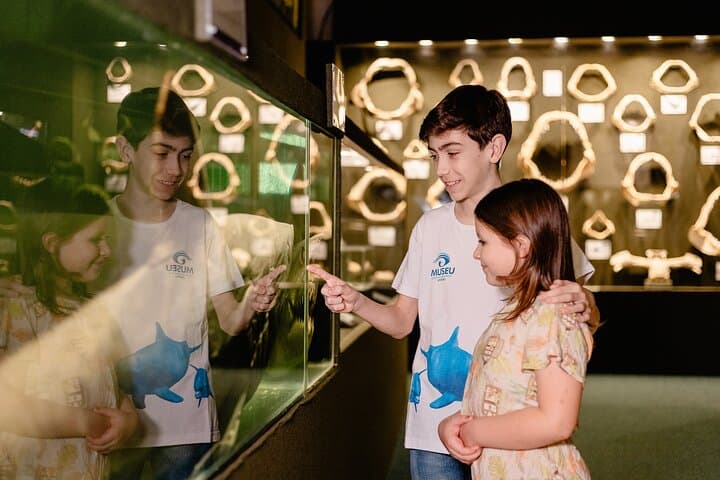
The museum opens with the emergence of life—fossils that mark tectonic shifts and ancient coastlines—then divides into themed wings that track marine form and function: invertebrates, cartilaginous fishes (including Brazil's rare white shark jaw), bony fishes, reptiles, seabirds and mammals. The Gray Wing places Santa Catarina's whaling past alongside modern research by Universidade do Vale do Itajaí, turning local maritime history into lessons on conservation and species recovery.
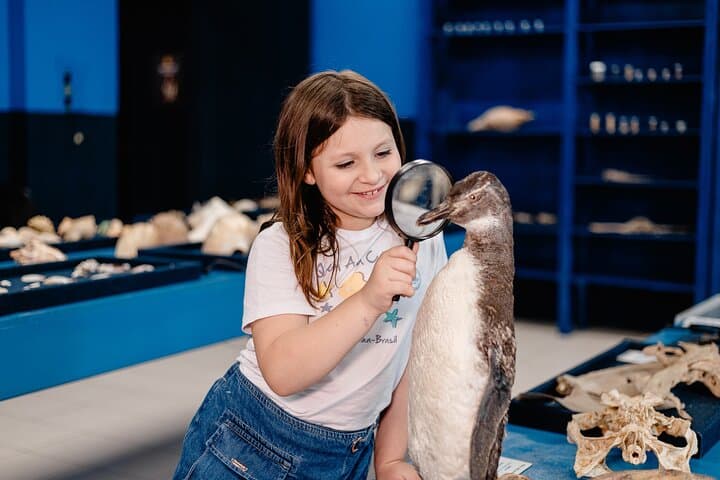
Practical notes sit close to the wonder: the space is fully accessible, air‑conditioned and designed for 60–90 minutes of steady walking and observation. The included Sensory Experience lets visitors touch select animals under supervision—rays and some shells are common touchpoints—so expect staff guidance and rotating displays. Outside the museum, the Ocean Giants Panel is a quick photo stop; a short walk takes you to Piçarras beach if you want salt air before or after your visit.
To make the most of the trip, arrive early in high season, carry a light layer for the cool galleries, avoid flash photography near tanks, and respect handling rules—these exhibits are curated for both education and species welfare.
easy.
60–90 minutes.
Suitable for all fitness levels; primarily walking and standing with benches for rest.
Allocate 60–90 minutes for the main exhibition and sensory experience; extend time if you want to linger at displays or visit the Ocean Giants Panel outside.
Yes—this ticket includes the Sensory Experience, but touch sessions are supervised and may be limited by rotation or animal welfare needs.
Yes—exhibition spaces, surfaces and transport options are accessible and the site accommodates strollers and service animals.
Full refund is available if cancelled at least 24 hours before the scheduled visit; within 24 hours tickets are non‑refundable.
The museum traces both deep geological eras through fossils and Santa Catarina's maritime history—displays also cover the region's whaling past and the transition to conservation science.
Univali emphasizes education and species protection; exhibits and the sensory gallery are managed with welfare in mind—support local programs and avoid disturbing live animals.
Museu Oceanográfico Univali operates guided outdoor trips and adventures with an emphasis on safety, stewardship, and memorable experiences.

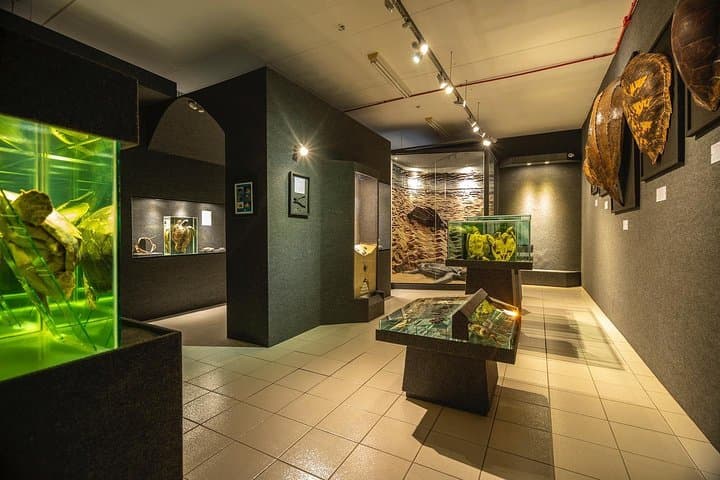
You step from Piçarras' humid air into cool, filtered light; outside, a life‑size panel of ocean giants fixes the shoreline scale, and inside glass tanks pulse with slow movement. Fossils and mounted specimens share space with living aquaria, and the building moves you through epochs and habitats with a steady, scientific rhythm.
You step from Piçarras' humid air into cool, filtered light; outside, a life‑size panel of ocean giants fixes the shoreline scale, and inside glass tanks pulse with slow movement. Fossils and mounted specimens share space with living aquaria, and the building moves you through epochs and habitats with a steady, scientific rhythm.
The museum opens with the emergence of life—fossils that mark tectonic shifts and ancient coastlines—then divides into themed wings that track marine form and function: invertebrates, cartilaginous fishes (including Brazil's rare white shark jaw), bony fishes, reptiles, seabirds and mammals. The Gray Wing places Santa Catarina's whaling past alongside modern research by Universidade do Vale do Itajaí, turning local maritime history into lessons on conservation and species recovery.
Practical notes sit close to the wonder: the space is fully accessible, air‑conditioned and designed for 60–90 minutes of steady walking and observation. The included Sensory Experience lets visitors touch select animals under supervision—rays and some shells are common touchpoints—so expect staff guidance and rotating displays. Outside the museum, the Ocean Giants Panel is a quick photo stop; a short walk takes you to Piçarras beach if you want salt air before or after your visit.
To make the most of the trip, arrive early in high season, carry a light layer for the cool galleries, avoid flash photography near tanks, and respect handling rules—these exhibits are curated for both education and species welfare.