THE ADVENTURE COLLECTIVE® · Independent discovery and booking for outdoor travel

Walk the carved caves of Udayagiri and Khandagiri in a guided three-hour tour that blends archaeology, local stories and easy climbing. This concise walk delivers sweeping views, carved reliefs dating to the 1st century BCE, and practical insights for first-time visitors.
Walk the carved caves of Udayagiri and Khandagiri in a guided three-hour tour that blends archaeology, local stories and easy climbing. This concise walk delivers sweeping views, carved reliefs dating to the 1st century BCE, and practical insights for first-time visitors.
You start on a stone-strewn path where wind slides along the rock faces and the carved mouths of caves peer like old doorways. Tall trees lean over the trail, their leaves clapping softly as you climb toward the twin ridges of Udayagiri and Khandagiri, just outside Bhubaneswar.
Verified experiences and guided adventures in the surrounding area.
Operated by Yo Tours Goa · Bhubaneswar, Odisha
You start on a stone-strewn path where wind slides along the rock faces and the carved mouths of caves peer like old doorways. Tall trees lean over the trail, their leaves clapping softly as you climb toward the twin ridges of Udayagiri and Khandagiri, just outside Bhubaneswar.
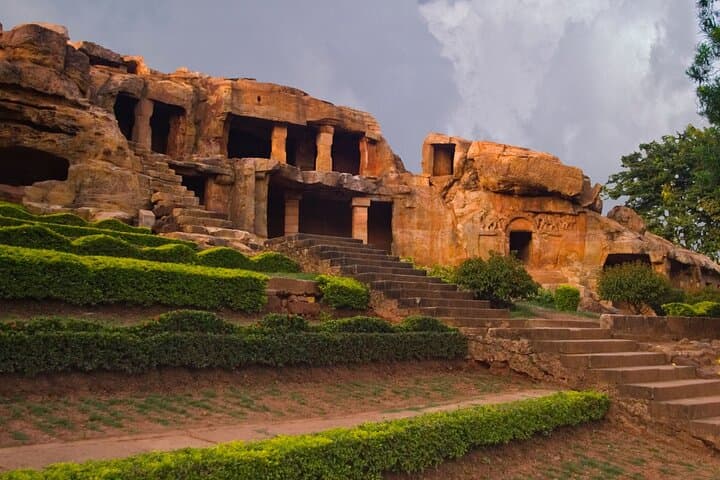
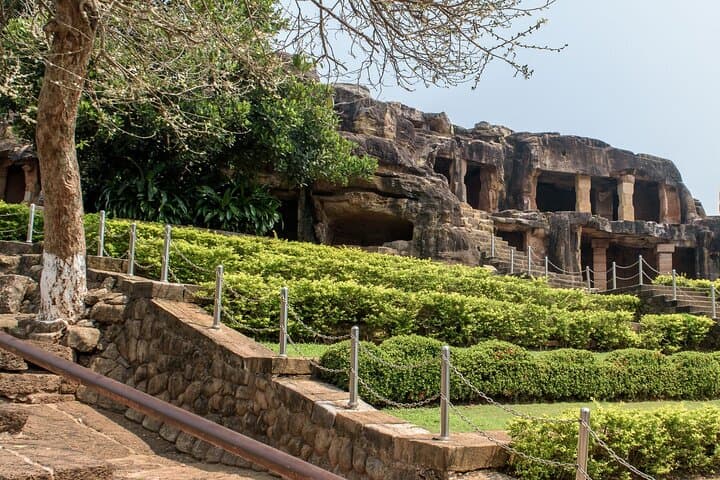
These partly natural, partly excavated caves date back to the 1st century BCE and were cut into sandstone by artisans and ascetics. The reliefs, pillared verandas and small cells reveal a layered history of Jain monastic life, regional rulers and devotional practice. Geologically the hills are compacted sandstone—soft enough to carve but durable against the tropical rains—so you’ll notice tool marks and weathered edges that record both human craft and time. Locally, the site sits within Odisha’s living cultural fabric; temple festivals in Bhubaneswar and nearby markets keep the region vibrant, and guides often weave oral stories about royal patrons and wandering monks into their narrative.
On this guided three-hour walk expect 1–2 kilometers of mixed paved and uneven stone steps, short steep sections and several vantage points that look back over Bhubaneswar’s sprawl. The guide’s “infotainment” style blends archaeology with local anecdotes—useful for families and serious history fans alike.
Practical notes: wear sturdy shoes for uneven rock, bring water and sun protection for exposed sections, and start early to avoid midday heat and crowds. Respect religious areas—photography rules can vary—and allow time to listen: many of the best stories are told in the shade of the caves.
easy.
3 hours.
Suitable for most fitness levels; requires short climbs, stairs and standing for guided explanations.
The guided route covers roughly 1–2 kilometers with stone steps, short steep sections and paved paths; expect uneven footing at times.
Yes, but access can be restricted during heavy monsoon rains or religious events; check with the guide or local authorities on the day.
Yes—it's rated easy and family-friendly, though participants should be comfortable with stairs and short climbs.
Basic access is generally available at the site; the tour may include guided access but confirm whether any archaeological site fees are covered.
Udayagiri and Khandagiri are a network of 1st-century BCE caves carved as Jain monastic dwellings and royal patronage sites, reflecting early eastern Indian religious life.
The sandstone carvings are vulnerable to weathering and visitor wear—follow marked paths, avoid touching carvings, and use local guides who support site preservation.
Yo Tours Goa operates guided outdoor trips and adventures with an emphasis on safety, stewardship, and memorable experiences.


You start on a stone-strewn path where wind slides along the rock faces and the carved mouths of caves peer like old doorways. Tall trees lean over the trail, their leaves clapping softly as you climb toward the twin ridges of Udayagiri and Khandagiri, just outside Bhubaneswar.
You start on a stone-strewn path where wind slides along the rock faces and the carved mouths of caves peer like old doorways. Tall trees lean over the trail, their leaves clapping softly as you climb toward the twin ridges of Udayagiri and Khandagiri, just outside Bhubaneswar.
These partly natural, partly excavated caves date back to the 1st century BCE and were cut into sandstone by artisans and ascetics. The reliefs, pillared verandas and small cells reveal a layered history of Jain monastic life, regional rulers and devotional practice. Geologically the hills are compacted sandstone—soft enough to carve but durable against the tropical rains—so you’ll notice tool marks and weathered edges that record both human craft and time. Locally, the site sits within Odisha’s living cultural fabric; temple festivals in Bhubaneswar and nearby markets keep the region vibrant, and guides often weave oral stories about royal patrons and wandering monks into their narrative.
On this guided three-hour walk expect 1–2 kilometers of mixed paved and uneven stone steps, short steep sections and several vantage points that look back over Bhubaneswar’s sprawl. The guide’s “infotainment” style blends archaeology with local anecdotes—useful for families and serious history fans alike.
Practical notes: wear sturdy shoes for uneven rock, bring water and sun protection for exposed sections, and start early to avoid midday heat and crowds. Respect religious areas—photography rules can vary—and allow time to listen: many of the best stories are told in the shade of the caves.