THE ADVENTURE COLLECTIVE® · Independent discovery and booking for outdoor travel

Descend into To Luang Cave on a private half-day tour from Krabi and walk through three dramatic limestone chambers, ancient murals, and Ice Age fossil sites. This guided cave visit pairs cinematic geology with clear practical guidance for exploring safely and respectfully.
Descend into To Luang Cave on a private half-day tour from Krabi and walk through three dramatic limestone chambers, ancient murals, and Ice Age fossil sites. This guided cave visit pairs cinematic geology with clear practical guidance for exploring safely and respectfully.
You step from a shaded roadside into a cool throat of limestone; sunlight slices through a natural vent and dust motes float like slow ships. To Luang Cave opens in layered chambers—each level a different mood: a bright entrance where beams carve the floor, a middle gallery streaked with mineral color, and a lower chamber where stalactites hang like slow icicles and the air tastes of stone and time.
Verified experiences and guided adventures in the surrounding area.
Operated by Oh-Hoo · Krabi, Krabi Province
You step from a shaded roadside into a cool throat of limestone; sunlight slices through a natural vent and dust motes float like slow ships. To Luang Cave opens in layered chambers—each level a different mood: a bright entrance where beams carve the floor, a middle gallery streaked with mineral color, and a lower chamber where stalactites hang like slow icicles and the air tastes of stone and time.
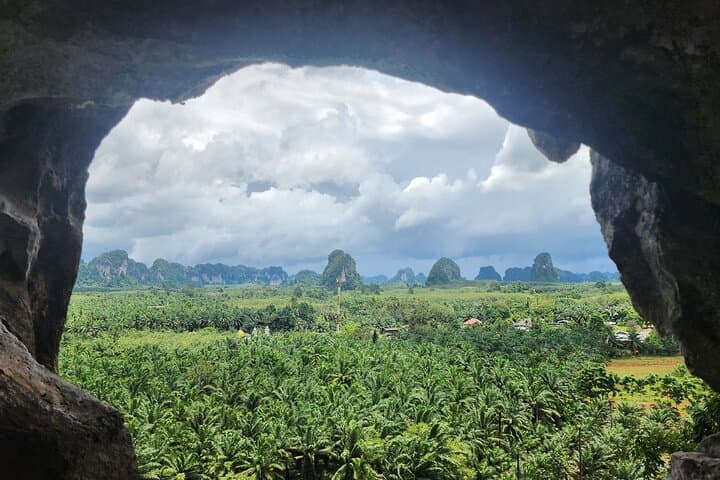
The cave is geologically young by human standards but ancient in action: rain and groundwater have dissolved the karst for millions of years, leaving cliffs, pillars, and fossil-bearing deposits. Archaeologists point to the Manorah mural as local cultural evidence of historic rituals, while paleontologists note Ice Age mammal remains found in the deeper sediment. Outside, the limestone karst that frames Krabi’s coast remains a coastal icon, sculpted by sea and rain.
On a private half-day you move deliberately—helmet secured, flashlight sweeping ahead—guided by someone who knows which chambers host the fragile formations and where fossils peek from the walls. Expect narrow steps, uneven footing, and sudden cool pockets of air; the pace is steady but not rushed, with time to inspect the Manorah panels and photograph the vent-lit atrium.
Practicalities: wear closed-toe shoes with grip, bring a headlamp and a light waterproof layer, and carry water—the cave’s constant humidity can sap energy. Tours include hotel pickup in Krabi Town or Ao Nang, and run about three hours total. Leave no trace: avoid touching formations and follow your guide to protect both history and habitat.
moderate.
3 hours.
Moderate mobility and balance; suitable for most people aged 8–70 with no severe mobility issues
Yes—operators typically accept ages 8–70; children should be comfortable with stairs and guided instructions.
Guides point out the Manorah mural and fossil-bearing deposits, though visibility depends on exact route and conservation restrictions.
Yes—helmet and flashlight are listed as included, but bringing a personal headlamp is recommended.
Most bookings include hotel pickup and drop-off from Krabi Town and Ao Nang; confirm your pickup location when booking.
Local researchers note the Manorah mural as a rare cultural mark inside the cave, and paleontological finds show Ice Age mammals once inhabited the region.
The cave’s formations and fossil layers are delicate—follow guide instructions, avoid touching features, and carry out all waste to minimize impact.
Oh-Hoo operates guided outdoor trips and adventures with an emphasis on safety, stewardship, and memorable experiences.
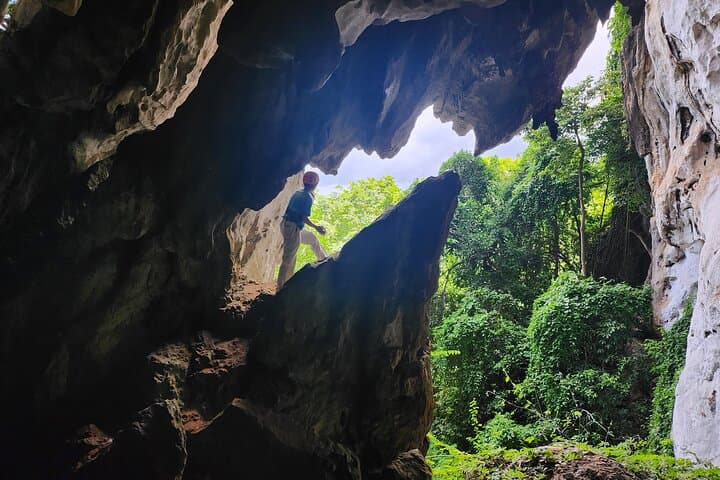
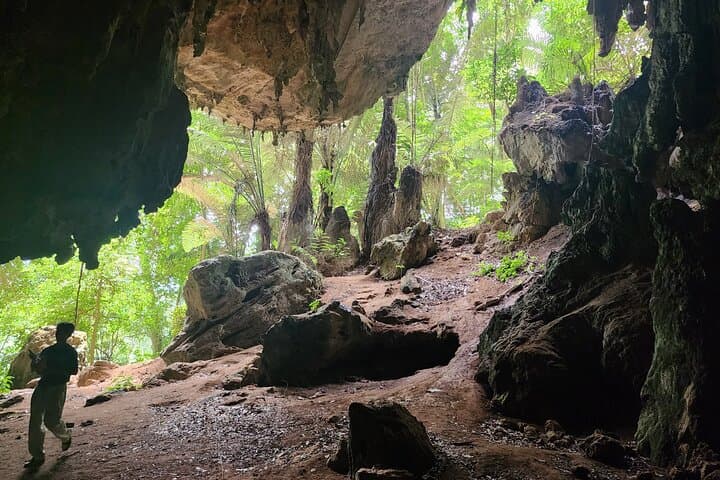
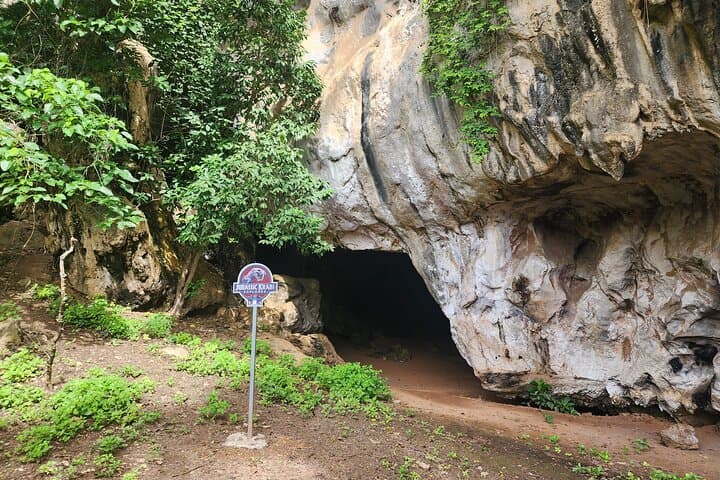
You step from a shaded roadside into a cool throat of limestone; sunlight slices through a natural vent and dust motes float like slow ships. To Luang Cave opens in layered chambers—each level a different mood: a bright entrance where beams carve the floor, a middle gallery streaked with mineral color, and a lower chamber where stalactites hang like slow icicles and the air tastes of stone and time.
You step from a shaded roadside into a cool throat of limestone; sunlight slices through a natural vent and dust motes float like slow ships. To Luang Cave opens in layered chambers—each level a different mood: a bright entrance where beams carve the floor, a middle gallery streaked with mineral color, and a lower chamber where stalactites hang like slow icicles and the air tastes of stone and time.
The cave is geologically young by human standards but ancient in action: rain and groundwater have dissolved the karst for millions of years, leaving cliffs, pillars, and fossil-bearing deposits. Archaeologists point to the Manorah mural as local cultural evidence of historic rituals, while paleontologists note Ice Age mammal remains found in the deeper sediment. Outside, the limestone karst that frames Krabi’s coast remains a coastal icon, sculpted by sea and rain.
On a private half-day you move deliberately—helmet secured, flashlight sweeping ahead—guided by someone who knows which chambers host the fragile formations and where fossils peek from the walls. Expect narrow steps, uneven footing, and sudden cool pockets of air; the pace is steady but not rushed, with time to inspect the Manorah panels and photograph the vent-lit atrium.
Practicalities: wear closed-toe shoes with grip, bring a headlamp and a light waterproof layer, and carry water—the cave’s constant humidity can sap energy. Tours include hotel pickup in Krabi Town or Ao Nang, and run about three hours total. Leave no trace: avoid touching formations and follow your guide to protect both history and habitat.