THE ADVENTURE COLLECTIVE® · Independent discovery and booking for outdoor travel

Walk through Arequipa’s famous sillar quarries, watch master stonemasons at work and take in sweeping views of Misti, Chachani and Pichu Pichu from Carmen Alto. Finish in Yanahuara with traditional desserts and handcrafted souvenirs.
Walk through Arequipa’s famous sillar quarries, watch master stonemasons at work and take in sweeping views of Misti, Chachani and Pichu Pichu from Carmen Alto. Finish in Yanahuara with traditional desserts and handcrafted souvenirs.
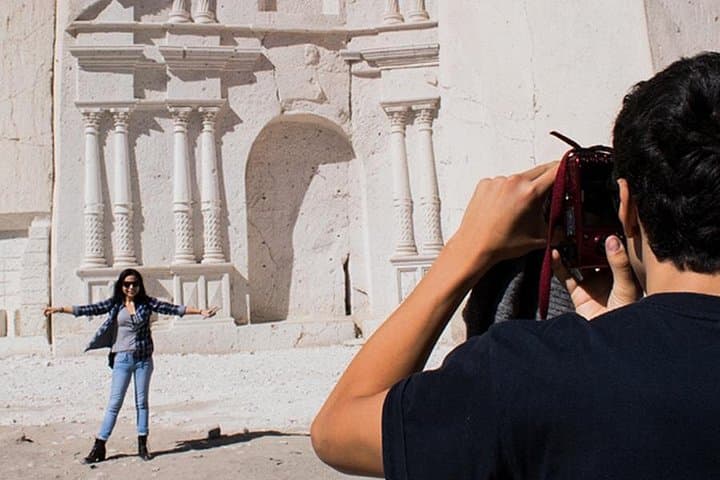
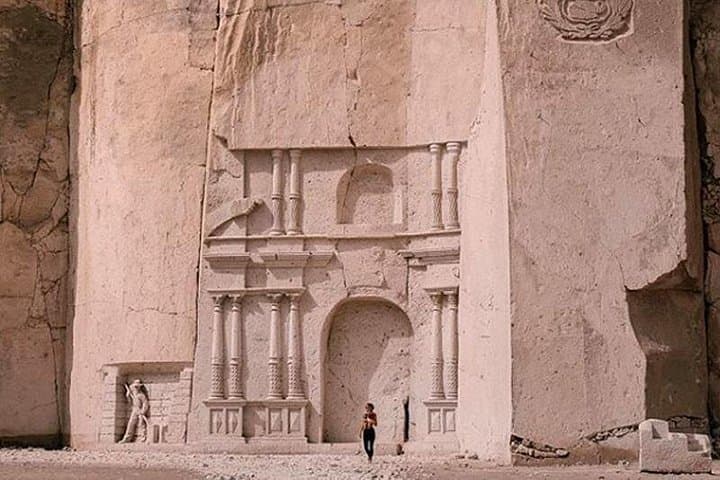
The heat of the puna sun bounces off pale volcanic walls as you step into a corridor of carved stone—massive sillar cliffs rise like folded pages, their faces cut and scored by generations of stonemasons.
Verified experiences and guided adventures in the surrounding area.
Operated by SKY VIAJES Y TURISMO · Arequipa, Arequipa Region
The heat of the puna sun bounces off pale volcanic walls as you step into a corridor of carved stone—massive sillar cliffs rise like folded pages, their faces cut and scored by generations of stonemasons.
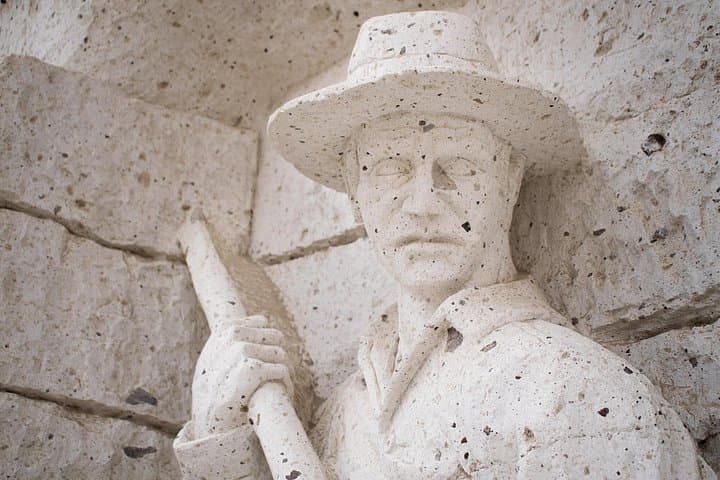
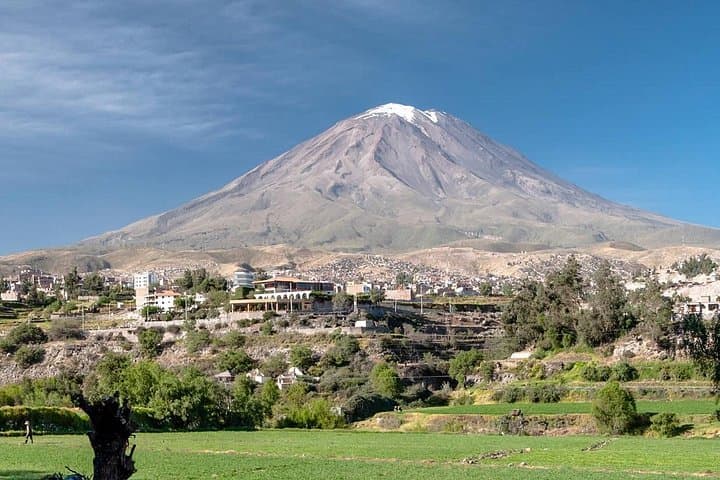
You begin at the working quarry where local cutters still use hand tools to shape ashlar blocks. The air smells faintly of dust and citrus from nearby orchards; the sound of chisels punctuates explanations about extraction techniques passed down through families since colonial times. From the quarry the route climbs toward Mirador de Carmen Alto, where the Chilina Valley opens and the trio of volcanoes—Misti, Chachani and Pichu Pichu—stand as silent, wind-sculpted sentinels.
History and geology are inseparable here: Arequipa’s white city façades owe their color to this welded volcanic tuff, called sillar, quarried from terraces carved by seismic and volcanic forces. Culture is close at hand in Yanahuara, a neighborhood of narrow streets and a small plaza where you’ll taste traditional desserts and find handmade keepsakes.
Practical details: this is an easy, largely on-foot cultural tour with short uneven sections in the quarry; expect 3–4 hours total, hotel pickup, and a short guided demo where you can try chiseling under supervision. Morning departures deliver crisper volcano views; bring sun protection, drinking water, and small bills to tip the quarry master or buy sweets in Yanahuara. The route is accessible to most travelers but watch your step on loose volcanic gravel and respect active work areas—this is both a living craft site and a landscape shaped by fire and time.
easy.
3–4 hours.
Suitable for most fitness levels; requires short walks on uneven ground and a few steps at viewpoints
The tour lasts about four hours and typically includes bottled water, entrance fees, a tasting of a typical dessert in Yanahuara, hotel pickup and a demonstration by the quarry master.
Yes—guided access limits you to safe areas, but wear sturdy shoes and follow the guide’s instructions around active cutting and loose stone.
Yes—this activity is suitable for families; strollers may be used in flatter parts but some sections have steps and gravel.
Early morning on clear days during the dry season (May–October) offers the sharpest views; afternoons in the wet season can bring clouds or showers.
Sillar has been quarried since pre-colonial and colonial periods; its white stone defines much of Arequipa’s colonial architecture and local identity.
Quarrying and tourism are managed to preserve working traditions—avoid taking stone fragments, stay on designated paths, and support local artisans to sustain the craft.
SKY VIAJES Y TURISMO operates guided outdoor trips and adventures with an emphasis on safety, stewardship, and memorable experiences.
The heat of the puna sun bounces off pale volcanic walls as you step into a corridor of carved stone—massive sillar cliffs rise like folded pages, their faces cut and scored by generations of stonemasons.
The heat of the puna sun bounces off pale volcanic walls as you step into a corridor of carved stone—massive sillar cliffs rise like folded pages, their faces cut and scored by generations of stonemasons.
You begin at the working quarry where local cutters still use hand tools to shape ashlar blocks. The air smells faintly of dust and citrus from nearby orchards; the sound of chisels punctuates explanations about extraction techniques passed down through families since colonial times. From the quarry the route climbs toward Mirador de Carmen Alto, where the Chilina Valley opens and the trio of volcanoes—Misti, Chachani and Pichu Pichu—stand as silent, wind-sculpted sentinels.
History and geology are inseparable here: Arequipa’s white city façades owe their color to this welded volcanic tuff, called sillar, quarried from terraces carved by seismic and volcanic forces. Culture is close at hand in Yanahuara, a neighborhood of narrow streets and a small plaza where you’ll taste traditional desserts and find handmade keepsakes.
Practical details: this is an easy, largely on-foot cultural tour with short uneven sections in the quarry; expect 3–4 hours total, hotel pickup, and a short guided demo where you can try chiseling under supervision. Morning departures deliver crisper volcano views; bring sun protection, drinking water, and small bills to tip the quarry master or buy sweets in Yanahuara. The route is accessible to most travelers but watch your step on loose volcanic gravel and respect active work areas—this is both a living craft site and a landscape shaped by fire and time.