THE ADVENTURE COLLECTIVE® · Independent discovery and booking for outdoor travel

Walk into authentic Icelandic cave-homes at Laugarvatn and hear stories of families who carved shelter from rock less than a century ago. This short, guided visit mixes local history, geology, and hands-on storytelling in a compact, accessible tour.
Walk into authentic Icelandic cave-homes at Laugarvatn and hear stories of families who carved shelter from rock less than a century ago. This short, guided visit mixes local history, geology, and hands-on storytelling in a compact, accessible tour.
You step off the gravel parking area and feel the lake-breeze shift; the entrance sits low in the hillside, cool air spilling out like a breath from the earth. The guide leads a small group up a short path and, within minutes, you’re stepping into rooms that were lived in less than a century ago — not a reconstruction, but original spaces cut directly into the hill.
Verified experiences and guided adventures in the surrounding area.
Operated by The Cave People · Laugarvatn, Southern Region
You step off the gravel parking area and feel the lake-breeze shift; the entrance sits low in the hillside, cool air spilling out like a breath from the earth. The guide leads a small group up a short path and, within minutes, you’re stepping into rooms that were lived in less than a century ago — not a reconstruction, but original spaces cut directly into the hill.
These cave-homes reflect Iceland’s pragmatic history: families carving shelter from the earth where timber was scarce and winters were long. The geology here is a mix of compacted soils and older lava fragments that were easier to shape with hand tools, creating insulated interiors that held warmth and smoke from indoor fires.
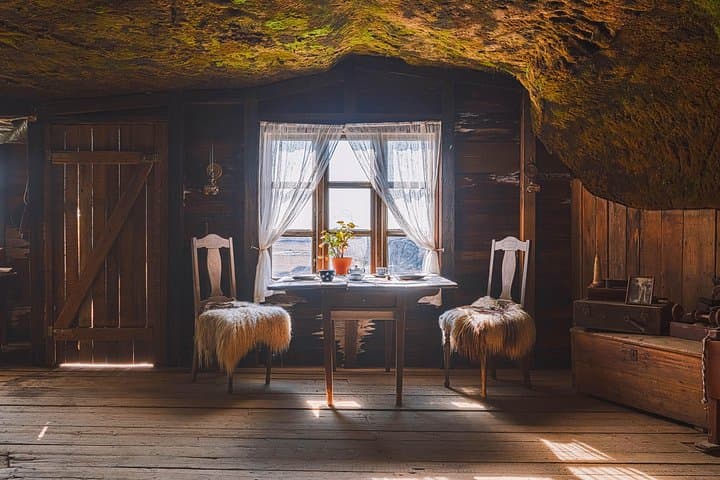
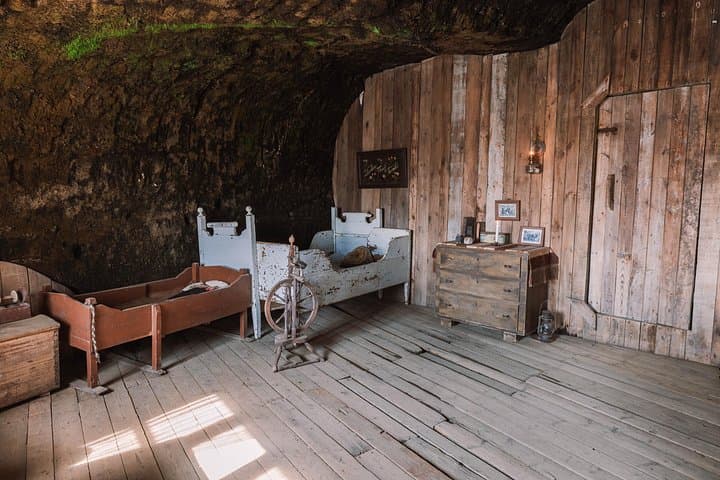
Culturally, the site sits near Lake Laugarvatn, in a region that saw centuries of rural settlement and agricultural adaptation. Guides typically point out period photos and objects, connecting the physical rooms to stories of daily life, food preservation, and community resilience.
Practically, tours are short (about 30 minutes), family-friendly, and operate in small groups — expect uneven ground, low ceilings in places, and cool, damp air. Wear sturdy shoes and a light jacket; cameras are welcome but keep flashes subdued. If you prefer privacy, private tastings of traditional foods such as smoked lamb are sometimes available on request.
Plan this visit as a close, tactile lesson in Icelandic ingenuity: it’s accessible, immediate, and quietly powerful — a human-scale encounter with how people used landscape and materials to make home.
easy.
30 minutes.
Suitable for most fitness levels; involves short walk and navigating low or uneven surfaces
The standard shared tour runs about 30 minutes, including a short walk from the parking area and time inside the caves.
These are original cave dwellings where families lived less than a century ago, not replicas.
Families are welcome, but strollers are not practical inside caves; small children should be carried through tighter areas.
Yes—photography is allowed but avoid flash on delicate surfaces and follow the guide’s directions.
The caves were used as practical living spaces by Icelandic families into the 20th century, reflecting local adaptations where building timber was scarce and insulation was vital.
Tours run in small groups to minimize wear; visitors are asked to avoid touching walls and to follow established paths to protect fragile surfaces.
The Cave People operates guided outdoor trips and adventures with an emphasis on safety, stewardship, and memorable experiences.
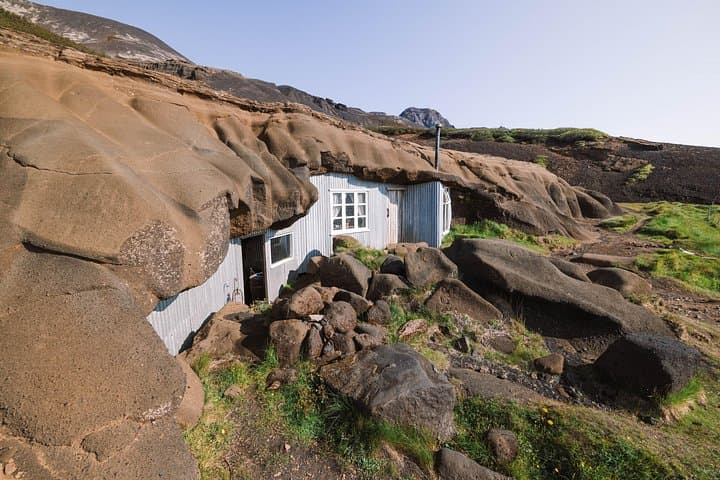
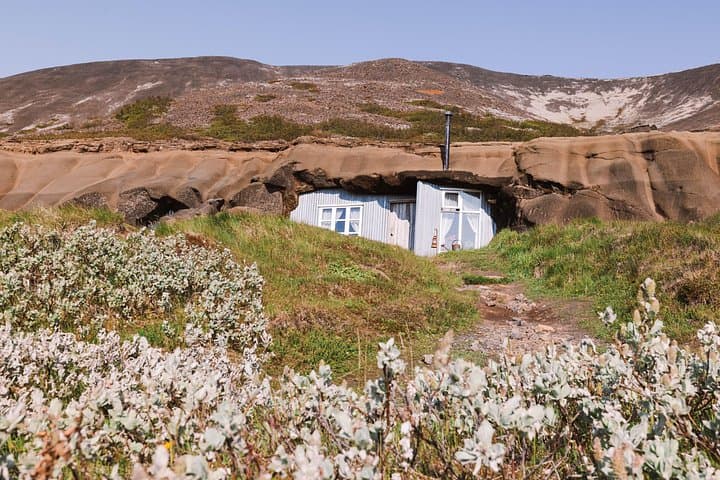
You step off the gravel parking area and feel the lake-breeze shift; the entrance sits low in the hillside, cool air spilling out like a breath from the earth. The guide leads a small group up a short path and, within minutes, you’re stepping into rooms that were lived in less than a century ago — not a reconstruction, but original spaces cut directly into the hill.
You step off the gravel parking area and feel the lake-breeze shift; the entrance sits low in the hillside, cool air spilling out like a breath from the earth. The guide leads a small group up a short path and, within minutes, you’re stepping into rooms that were lived in less than a century ago — not a reconstruction, but original spaces cut directly into the hill.
These cave-homes reflect Iceland’s pragmatic history: families carving shelter from the earth where timber was scarce and winters were long. The geology here is a mix of compacted soils and older lava fragments that were easier to shape with hand tools, creating insulated interiors that held warmth and smoke from indoor fires.
Culturally, the site sits near Lake Laugarvatn, in a region that saw centuries of rural settlement and agricultural adaptation. Guides typically point out period photos and objects, connecting the physical rooms to stories of daily life, food preservation, and community resilience.
Practically, tours are short (about 30 minutes), family-friendly, and operate in small groups — expect uneven ground, low ceilings in places, and cool, damp air. Wear sturdy shoes and a light jacket; cameras are welcome but keep flashes subdued. If you prefer privacy, private tastings of traditional foods such as smoked lamb are sometimes available on request.
Plan this visit as a close, tactile lesson in Icelandic ingenuity: it’s accessible, immediate, and quietly powerful — a human-scale encounter with how people used landscape and materials to make home.