THE ADVENTURE COLLECTIVE® · Independent discovery and booking for outdoor travel

Leave Marrakech for a day and follow the Ourika River into the High Atlas foothills to the Seven Waterfalls. This accessible day hike mixes river walks, village culture, and a riverside lunch—ideal for travelers wanting nature and local insight without technical climbing.
Leave Marrakech for a day and follow the Ourika River into the High Atlas foothills to the Seven Waterfalls. This accessible day hike mixes river walks, village culture, and a riverside lunch—ideal for travelers wanting nature and local insight without technical climbing.
A brisk morning drive unspools south from Marrakech, and the city’s heat gives way to terraced fields and scrubbed foothills. The Ourika River threads the valley floor, its current daring you toward the line of cascades known locally as the Seven Waterfalls. Walks follow the riverbank at first—shallow streams and rock steps—then climb into shady cedar and olive groves where the scent of damp earth and wood smoke lingers.
Verified experiences and guided adventures in the surrounding area.
Operated by Experience.ma · Ourika, Marrakech-Safi
A brisk morning drive unspools south from Marrakech, and the city’s heat gives way to terraced fields and scrubbed foothills. The Ourika River threads the valley floor, its current daring you toward the line of cascades known locally as the Seven Waterfalls. Walks follow the riverbank at first—shallow streams and rock steps—then climb into shady cedar and olive groves where the scent of damp earth and wood smoke lingers.
The valley sits on the northern fringes of the High Atlas, carved by millennia of seasonal runoff that left exposed schists and pockets of fertile soil for Berber villages. Settlements here keep a living mountain culture: women weaving, men tending terraces, and small cafés serving mint tea beside the water. Guides often share local stories and point out old irrigation channels—the foggara—still in use.
Expect a 3–5 km round-trip hike to the most visited waterfalls with roughly 200–300 m of elevation gain depending on how many cascades you climb to. Terrain alternates between packed dirt, stone steps and occasional loose scree; arrive in sturdy footwear and with layered clothing. Bring cash for village-run restaurants and tips, and time your return before late afternoon when light softens but temperatures drop. The full excursion, including transfer from Marrakech, runs about eight hours—enough time to move through landscape, culture and a satisfying riverside lunch without rush.
easy.
8 hours (full day, including transfer).
Suitable for travelers in average fitness; able to walk several kilometers with short, steep sections.
Typical transfer time is 45–75 minutes depending on traffic and the exact pickup point—plan for about an hour each way.
Yes—paths to the main waterfalls are family-friendly though there are steep stairs in places; notify the operator about any mobility concerns.
Yes, certified guides are included and commonly speak English, French, and sometimes Spanish—guides also share cultural context about Berber life.
Expect 3–5 km round-trip with intermittent elevation gain (roughly 200–300 m) and mixed terrain—no technical climbing required.
The Ourika Valley has long been inhabited by Amazigh (Berber) communities who developed terraced agriculture and traditional irrigation systems that persist today.
Seasonal visitors and local initiatives emphasize low-impact tourism—stick to trails, avoid littering, and support village cafés to help local economies.
Experience.ma operates guided outdoor trips and adventures with an emphasis on safety, stewardship, and memorable experiences.

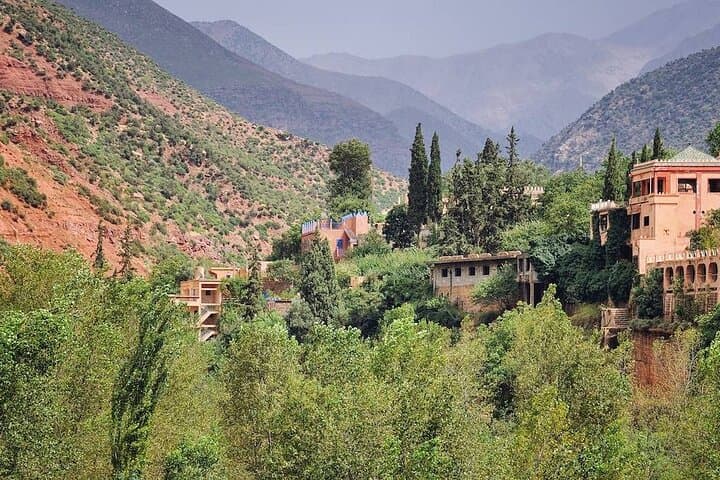


A brisk morning drive unspools south from Marrakech, and the city’s heat gives way to terraced fields and scrubbed foothills. The Ourika River threads the valley floor, its current daring you toward the line of cascades known locally as the Seven Waterfalls. Walks follow the riverbank at first—shallow streams and rock steps—then climb into shady cedar and olive groves where the scent of damp earth and wood smoke lingers.
A brisk morning drive unspools south from Marrakech, and the city’s heat gives way to terraced fields and scrubbed foothills. The Ourika River threads the valley floor, its current daring you toward the line of cascades known locally as the Seven Waterfalls. Walks follow the riverbank at first—shallow streams and rock steps—then climb into shady cedar and olive groves where the scent of damp earth and wood smoke lingers.
The valley sits on the northern fringes of the High Atlas, carved by millennia of seasonal runoff that left exposed schists and pockets of fertile soil for Berber villages. Settlements here keep a living mountain culture: women weaving, men tending terraces, and small cafés serving mint tea beside the water. Guides often share local stories and point out old irrigation channels—the foggara—still in use.
Expect a 3–5 km round-trip hike to the most visited waterfalls with roughly 200–300 m of elevation gain depending on how many cascades you climb to. Terrain alternates between packed dirt, stone steps and occasional loose scree; arrive in sturdy footwear and with layered clothing. Bring cash for village-run restaurants and tips, and time your return before late afternoon when light softens but temperatures drop. The full excursion, including transfer from Marrakech, runs about eight hours—enough time to move through landscape, culture and a satisfying riverside lunch without rush.